Cigarette smoking has been a major public health challenge for decades, and it's still the leading cause of preventable death and disease in the United States, responsible for more than
480,000 deaths, yearly.
However, since the first America’s Health Rankings Annual Report in 1990, adult smoking rates have been reduced by more than half. In fact, the data show a 59% decrease, from 29.5% in 1990 to 12.1% in 2023.
Adults ages 18-44 are the biggest users of e-cigarettes. 13.0% report regular use, compared with 1.1% of those age 65 and older — 11.8 times higher.
Curious about smoking and e-cigarette use data? Explore this health topic.
Digging Deeper: Trends in Cigarette Smoking Over the Past Decade
Looking at the last decade-plus, from 2011 to 2023, cigarette
smoking among adults dropped by 43%, from 21.2% to 12.1%.
Since 2011, smoking decreased in all 48 states with data and the District of Columbia. The greatest decreases were in:
- The District of Columbia, where rates dropped from 20.8% to 9.8%.
- Rhode Island, which went from 20.0% to 9.5%.
Explore state-level data for smoking.
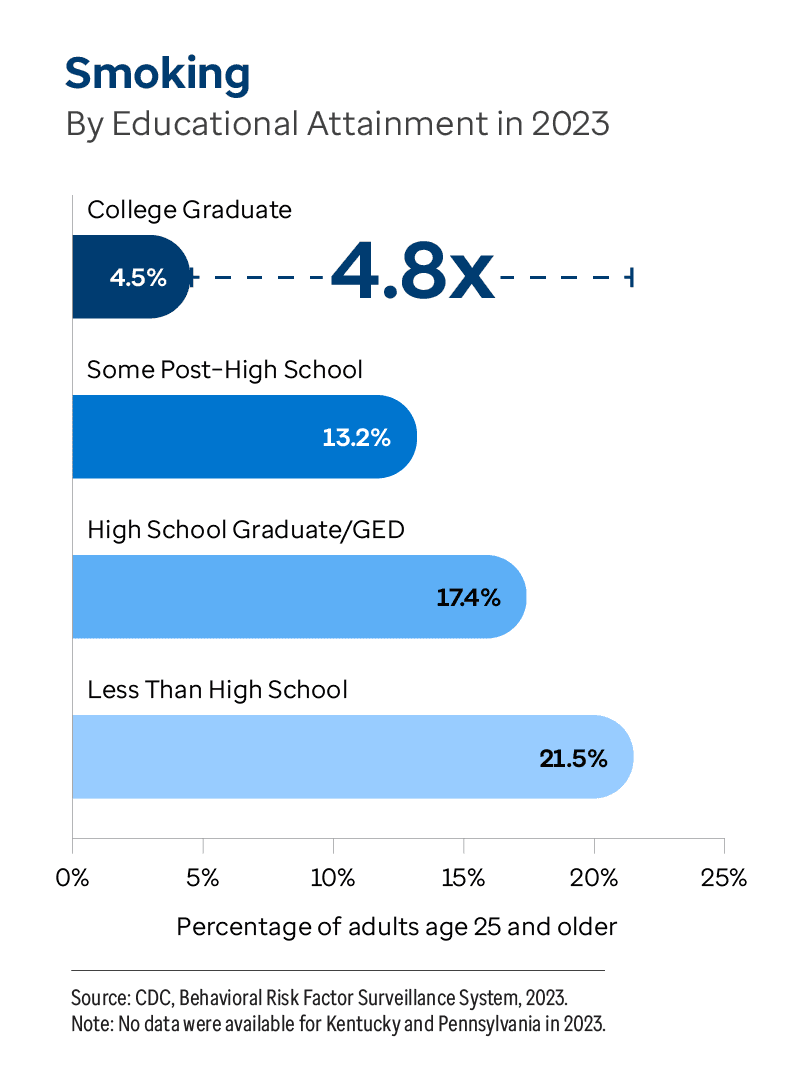
Despite this progress, smoking varied significantly by education, race/ethnicity and geography. Those with lower education levels experienced higher rates:
- Adults with less than a high school education (21.5%) have a smoking prevalence 4.8 times higher than college graduates (4.5%).
- Those with a high school degree or GED (17.4%) and those with some post-high school education (13.2%) also have a higher prevalence than college graduates.
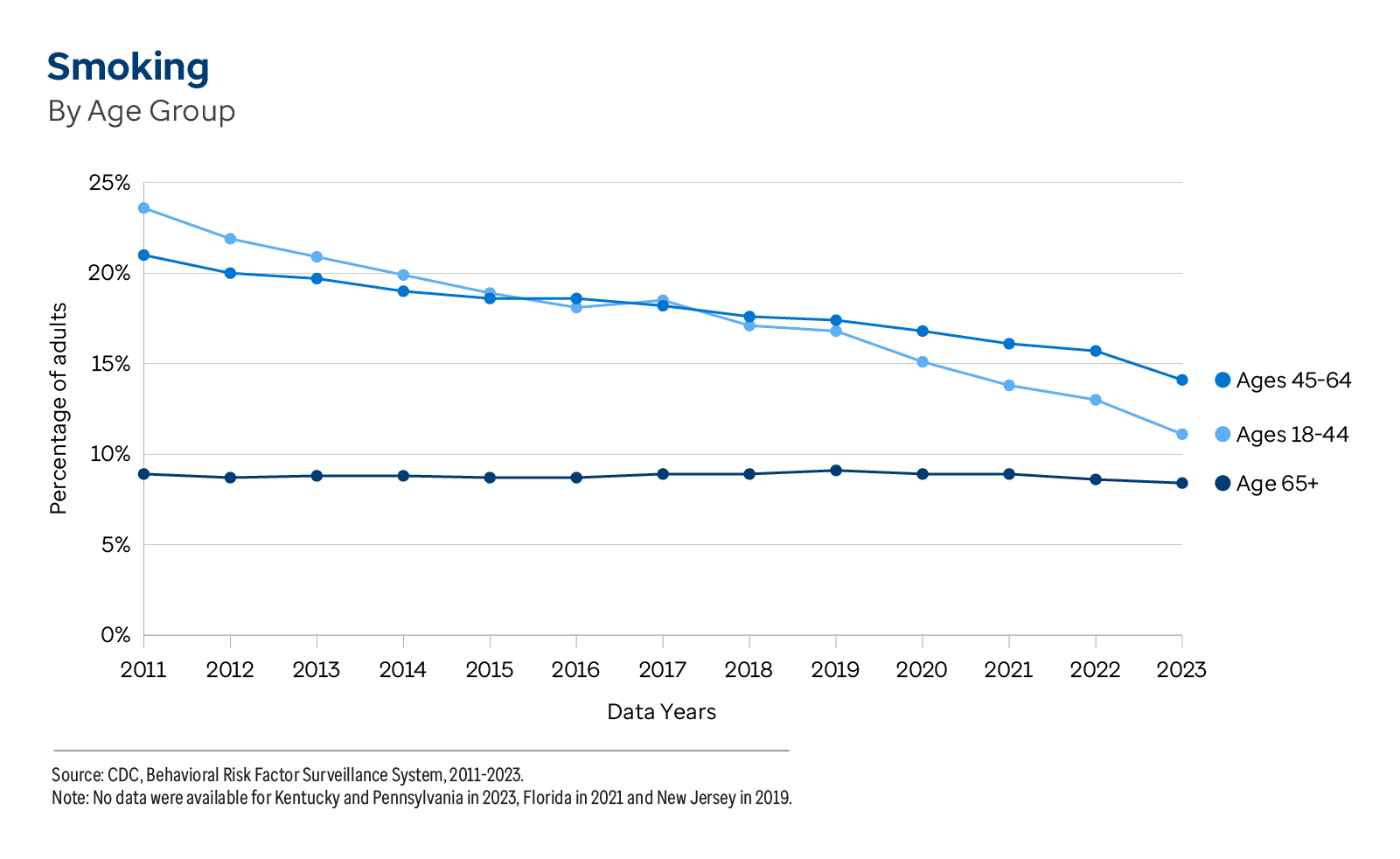
Adults age 65 and older have consistently had the lowest prevalence of smoking, but the gap is narrowing as rates among adults ages 18-44 and 45-64 continue to decrease.
Want to dive deeper into how smoking rates differ between population groups? Explore the data.
Explore the Data and Stay Tuned for New Insights
To sustain progress and drive meaningful change, public health leaders can use these data to better understand trends, build on three decades of progress in decreasing smoking and rally around healthier outcomes for all.
The data available on the America’s Health Rankings platform allow for more detailed analysis of trends in smoking across different ages, racial/ethnic groups and socioeconomic groups, among others.
Want to stay informed?
Sign up here to receive new insights as they are released.