Understanding the Rising Rates of Obesity and Diabetes
Despite widespread gains in measures of coverage and providers tracked by
America’s Health Rankings — the uninsured rate and number of primary care providers — the prevalence of some health outcomes like
diabetes and
obesity have worsened.
The graphic below illustrates the increase in obesity prevalence across all states, using data from the past several decades. As the colors change, they correspond to the prevalence of obesity indicated in the legend below the map.
Between 2011 and 2023,
obesity increased 23%, from 27.8% to 34.3% of adults.
The prevalence increased in all 48 states with 2023 data; the largest increases were: 34% in New Mexico (26.3% to 35.3%) and 33% in both Wyoming (25.0% to 33.3%) and Illinois (27.1% to 36.0%).*
At the same time, the prevalence of
diabetes increased 21%, from 9.5% to 11.5% of adults.
* Note: No data were available for Kentucky and Pennsylvania in 2023, Florida in 2021 and New Jersey in 2019.
Significant Differences in Obesity and Diabetes by Demographic Group
Obesity rates varied by race/ethnicity, geography and disability status and other demographic groups in 2023, and diabetes rates varied by income and education and other demographic groups.
The prevalence of obesity was 3.1 times higher among Black (42.0%) than Asian (13.4%) adults, 1.7 times higher in West Virginia (41.2%) than Colorado (24.9%), and 1.4 times higher among adults with less than a high school education (38.5%) and high school graduates (38.4%) than college graduates (27.9%).
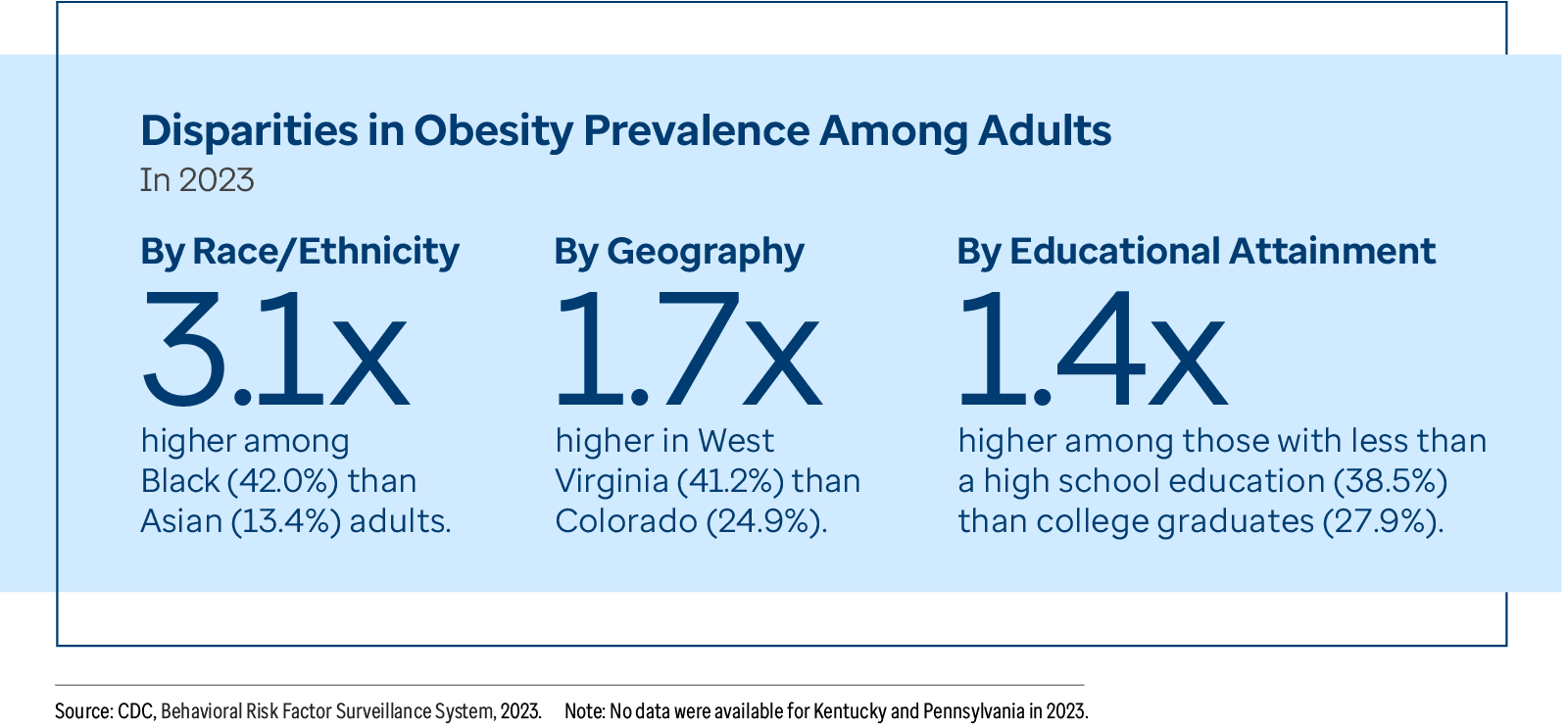
Note: The values for Black and American Indian/Alaska Native (38.9%) adults may not differ significantly based on overlapping 95% confidence intervals.
Among those with an annual household income less than $25,000 (21.2%), the prevalence of diabetes was 2.4 times higher compared with those with incomes of $75,000 or more (9.0%). In addition, the prevalence was 2.3 times higher among adults with less than a high school education (21.2%) compared with college graduates (9.2%).
Learn more about rates of diabetes, obesity and other health outcomes at the national and state levels.
Obesity is a
complex health condition with biological, economic, environmental, individual and societal causes. Adults who have obesity are more likely to have a decreased quality of life and an increased risk of developing
serious health conditions.
Diabetes was the nation’s
eighth-leading cause of death in 2022, accounting for more than 100,000 deaths annually. People with diabetes are
twice as likely to have heart disease or a stroke than those without diabetes. Currently,
38.1 million adults are estimated to have diabetes, with 8.7 million of them undiagnosed.
These trends in obesity and diabetes prevalence reinforce the need for data-driven insights and targeted solutions.
Explore the Data and Stay Tuned for New Insights
Want to stay informed?
Sign up here to receive insights as they are released.


