America’s Health Rankings® recognizes that a holistic approach to health includes a focus on overall community wellness, and that trusted, actionable data make this tangible and measurable.
A strong example of this approach comes from Kansas Health Foundation, a nonprofit organization focused on improving the health of all Kansans. The foundation is guided by a
purpose statement; the first component — “empowering Kansas to lead the nation in health” — is informed by the state’s rank in the
America’s Health Rankings platform.
“Kansas used to be eighth, and now we're 28th. We want to be the healthiest state,” said the President and CEO of the Kansas Health Foundation, Ed O’Malley. “We’ve anchored our success to the rankings.”
To achieve its goals, Kansas Health Foundation takes a wide-reaching approach that works alongside partners to address the root causes of health challenges. The foundation looks beyond health care to the social and economic conditions that shape wellness.
Explore the evolution of America’s Health Rankings’ model — as well as how it holistically measures health.
Kansas Health Foundation in Action: Data with Purpose
America’s Health Rankings is built to support leaders who take a holistic view of their community’s well-being. The platform offers data at the state level with measures spanning a comprehensive understanding of health, allowing for comparisons and tracking over time. The platform provides data that Kansas Health Foundation uses to monitor its progress in addressing the health challenges in the state, including food insecurity.
Food insecurity is an
economic and social condition where one’s regular access to food is limited or uncertain. It is measured by
America’s Health Rankings as the percentage of households unable to provide adequate food for one or more household members due to lack of resources.
Data from the
America’s Health Rankings platform showed that food insecurity was an area of opportunity that Kansas Health Foundation could build upon. The rate of food insecurity in Kansas
improved significantly over the past decade, from 15.2% (2011-2013) to 10.6% (2021-2023) of households, and the rate has been consistently healthier than the national average since 2019-2021. However, according to Feeding America,
20.1% of children in the state still experienced food insecurity in 2023, which means there is a need for Kansas Health Foundation to continue progress by driving sustained action, tangible results and better well-being for all Kansans.
Hunger Free Kansas: Collaborating to Leverage Kansas’s Strengths to Combat Food Insecurity
Kansas Health Foundation recognizes that there are distinct challenges and strengths within its state when it comes to its population’s health.
Twenty-eight percent of Kansans live in rural areas, placing Kansas in the middle (No. 25) among the states in terms of its
rural population. However,
85% of the state is farmland, and agriculture dominates the local economy. This presents an opportunity to unite communities around the shared goal of addressing hunger across Kansas using the state’s agricultural assets.
Kansas Health Foundation started
Hunger Free Kansas in 2023 as a collaboration built on data, problem-solving and sustained investment. For the statewide effort, Kansas Health Foundation brought together advocacy organizations, local coalitions and foundations, colleges and universities, state health institutions and corporate partners to allow a variety of different perspectives to tackle hunger together. The result is a
program that aims to improve service quality and access, strengthen data and technology and support communities involved in food distribution for those affected by food insecurity.
Hunger Free Kansas builds on Kansas Health Foundation’s focus on rural health; it recognizes both the unique challenges of these communities and the lessons they offer statewide. Kansas Health Foundation launched its food insecurity program to improve health for all Kansans, and America’s Health Rankings data allow them to track progress both on this important issue and the state’s overall ranking year over year.
Why This Matters: A Roadmap for States and Communities
Kansas Health Foundation’s approach illustrates what’s possible when community leaders take a comprehensive and data-driven approach: targeted action, measurable outcomes and progress toward better health.
O'Malley explained that, while change on a large scale can be difficult, data can help determine a pathway for momentum.
“Align your organization and initiatives around powerful metrics that fuel performance,” he said. “Pick the right metrics, communicate about them all the time and watch your system respond.”
As efforts to improve health are put in place, data from America’s Health Rankings can provide a benchmark for organizations to understand progress in their state’s health.
“Data holds you accountable,” O’Malley said. “The point of measuring something is to create pressure to do something.”
Explore America’s Health Rankings Platform: Turn Insight into Impact
By providing state and national health data across over 280 measures that encompass a holistic understanding of health and well-being, America’s Health Rankings can be a resource for stakeholders looking to improve their communities.
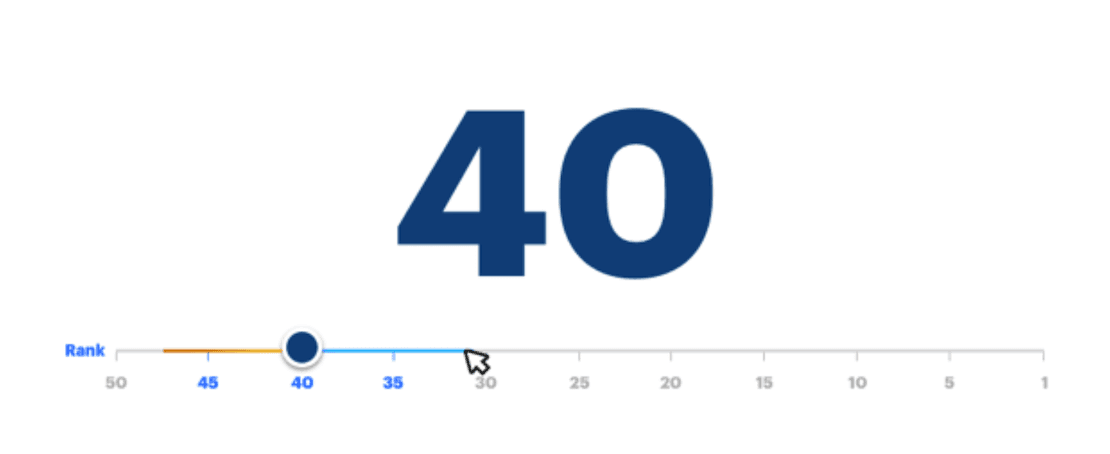
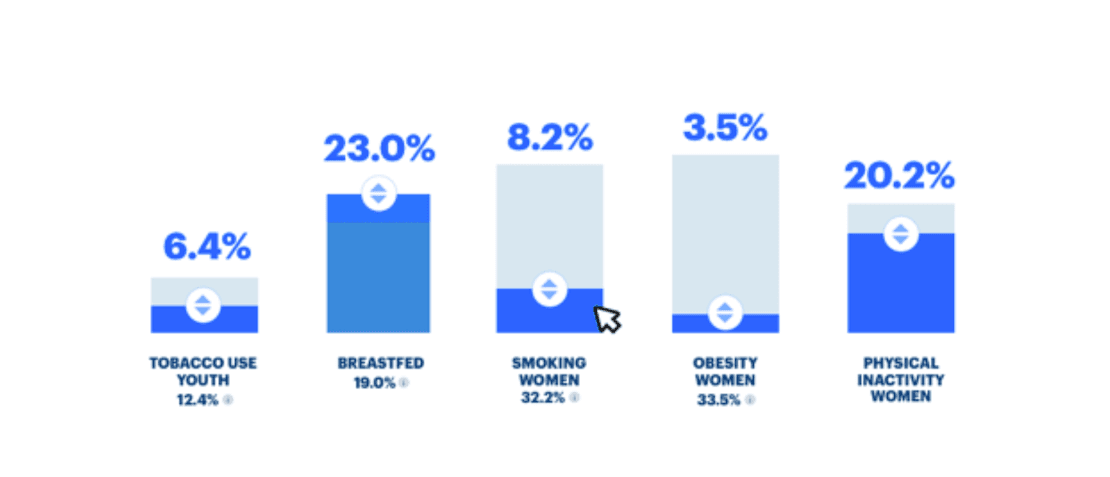
The platform has a variety of tools that can inspire similar efforts in every state that equip communities and leaders with data to drive collaboration and provide accountability to sustain progress. Health information specific to each state is available on the View State Data pages (accessible from the Explore Data menu), which feature dynamic visualizations and an Adjust My Rank tool that allows users to explore how progress and challenges across key measures might affect a state’s overall rank.
Learn More About Your State’s Ranking — and What Measures Could Improve It
Explore how your state can improve health and well-being with the Adjust My Rank tool, which can be found by following the steps below:
- Click “Explore Data”
- Click on the name of the state you would like to explore
- Scroll down to “Measures Impacting a State’s Rank”
- Choose a report from the dropdown (e.g., Annual Report for a state’s overall health, or Health of Women and Children Report or Senior Report for the health of select populations in the state)
- Click “Adjust My Rank”
After selecting a state, change the state's rank by moving the slider to the left or right. Moving the slider to the right shows an improvement in rank, while moving it to the left shows a less healthy rank.
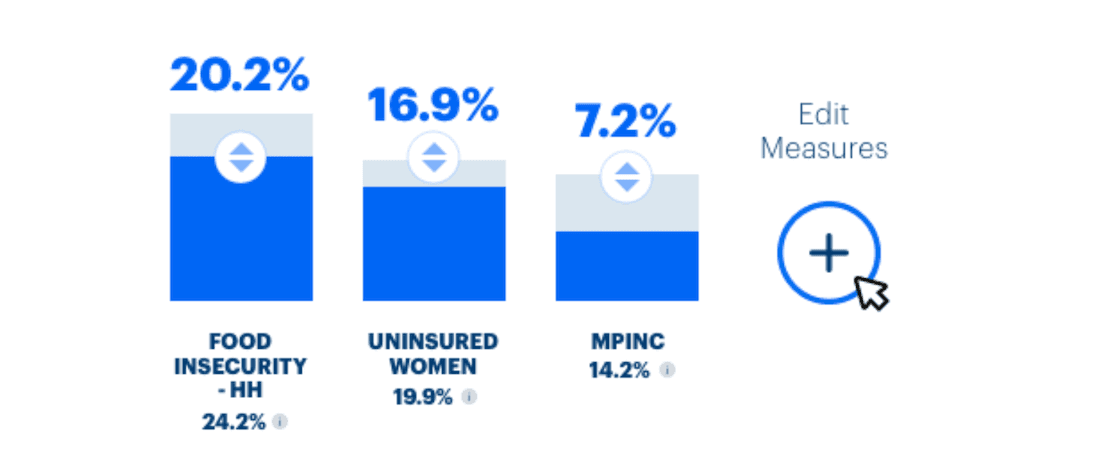
After changing the state's rank, modify the individual contributing health measures by moving the sliders up or down. Adjusting one measure will impact the other selected measures.
Users can view the preselected measures or choose from a list of additional health measures.
State rankings are updated using the America’s Health Rankings model based on the latest data. Sign up here to receive new insights as they are released.