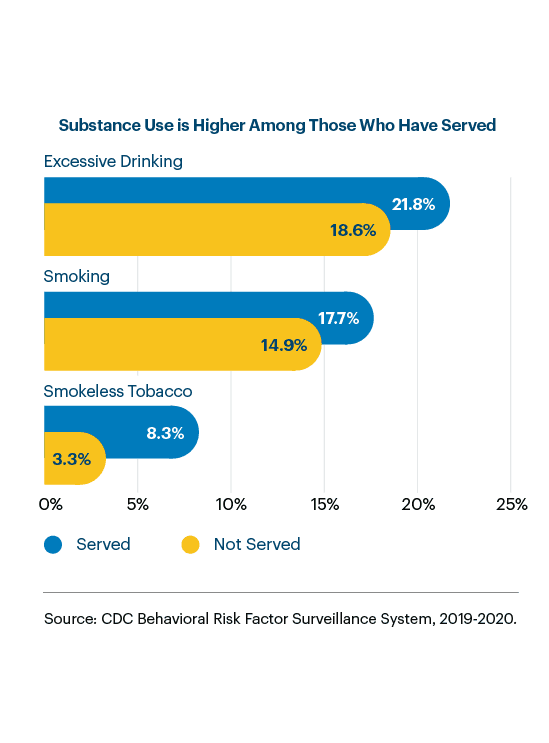
Substance use continues to be higher among those who have served.
Historically, those who have served reported higher rates of excessive drinking, cigarette smoking and using smokeless tobacco than their counterparts who have not served. While rates of excessive drinking and smoking have decreased in both groups since 2011-2012, those who have served are still 1.2 times more likely to engage in these behaviors than those who have not (17.7% vs. 14.9% and 21.8% vs. 18.6%, respectively). Similarly, those who have served are 2.5 times more likely than those who have not served to use smokeless tobacco (8.3% vs. 3.3%).
For
excessive drinking, those who have served with less than a high school education are 1.6 times more likely to report this behavior than their counterparts who have not served (26.0% vs. 16.6%). Hispanic adults who have served have the highest rates of excessive drinking among most other racial/ethnic groups and are 1.4 times more likely to drink excessively than those without service experience (24.5% vs. 17.3%).
Smokeless tobacco use remains significantly higher among those who have served overall compared with civilians, as well as within certain subpopulations. Those who have served who have a college degree are 3.7 times more likely to use smokeless tobacco than their non-serving counterparts (7.0% vs. 1.9%). Similarly, rates are 2.9 times higher in Hawaiian/Pacific Islander adults who have served than in those who have not (8.5% vs. 2.9%). Among those who have served, smokeless tobacco use is most common among younger adults, with those ages 18-25 being 2.9 times more likely to use smokeless tobacco than those ages 50 and older (13.7% vs. 4.8%).
While cigarette smoking is higher among those who have served, some subpopulations have higher rates compared with civilians. Among Asian adults, those who have served are almost twice as likely to smoke (13.3%) as their non-serving counterparts (7.1%). Those with less than a high school education who have served and American Indian/Alaska Native adults with service experience have the highest rates of smoking compared to their civilian counterparts (41.4% and 25.7%, respectively).