Sleep is critical for brain and body
functions, including cognition and emotion, as well as for the immune, hormonal and metabolic systems. Insufficient sleep is associated with
chronic diseases such as cancer, depression, diabetes, hypertension and obesity.
Findings
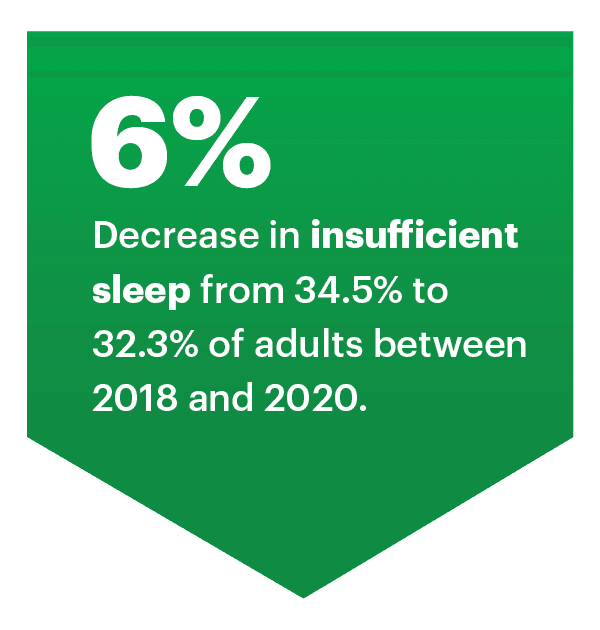
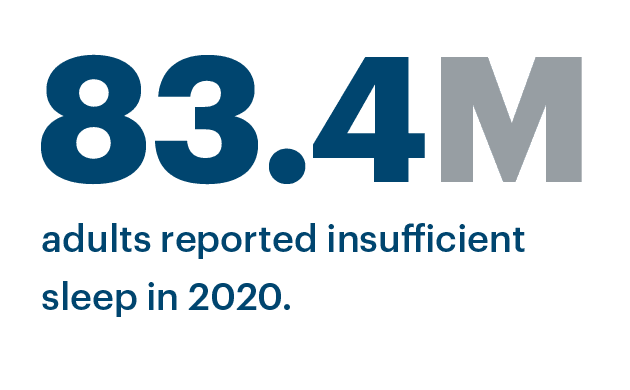
Nationally, the percentage of adults who reported sleeping, on average, fewer than seven hours in a 24-hour period decreased 6% from 34.5% to 32.3% between 2018 and 2020. This is the lowest prevalence since America’s Health Rankings started tracking this measure. In 2020, more than 83.4 million adults reported insufficient sleep.
Between 2018 and 2020, insufficient sleep significantly decreased among all racial and ethnic groups except
Hawaiian/Pacific Islander adults, all income levels except adults ages 25 and older with an annual household income of
$50,000-$74,999, all education levels, both genders and all age groups. By group, the largest decreases were:
Disparities
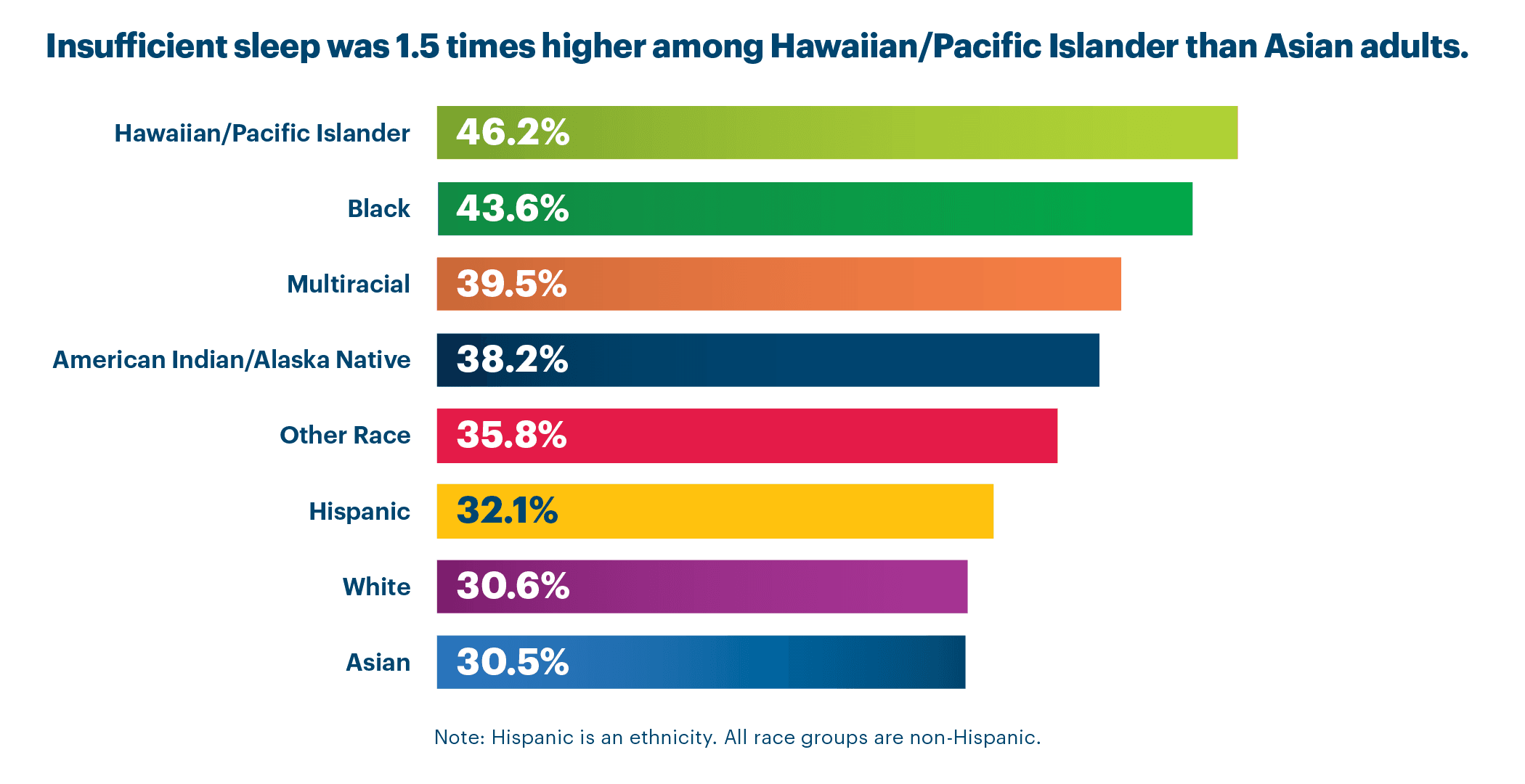
In 2020, insufficient sleep varied most by race and ethnicity, but also significantly varied by age, income, education and gender. The percentage was higher among:
* Data were available for 38 states in 2020. National value is the median of the 38 states with data.
In recent years, there has been an increase in the popularity of
electronic cigarettes, more commonly referred to as e-cigarettes. E-cigarettes typically deliver the
highly addictive compound nicotine and often contain other harmful additives such as cancer-causing chemicals,
small particles that can go deep into lungs and flavoring chemicals linked to serious lung disease and
lung injury.
Findings
Nationally, the percentage of adults who reported
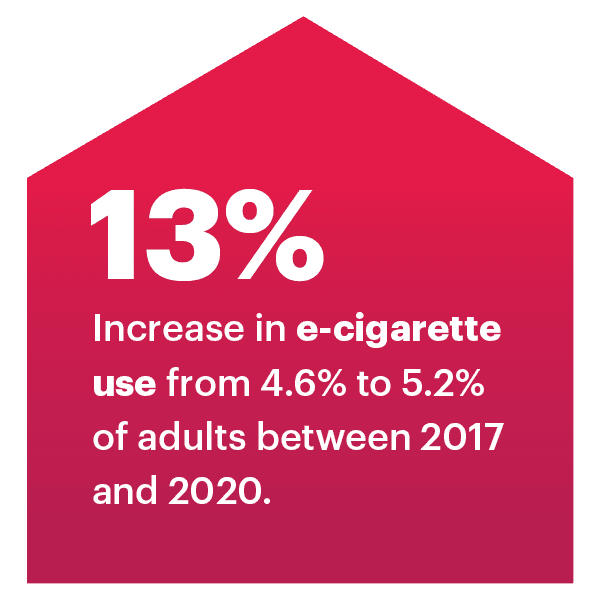
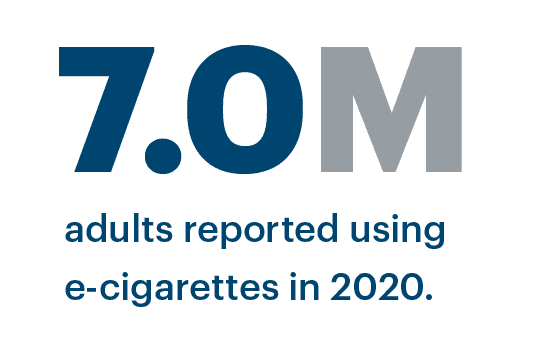
using e-cigarettes or other electronic vaping products at least once in their lifetime and now use daily or some days increased 13% from 4.6% to 5.2% between 2017 and 2020. This equaled nearly 7.0 million adults in 2020.
E-cigarette use significantly increased in four states between 2017 and 2020: 55% in
Nebraska (3.8% to 5.9%), 41% in both
Connecticut (3.2% to 4.5%) and
Utah (5.1% to 7.2%) and 36% in
Minnesota (3.6% to 4.9%).
Between 2017 and 2020, e-cigarette use significantly increased among adults ages 18-44, Hispanic and
white adults, adults with the highest levels of education and
income, and both
genders. By group, the largest increases were:
Disparities
In 2020, e-cigarette use varied most by age and race and ethnicity, but also significantly varied by gender, education and income. The percentage was higher among:
- Adults ages 18-44 (9.5%), 10.6 times higher than among adults ages 65 and older (0.9%). E-cigarette use was significantly lower with each increase in age group.
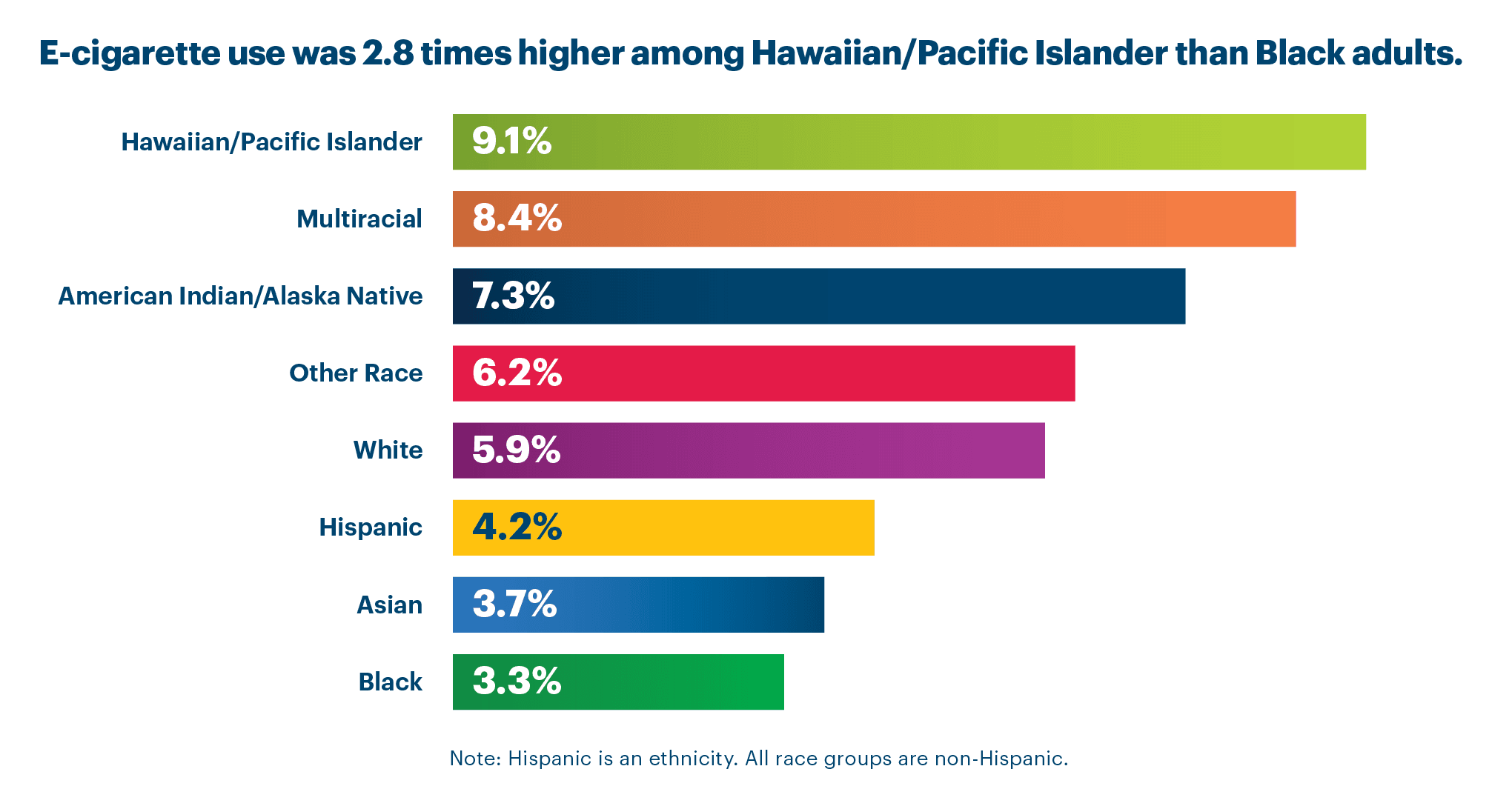
- Hawaiian/Pacific Islander adults (9.1%), 2.8 times higher than among Black adults (3.3%). E-cigarette use was also significantly higher among multiracial (8.4%) and American Indian/Alaska Native (7.3%) adults and significantly lower among Black (3.3%), Asian (3.7%) and Hispanic (4.2%) adults than all other racial and ethnic groups except for adults who identified their race as other (6.2%).
- Males (6.3%) than females (4.3%).
- Adults ages 25 and older with lower levels of education than college graduates (2.5%).
- Adults ages 25 and older with lower levels of income than those with an annual household income of $75,000 or more (3.7%).
Related Findings
This increase in e-cigarette use contrasts the long-term success in lowering cigarette
smoking rates, which recently decreased 9% nationally from 17.1% to 15.5% of adults between 2017 and 2020.

 Alabama
 Alaska
 Arizona
 Arkansas
 California
 Colorado
 Connecticut
 Delaware
 District of Columbia
 Florida
 Georgia
 Hawaii
 Idaho
Idaho Illinois
 Indiana
 Iowa
Iowa Kansas
 Kentucky
 Louisiana
 Maine
Maine Maryland
 Massachusetts
 Michigan
 Minnesota
 Mississippi
 Missouri
 Montana
 Nebraska
 Nevada
 New Hampshire
 New Jersey
 New Mexico
 New York
 North Carolina
 North Dakota
 Ohio
Ohio Oklahoma
 Oregon
 Pennsylvania
 Rhode Island
 South Carolina
 South Dakota
 Tennessee
 Texas
Texas Utah
Utah Vermont
 Virginia
 Washington
 West Virginia
 Wisconsin
 Wyoming
 US SummaryAppendixMeasures TableData Source DescriptionsThe Team