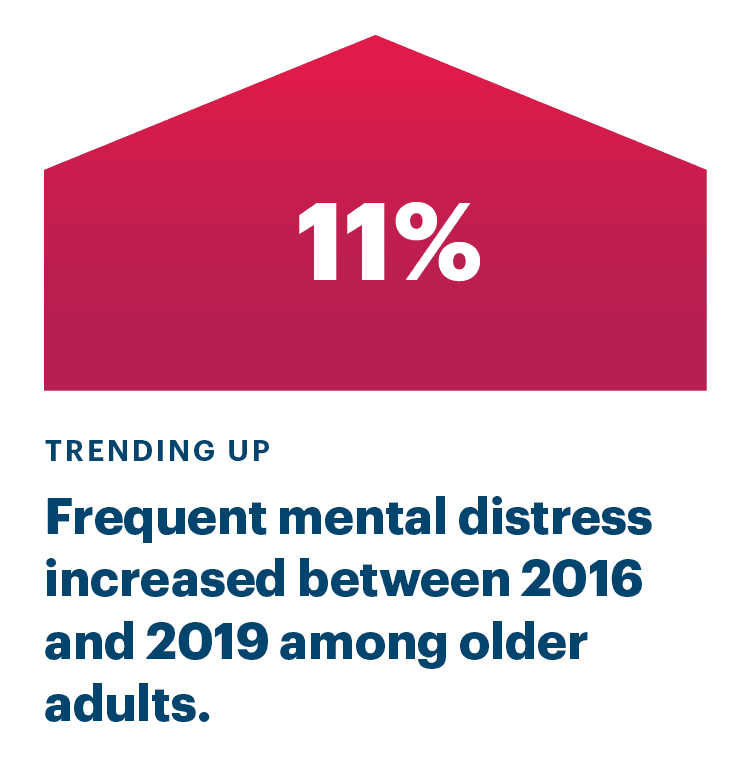
Before the COVID-19 pandemic, early deaths from all causes declined among adults ages 65-74. Seniors also faced a number of worsening behavioral health outcomes, including increases in drug deaths, suicides and frequent mental distress. As Americans entered a nationwide shutdown that increased isolation, these outcomes were potentially exacerbated.
COVID-19 was the third leading cause of death in 2020, according to provisional death
data released by the CDC.
Age-adjusted death rates varied by race and ethnicity. COVID- 19-associated death rates were highest among American Indian/ Alaska Native, Hispanic and Black persons and lowest among multiracial, Asian and white persons. COVID-19-associateddeath rates were 2.6 times higher among American Indian/Alaska Native than white persons. The April 2021 release of the initial review of 2020 death data by CDC are considered provisional because of the time needed to investigate certain causes of death. Final deaths reports are generally released in November of the following calendar year.
Definition: Deaths per 100,000 adults ages 65-74.
In 2019, the
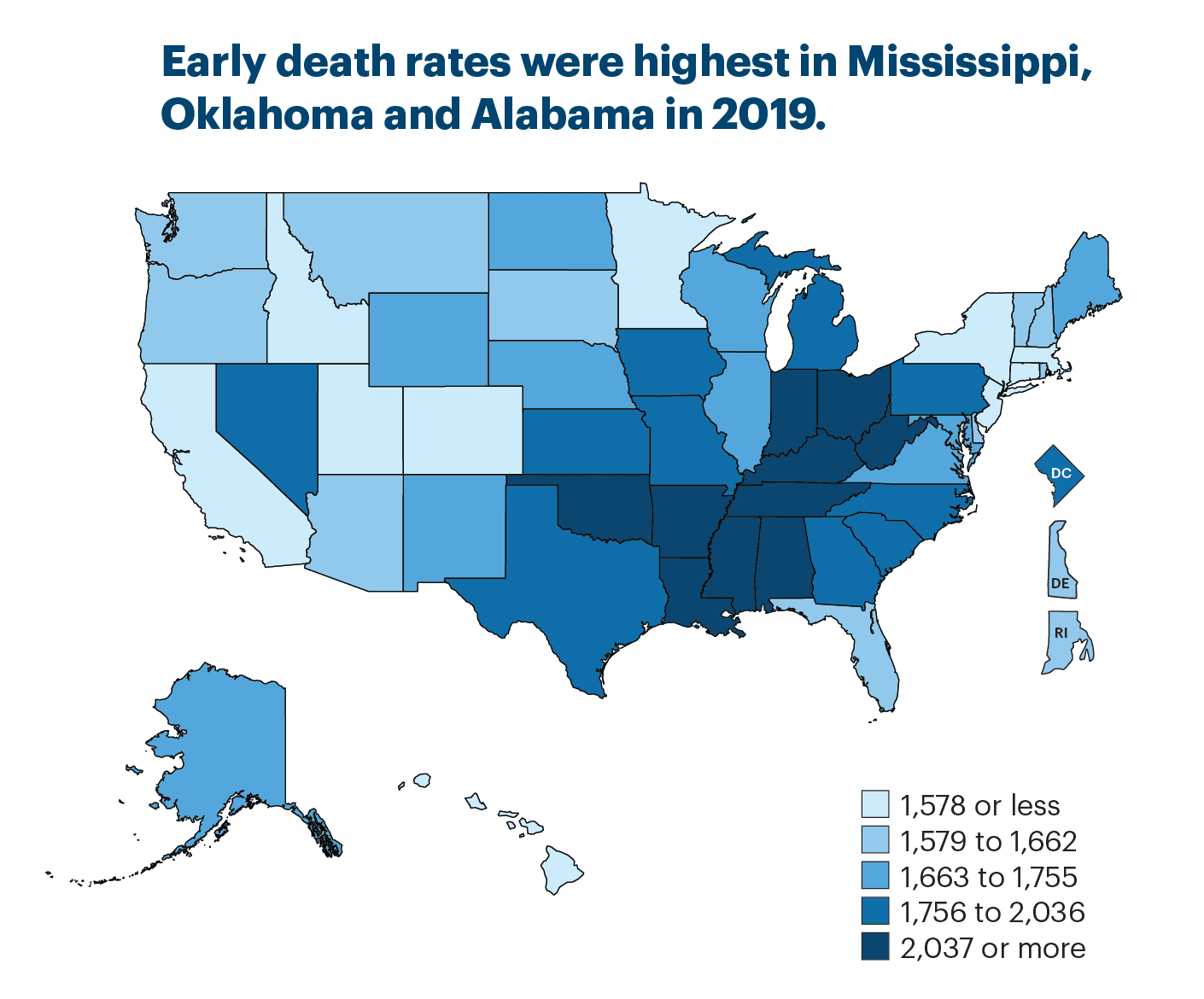
early death rate was 1,765 deaths per 100,000 adults ages 65-74, corresponding to an estimated 555,559 early deaths. Twelve states had early death rates of more than 2,000 deaths per 100,000. This rate decreased 1% — or 11,781 fewer deaths — since 2018 (1,783 deaths per 100,000).
Between 2018 and 2019, the early death rate significantly decreased in
Pennsylvania (1,826 to 1,775 deaths per 100,000) and
California (1,485 to 1,452).
Mississippi,
Oklahoma,
Alabama,
Kentucky,
Arkansas,
West Virginia,
Tennessee and
Louisiana have had consistently higher early death rates than all other states between 2011 and 2019.
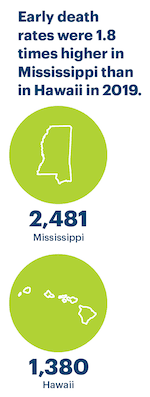
Early death varied by state and race and ethnicity. In 2019, the early death rate among adults ages 65-74 was 1.8 times higher in
Mississippi (2,481 deaths per 100,000) than in
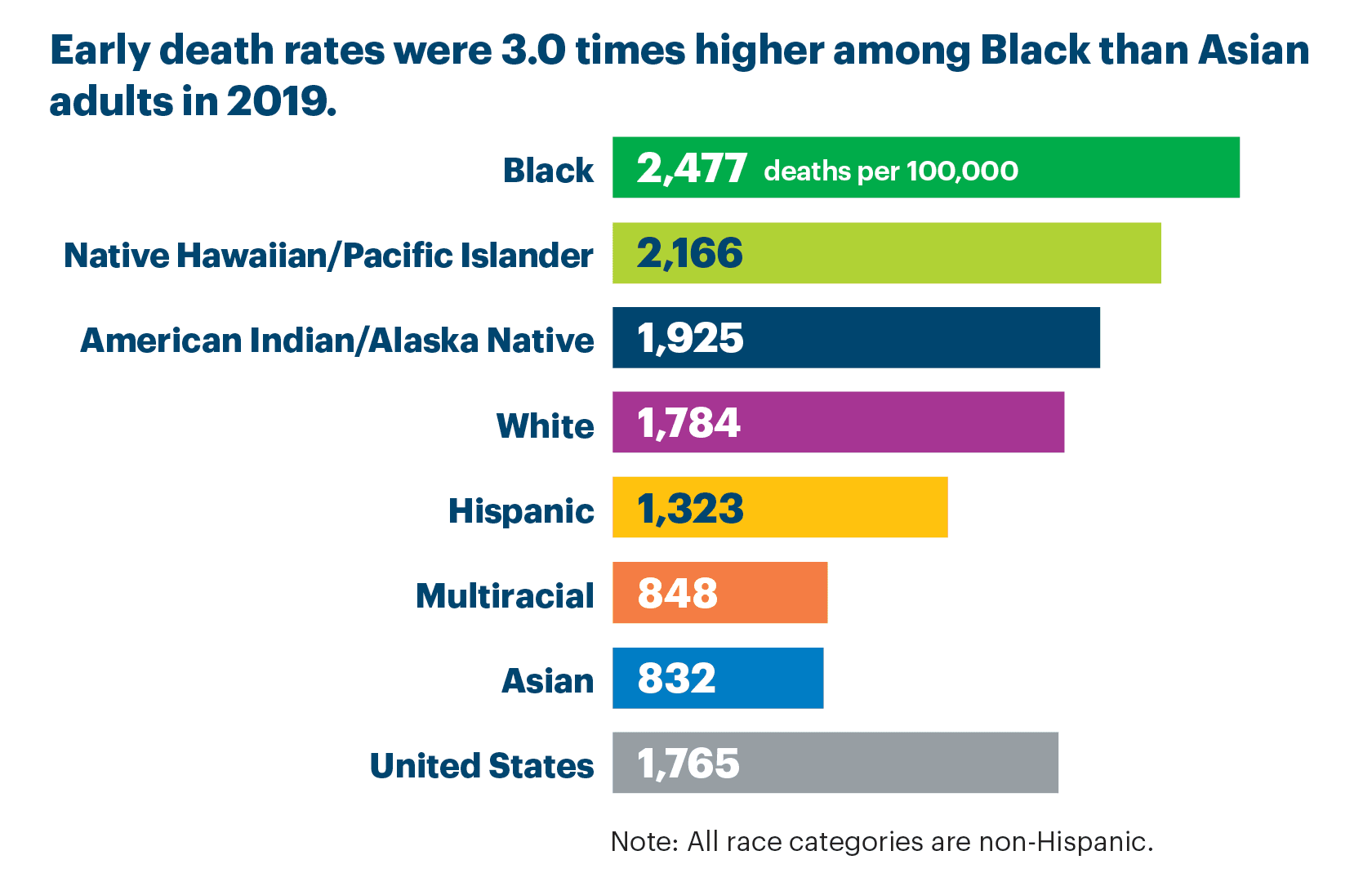
Hawaii (1,380). In 2019, the early death rate among adults ages 65-74 was significantly different across all racial and ethnic groups except for two groups with the lowest rates:
Asian (832 deaths per 100,000) and
multiracial (848) adults ages 65-74. The early death rate was 3.0 times higher among
Black (group with the highest rate at 2,477 deaths per 100,000) than Asian (group with the lowest rate) adults ages 65-74.
Prior to the COVID-19 pandemic, the
leading causes of death among older adults in the U.S. were heart disease, cancer, chronic lower respiratory diseases, stroke and Alzheimer’s disease, according to the CDC. However, COVID-19 was identified as the
third leading cause of death in 2020, according to an analysis of provisional death data. COVID-19 deaths rates were highest among older adults, males and American Indian/Alaska Native and Hispanic persons.
Early death racial disparity
Definition: Ratio of the racial or ethnic group with the highest early death rate to the non-Hispanic white rate among adults ages 65-74.
The
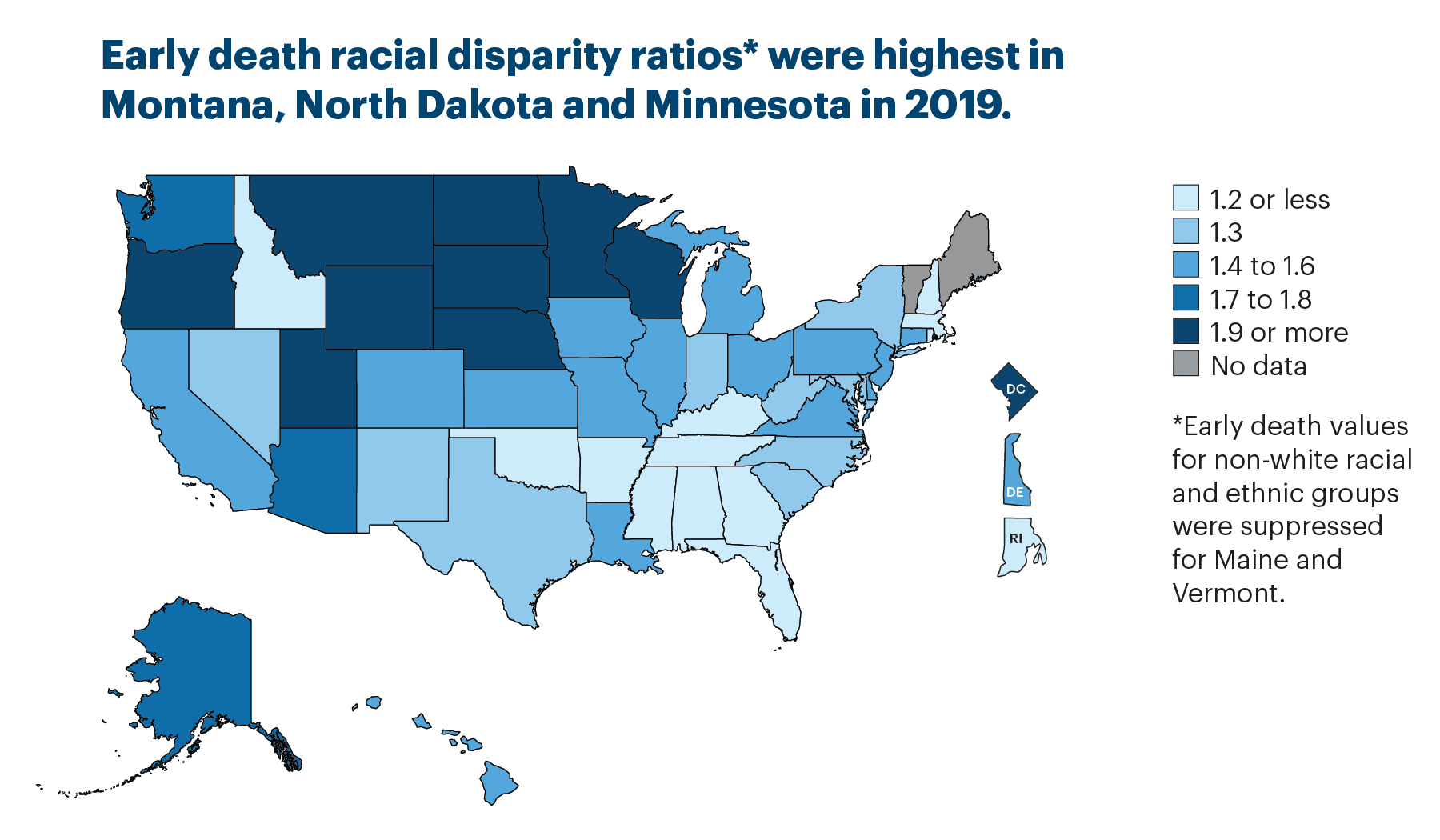
early death racial disparity ratio was 1.4 times higher among Black than white adults ages 65-74. States with the highest early death racial disparity ratios were concentrated in the Midwest and West.
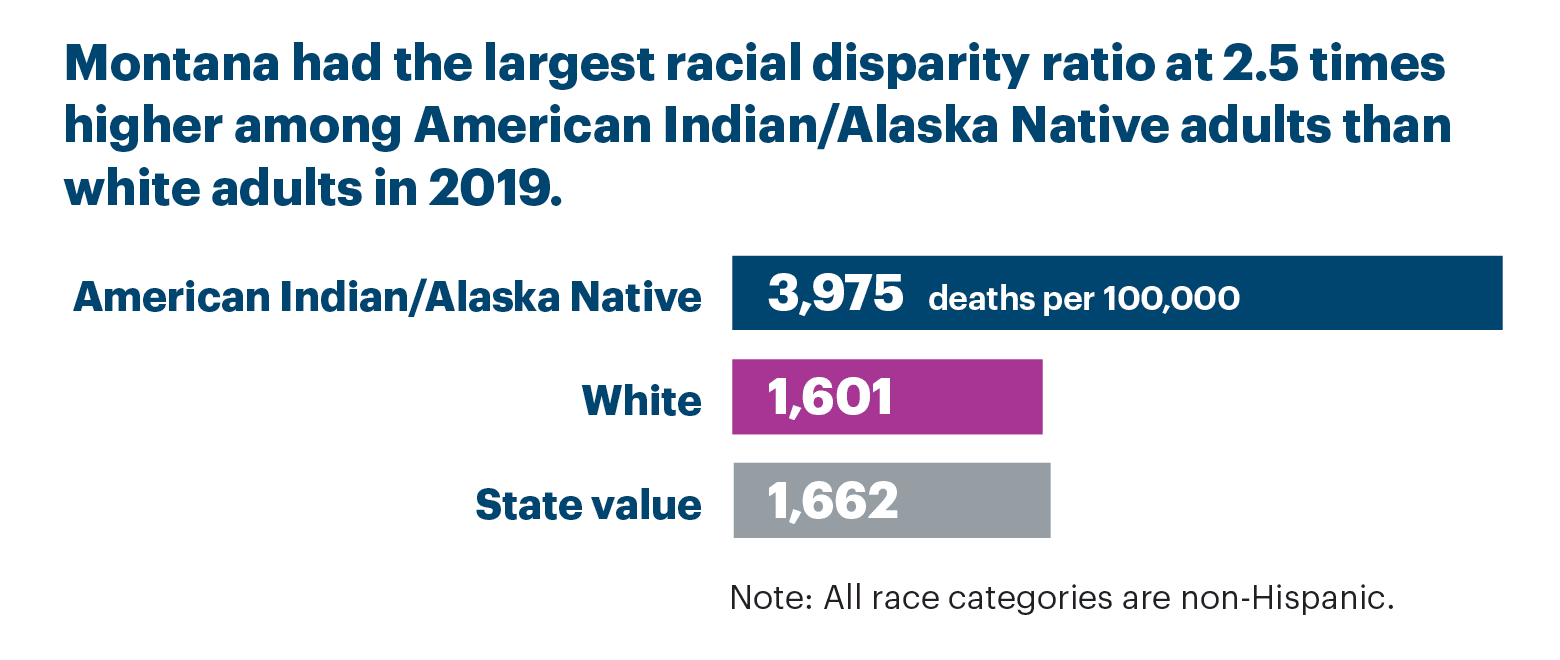
Montana had the largest early death racial disparity ratio at 2.5, followed by
North Dakota (2.3). In Montana, American Indian/Alaska Native older adults had the highest early death rate at 3,975 deaths per 100,000 compared with 1,601 among white older adults.
New Hampshire and
Rhode Island had early death racial disparity ratios of 1.0. Black older adults in Rhode Island had a similar early death rate as white older adults.
Early death racial disparity had a moderate negative correlation (r=-0.40) with the early death rate. States with higher racial disparity tended to have lower early death rates, while states with low racial disparity tended to have higher early death rates. Two examples are Minnesota and Kentucky.
- Minnesota had a high early death racial disparity ratio and a low early death rate (1,496 deaths per 100,000 adults ages 65-74). In Minnesota, the early death rate was 2.2 times higher among American Indian/Alaska Native (3,267 deaths per 100,000) than white (1,471) older adults.
- Kentucky, on the other hand, had a low early death racial disparity ratio and a high early death rate (2,344 deaths per 100,000 adults ages 65-74). In Kentucky, the early death rate was 1.1 times higher among Black (2,719 deaths per 100,000) than white (2,365) older adults.
Examining early death levels by race provides more depth and understanding of the challenges facing a state, challenges that overall early death rates can mask. Go to
Early Death Racial Disparity for a breakdown of all available racial and ethnic groups. For additional details on the method and rationale behind the disparity calculations see Methodology.
States with higher early death racial disparity ratios tended to have lower early death rates.
Definition: Deaths due to drug injury (unintentional, suicide, homicide or undetermined) per 100,000 adults ages 65-74.
In 2017-19, the
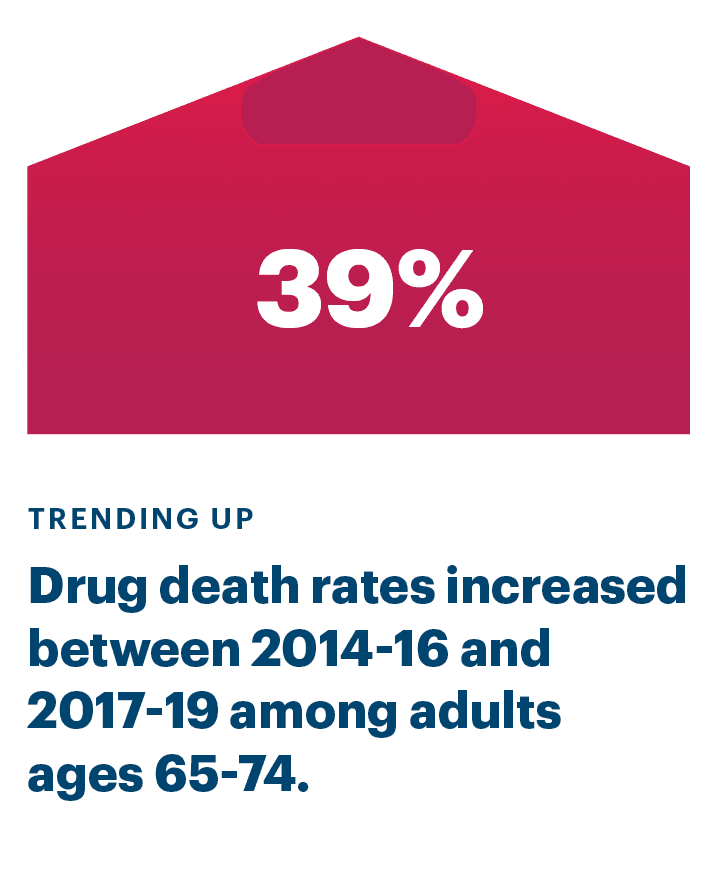
drug death rate was 10.3 deaths per 100,000 adults ages 65-74, corresponding to an estimated 9,417 deaths. This rate increased 39% — or 3,282 additional deaths — since 2014-16 (7.4 deaths per 100,000).
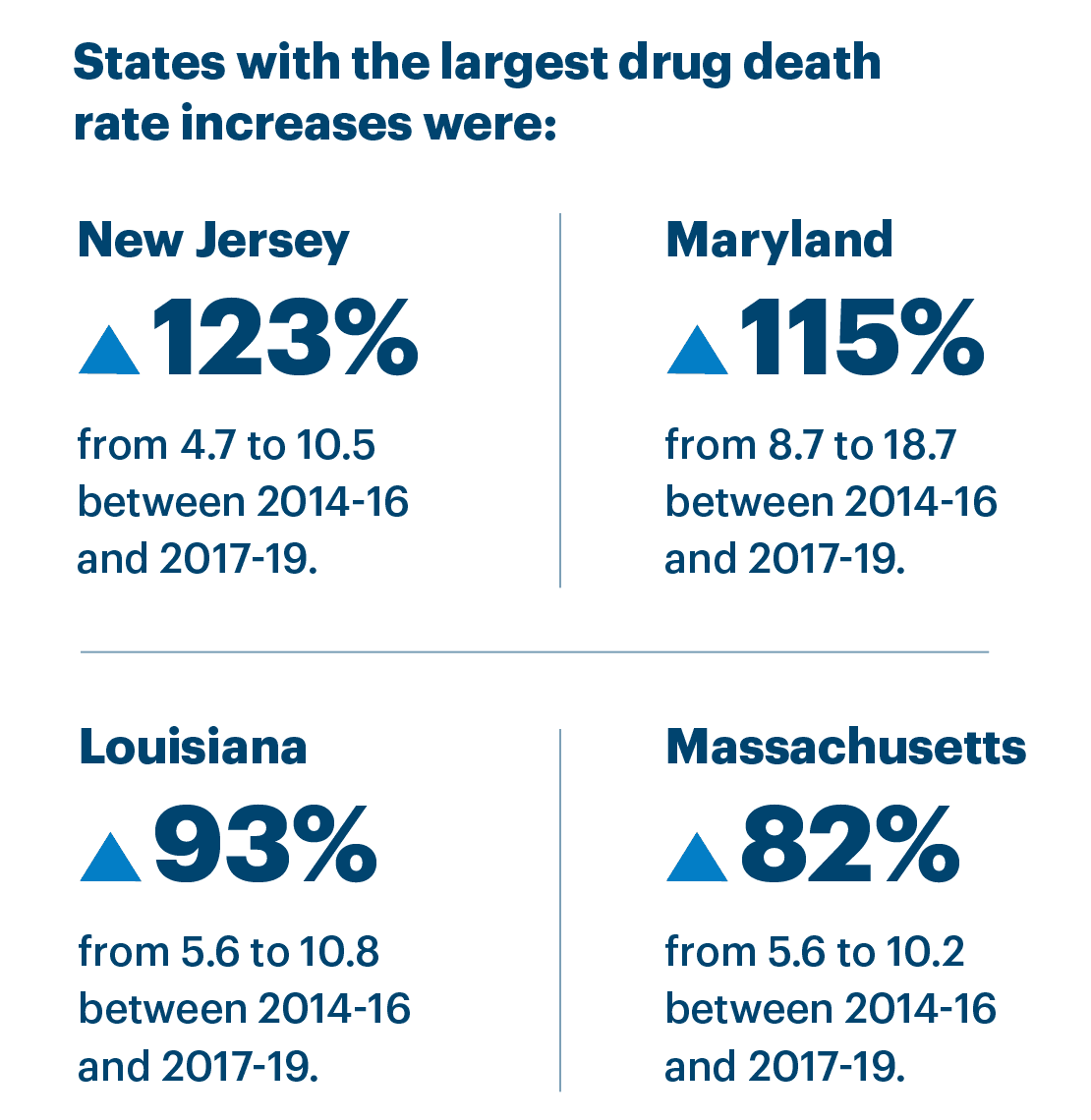
Between 2014-16 and 2017-19, the drug death rate increased in 15 states led by
New Jersey (4.7 to 10.5 deaths per 100,000),
Maryland (8.7 to 18.7),
Louisiana (5.6 to 10.8), and
Massachusetts (5.6 to 10.2).
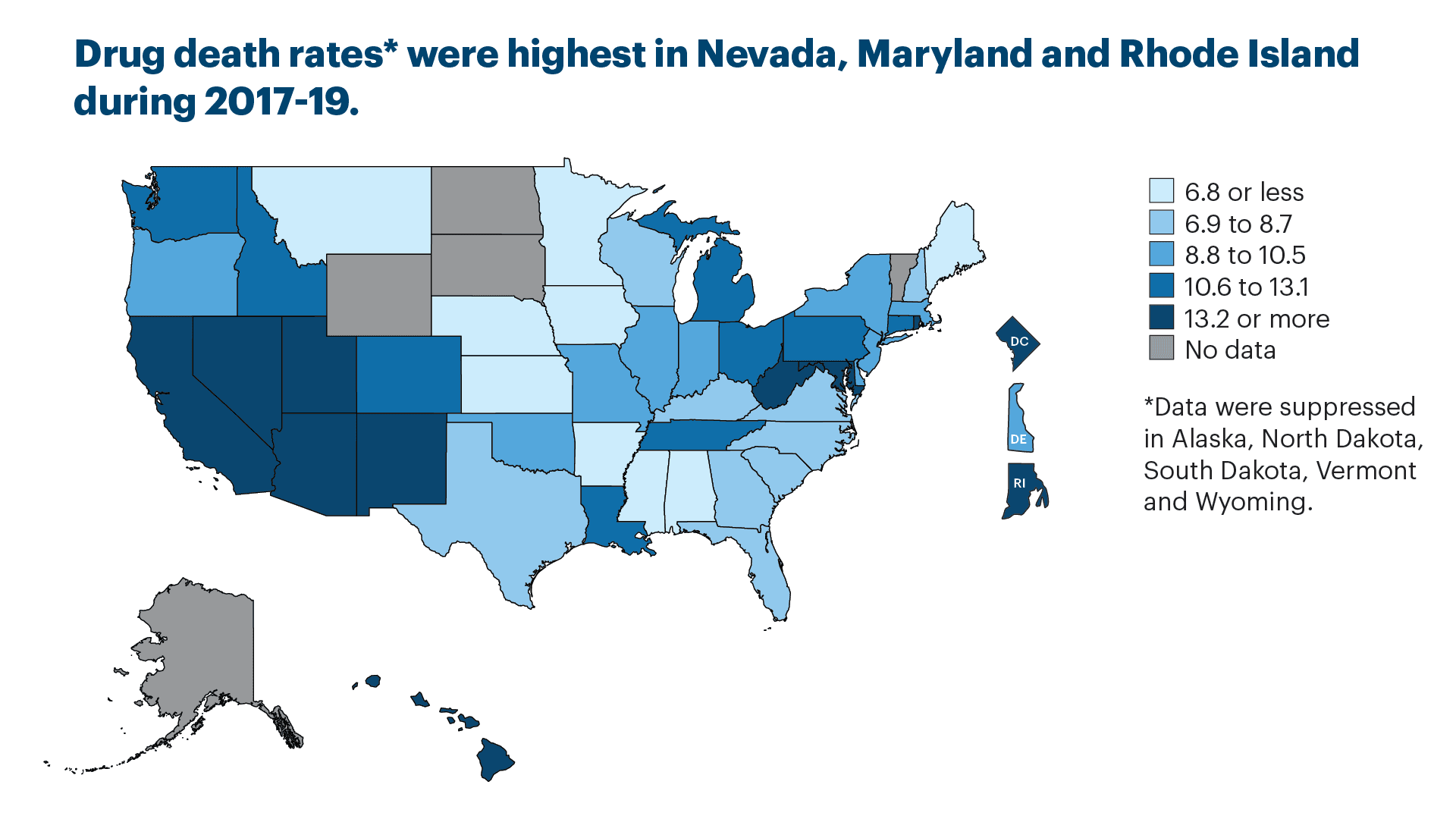
States with the highest drug death rates were in the West and Northeast.
Nevada,
Maryland,
Rhode Island and the
District of Columbia had drug death rates above 15.0 deaths per 100,000. Data were not available in Alaska, North Dakota, South Dakota, Vermont and Wyoming.
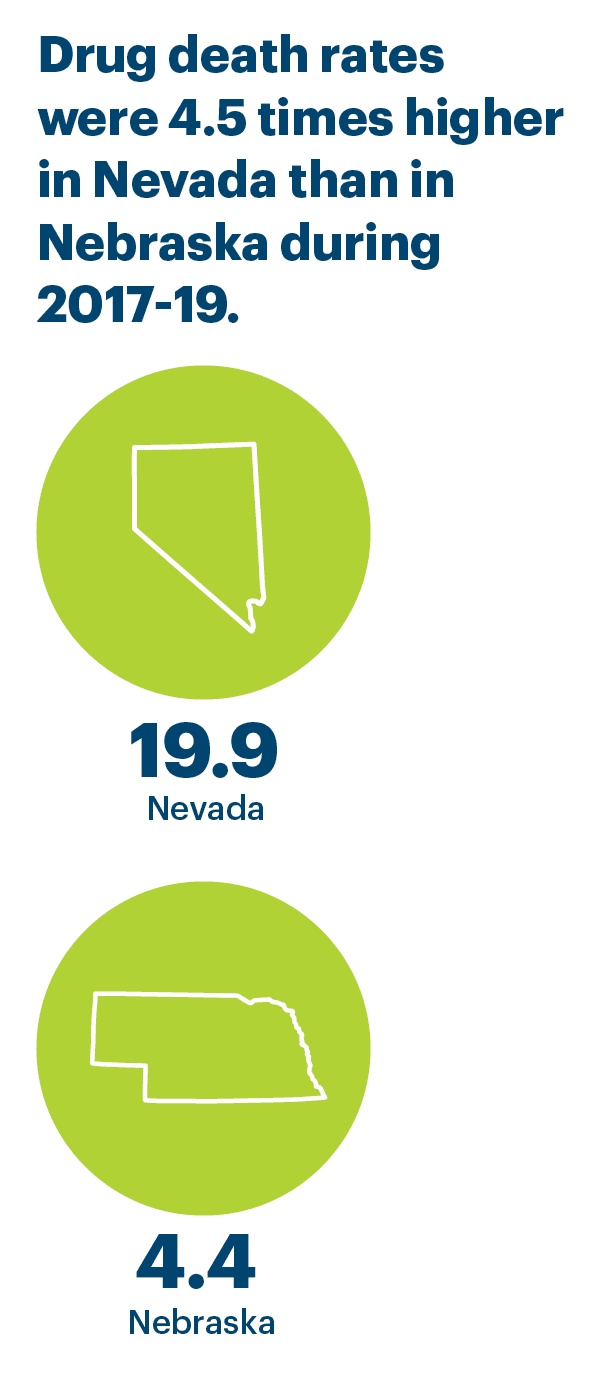
Drug deaths varied by state. In 2017-19, the drug death rate among adults ages 65-74 was 4.5 times higher in
Nevada (19.9 deaths per 100,000) than in
Nebraska (4.4). The
District of Columbia (64.4 deaths per 100,000) had a drug death rate 14.6 times higher than Nebraska.
Drug overdoses are the
leading cause of injury death in the U.S., according to the CDC. Drug abuse is particularly dangerous among older adults because of their reduced ability to
metabolize medications due to age-related changes in the liver. Older adults are more likely to be taking multiple
prescription medications. They may also be taking
non-prescription medications and
dietary-supplements, which can further complicate drug interactions that can lead to drug-induced death.
Definition: Deaths due to intentional self-harm per 100,000 adults ages 65 and older.
In 2017-19, the
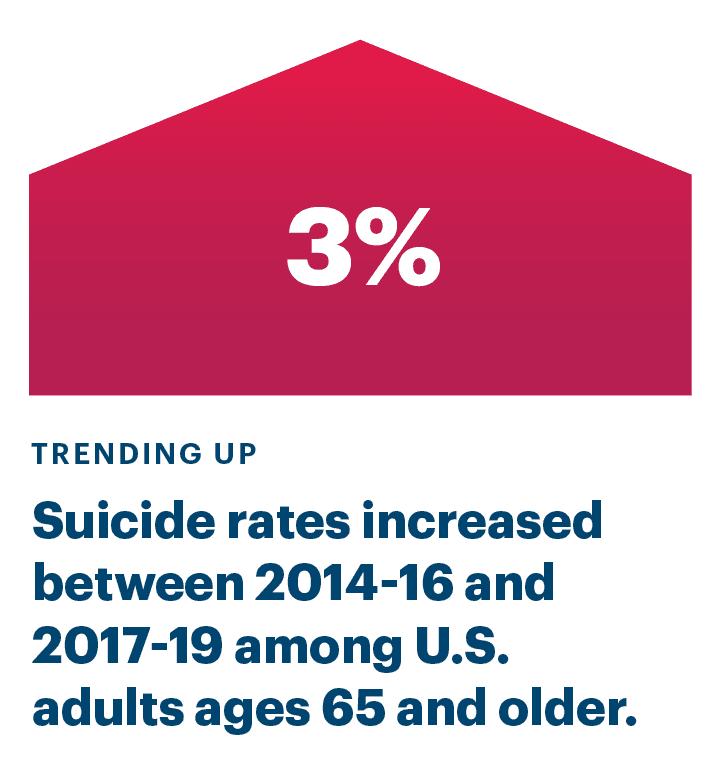
suicide rate among adults ages 65 and older was 17.1 deaths per 100,000. This corresponded to an estimated 26,843 suicide deaths among adults ages 65 and older during 2017-19. Fifteen states had suicide rates of 20.0 deaths per 100,000 or greater. States with the highest suicide rates were clustered in the West, except for
Maine. The rate of suicide has increased 3% since 2014-16 (16.6 deaths per 100,000), an increase of 3,025 deaths.
Between 2014-16 and 2017-19, the suicide rate significantly increased in
Nebraska (9.7 to 15.2 deaths per 100,000) and Maine (17.4 to 24.4).
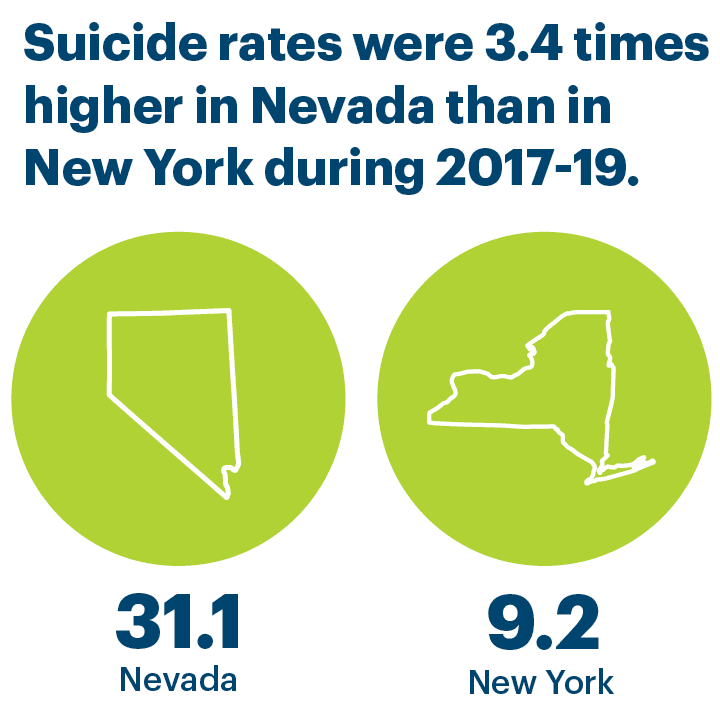
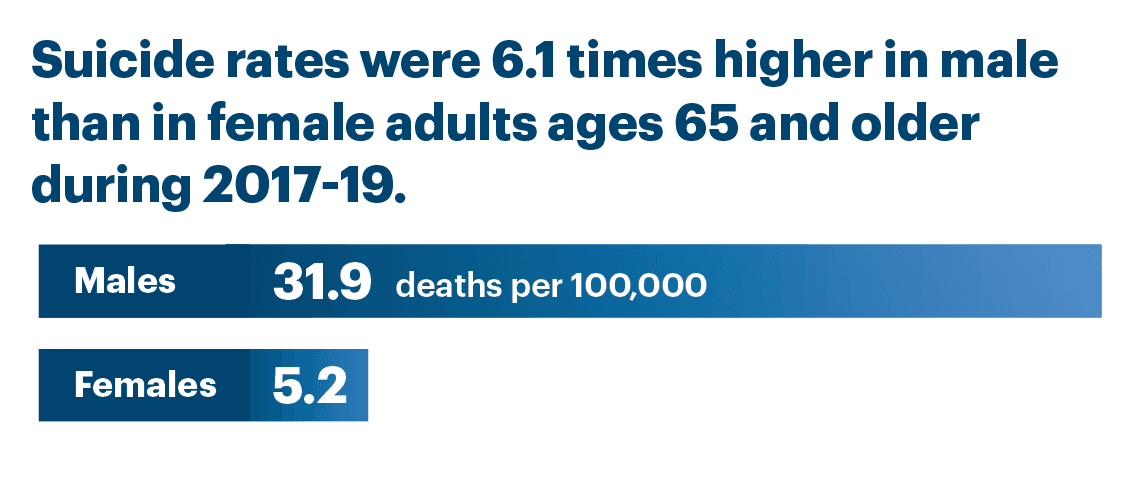
Suicide varied by state, gender and age. In 2017-19, the suicide rate among adults ages 65 and older was:
- 3.4 times higher in Nevada (31.1 deaths per 100,000) than in New York (9.2).
- 6.1 times higher among males (31.9 deaths per 100,000) than females (5.2).
- 1.3 times higher among those ages 85 and older (19.8 deaths per 100,000) than those ages 65-74 (15.8); the rate significantly increased with each increase in age group.
Suicide affects people of all ages, races and ethnicities. According to an Administration on Aging and the Substance Abuse and Mental Health Services Administration, recorded
suicide attempts among older adults are usually more lethal than those among younger age groups. Older adults are nearly
twice as likely to use firearms as a means of suicide compared with younger adults.
Definition: Percentage of adults ages 65 and older who reported their mental health was not good 14 or more days in the past 30 days.
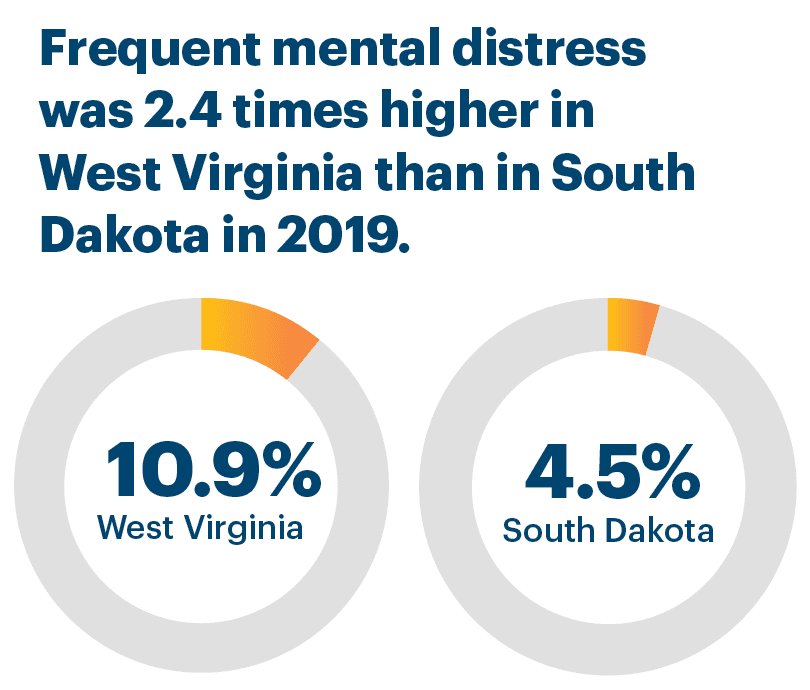
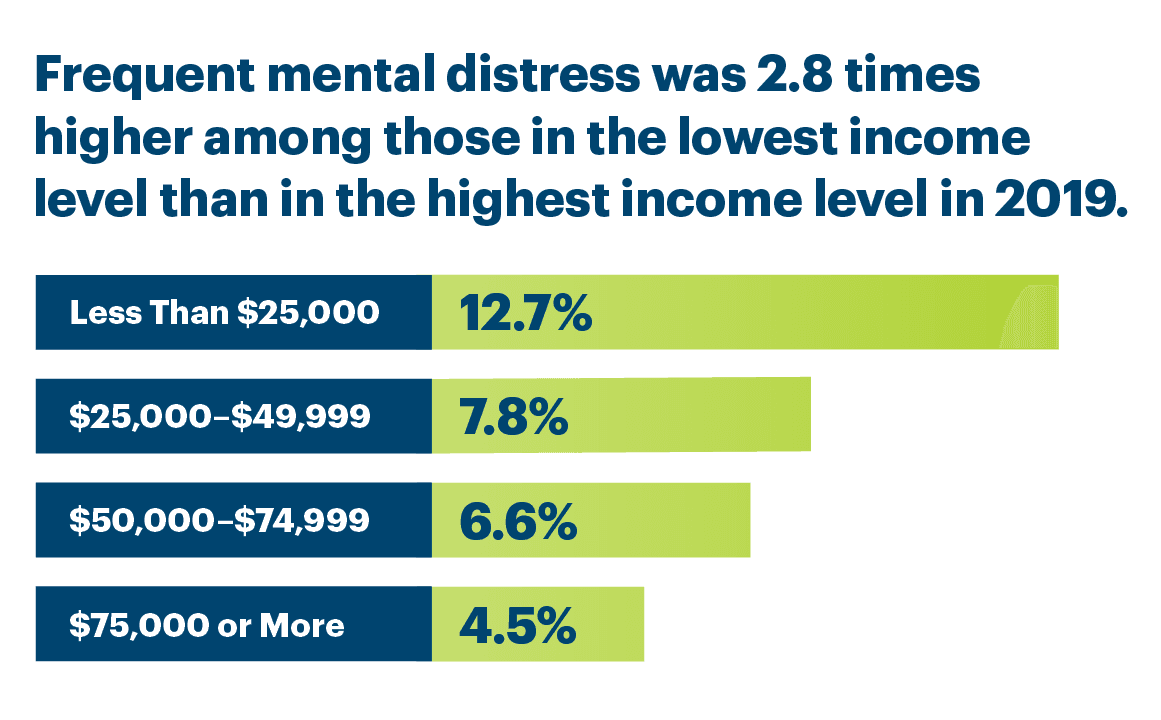
Frequent mental distress varied by state, gender, education and income. In 2019, frequent mental distress among adults ages 65 and older was:

 Alabama
 Alaska
 Arizona
 Arkansas
 California
 Colorado
 Connecticut
 Delaware
 District of Columbia
 Florida
 Georgia
 Hawaii
 Idaho
Idaho Illinois
 Indiana
 Iowa
Iowa Kansas
 Kentucky
 Louisiana
 Maine
Maine Maryland
 Massachusetts
 Michigan
 Minnesota
 Mississippi
 Missouri
 Montana
 Nebraska
 Nevada
 New Hampshire
 New Jersey
 New Mexico
 New York
 North Carolina
 North Dakota
 Ohio
Ohio Oklahoma
 Oregon
 Pennsylvania
 Rhode Island
 South Carolina
 South Dakota
 Tennessee
 Texas
Texas Utah
Utah Vermont
 Virginia
 Washington
 West Virginia
 Wisconsin
 Wyoming
 US SummaryAppendixMeasures TableData Source DescriptionsThe Team