Before the COVID-19 pandemic, food insecurity among older adults dropped to the lowest point in Senior Report history, however, nearly 1 in 10 older adults were living in poverty with a large disparity by race and ethnicity. High-speed internet increased in older adult households. Risk of social isolation continues to play a role in understanding the health of seniors.
Definition: Percentage of adults ages 60 and older who faced the threat of hunger in the past 12 months.
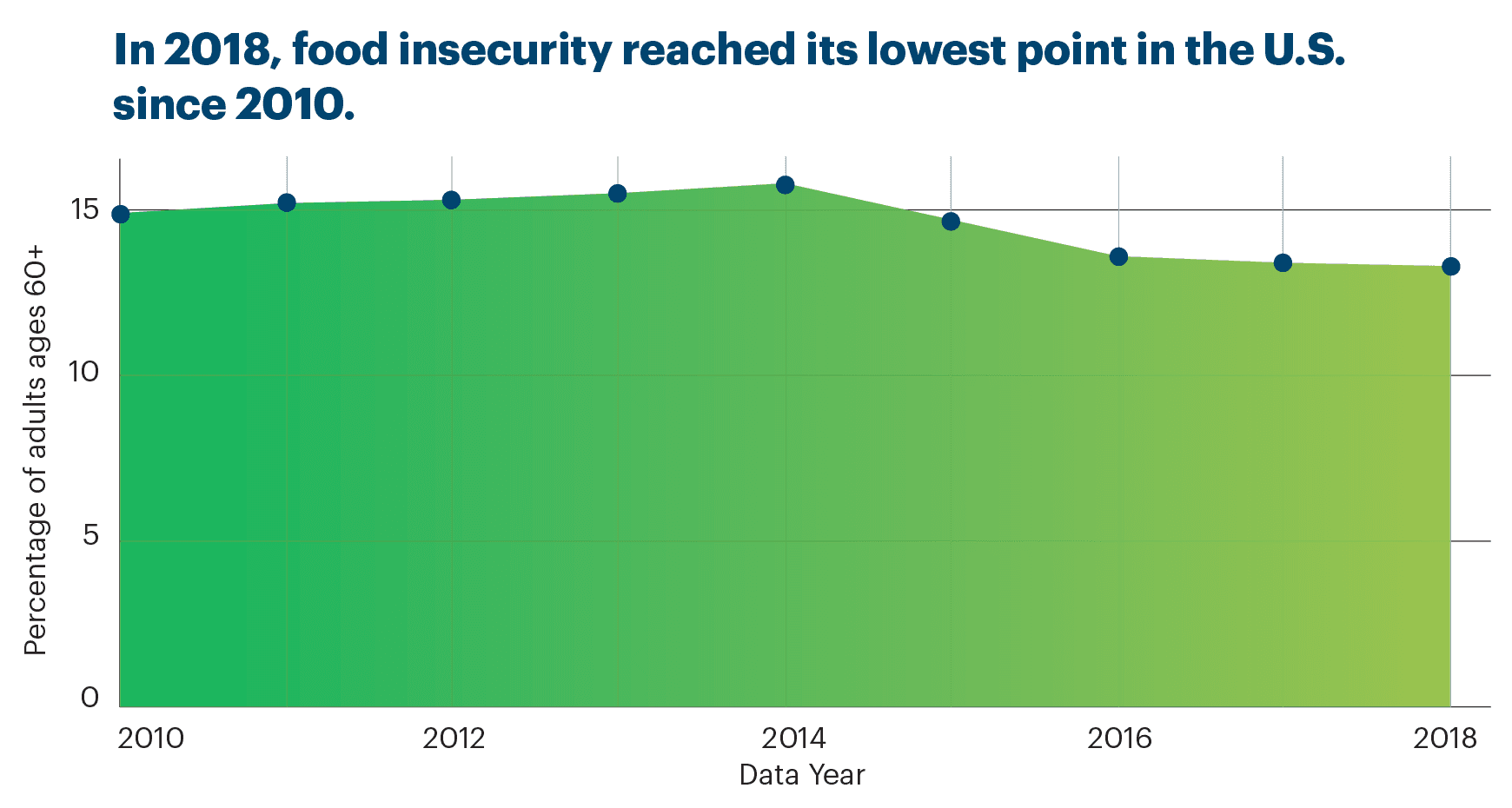
Food insecurity decreased 16% between 2014 and 2018, from 15.8% to 13.3% of adults ages 60 and older, the lowest rate in the report’s history. States with a higher percentage of older adults experiencing food insecurity were in the South.
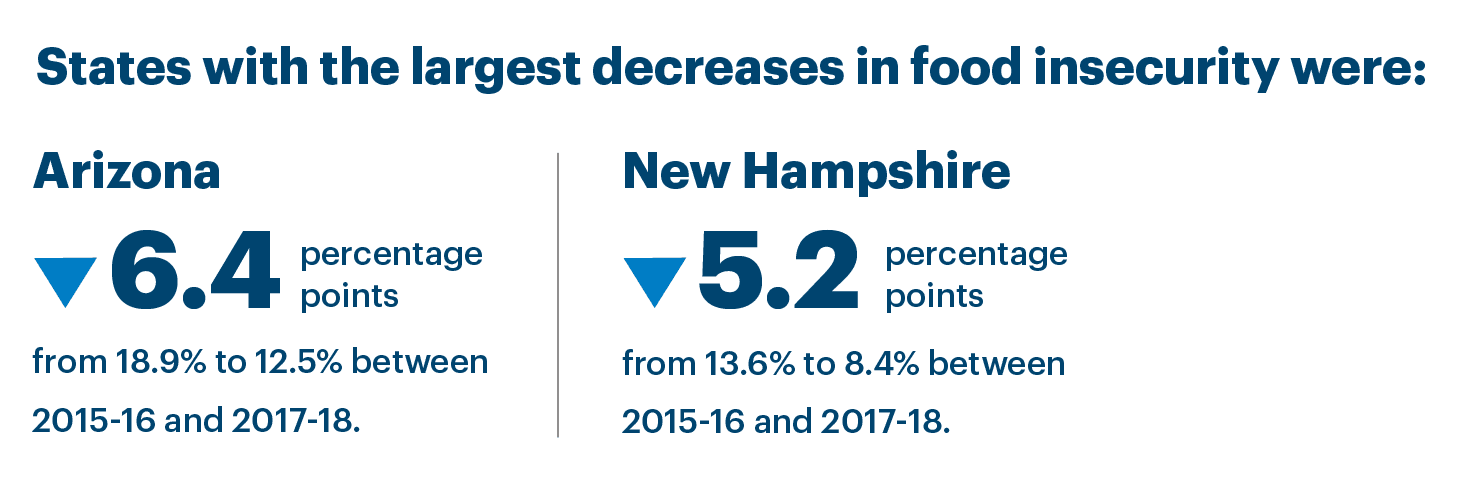
Between 2015-16 and 2017-18, food insecurity decreased 2.0 percentage points or more in 17 states. The largest decreases occurred in
Arizona (18.9% to 12.5%),
New Hampshire (13.6% to 8.4%),
Alabama (19.3% to 15.1%) and
Pennsylvania (16.5% to 12.3%). On the other hand,
Nevada (14.4% to 20.9%),
Kansas (10.2% to 15.5%),
Colorado (5.8% to 10.1%),
Florida (11.3% to 14.1%) and the
District of Columbia (17.7% to 21.3%) all increased more than 2.0 percentage points.
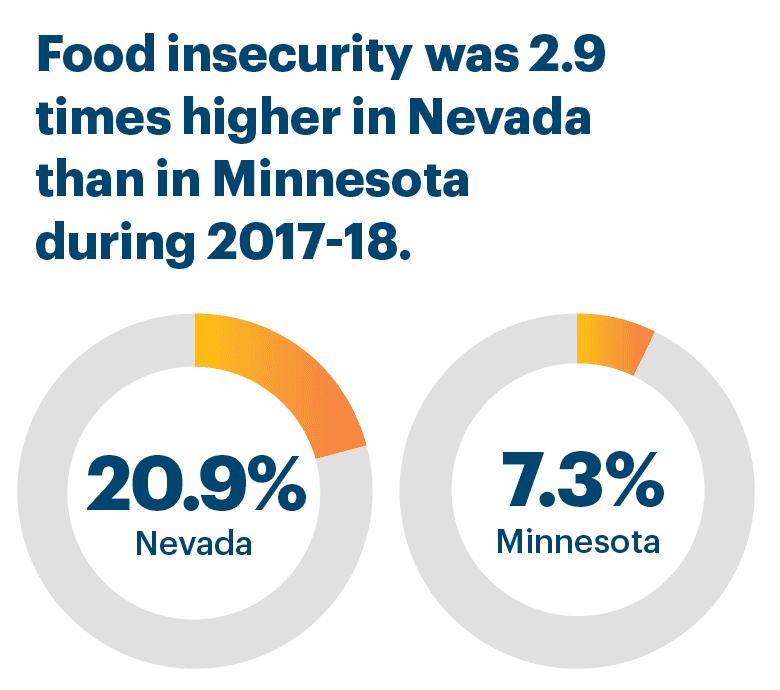
Large disparities persisted by state. In 2017-18, food insecurity among adults ages 60 and older was 2.9 times higher in
Nevada (20.9%) than in
Minnesota (7.3%).
Despite reaching a low point in 2018, older adults are experiencing increases in food insecurity due to the COVID-19 pandemic.
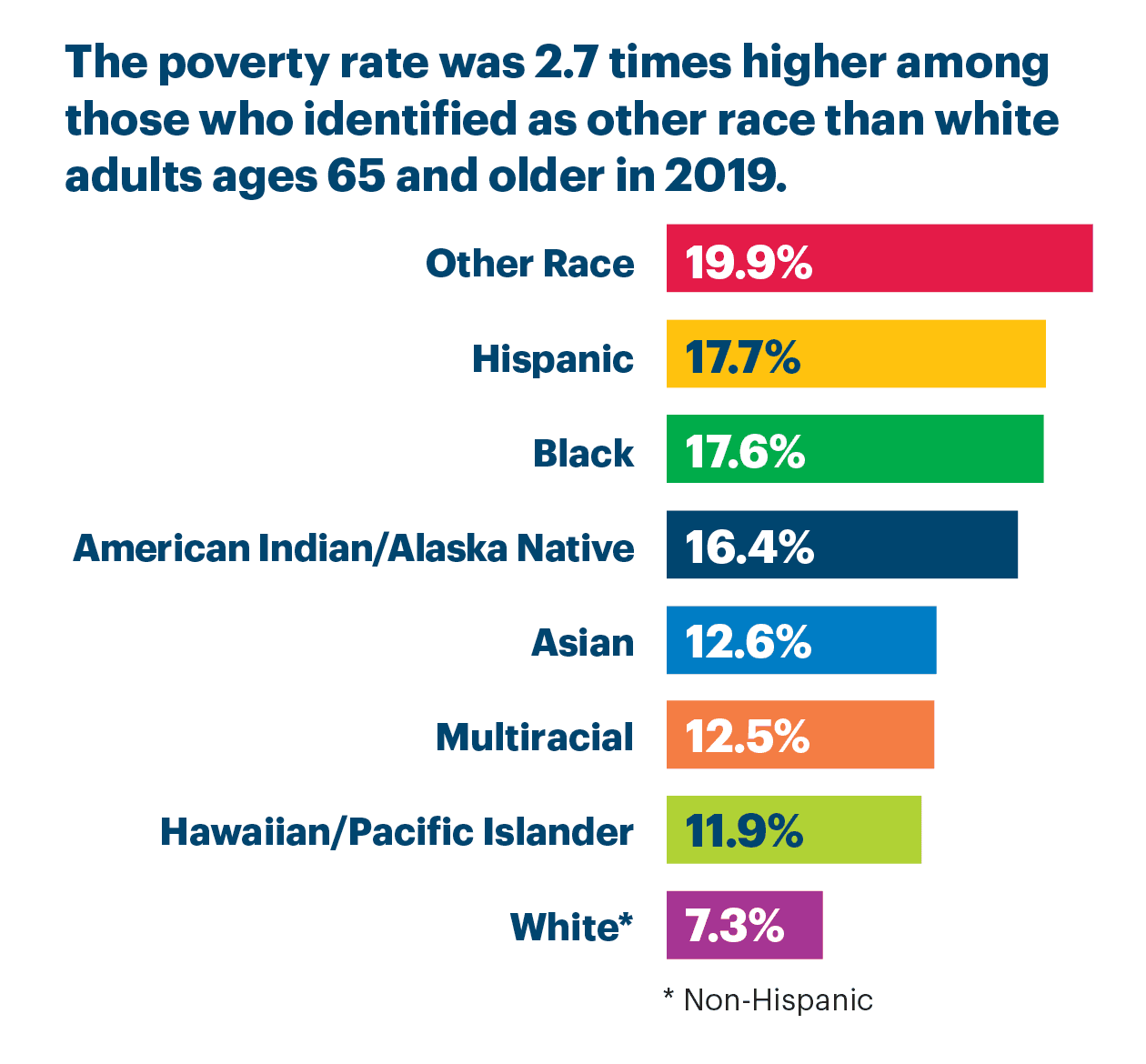
Definition: Ratio of the racial or ethnic group with the highest poverty rate to the non-Hispanic white rate among adults ages 65 and older.
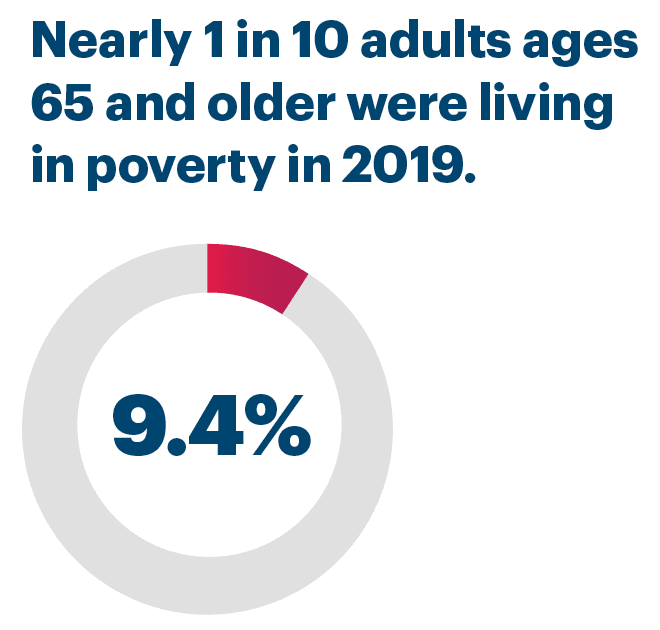
In 2019, nearly 1 in 10 (9.4%) adults ages 65 and older were living in
poverty, affecting almost 5 million older adults. The poverty rate was
2.7 times higher among adults who identified as
other race (the group with the highest rate) than
white adults (the group with the lowest rate, significantly lower than all other groups). Poverty was also more than 2 times higher among
Hispanic (2.4),
Black (2.4) and
American Indian/Alaska Native (2.2) older adults than those who identified as white.
Connecticut had the largest racial disparity ratio at 7.3, followed by
Rhode Island (6.5) and
Pennsylvania (5.8). In Connecticut, older adults who identified as other race had the highest poverty rate at 39.2% compared with 5.4% of white older adults.
West Virginia and
Alaska had the smallest racial disparity ratios, both at 1.6.
Hawaii had a racial disparity ratio of 1.0 as white older adults had the highest poverty rate (10.6%).
According to the CDC,
inequities in the social determinants of health, such as poverty, are driven by the negative effects of interpersonal and structural racism, placing communities of color at risk for poor health outcomes.. Addressing the social determinants of health is important for reducing health disparities related to unfavorable social and economic conditions, as well as improving overall health, according to a recent KFF
report.
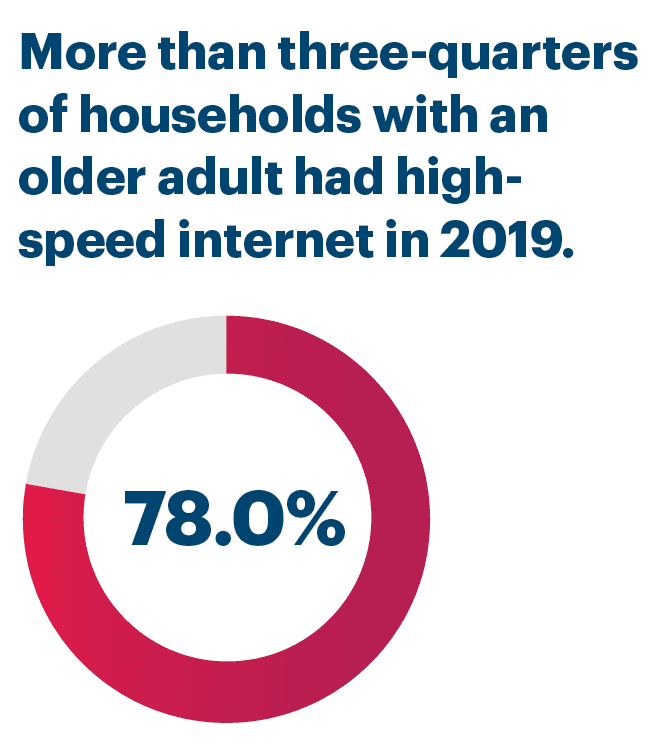
Definition: Percentage of households with adults ages 65 and older that have a broadband internet subscription and a computer, smartphone or tablet.
In 2019, 78.0% of households with adults ages 65 and older had
high-speed internet, an increase of 10% since 2016 (71.1%) and an increase of 2% since 2018 (76.1%). This rate was lower than the 88.3% of households of all ages with high-speed internet. In 15 states, more than 80.0% of households with older adults had high-speed internet.
Between 2018 and 2019, the percentage of households with adults ages 65 and older with high-speed internet significantly increased in 26 states, led by a 5% increase in
West Virginia from 66.1% to 69.3%. Despite the increase in high-speed internet in West Virginia, the state ranked No. 49, behind all other states except
Mississippi.
High-speed internet access varied by state. In 2019, high-speed internet in households with adults ages 65 and older was 1.3 times higher in
Utah (86.0%) than in Mississippi (63.8%). High-speed internet had a moderate negative association with rural population (r=-0.52), meaning states with larger rural populations had a lower prevalence of high-speed internet.
Being able to access high-speed internet has been vital during the COVID-19 pandemic. It allows older adults the opportunity to safely interact with others through video calling platforms, potentially preventing or reducing
loneliness and social isolation through
social connections.
Telehealth has also been key for providing essential health care during the pandemic according to the CDC.
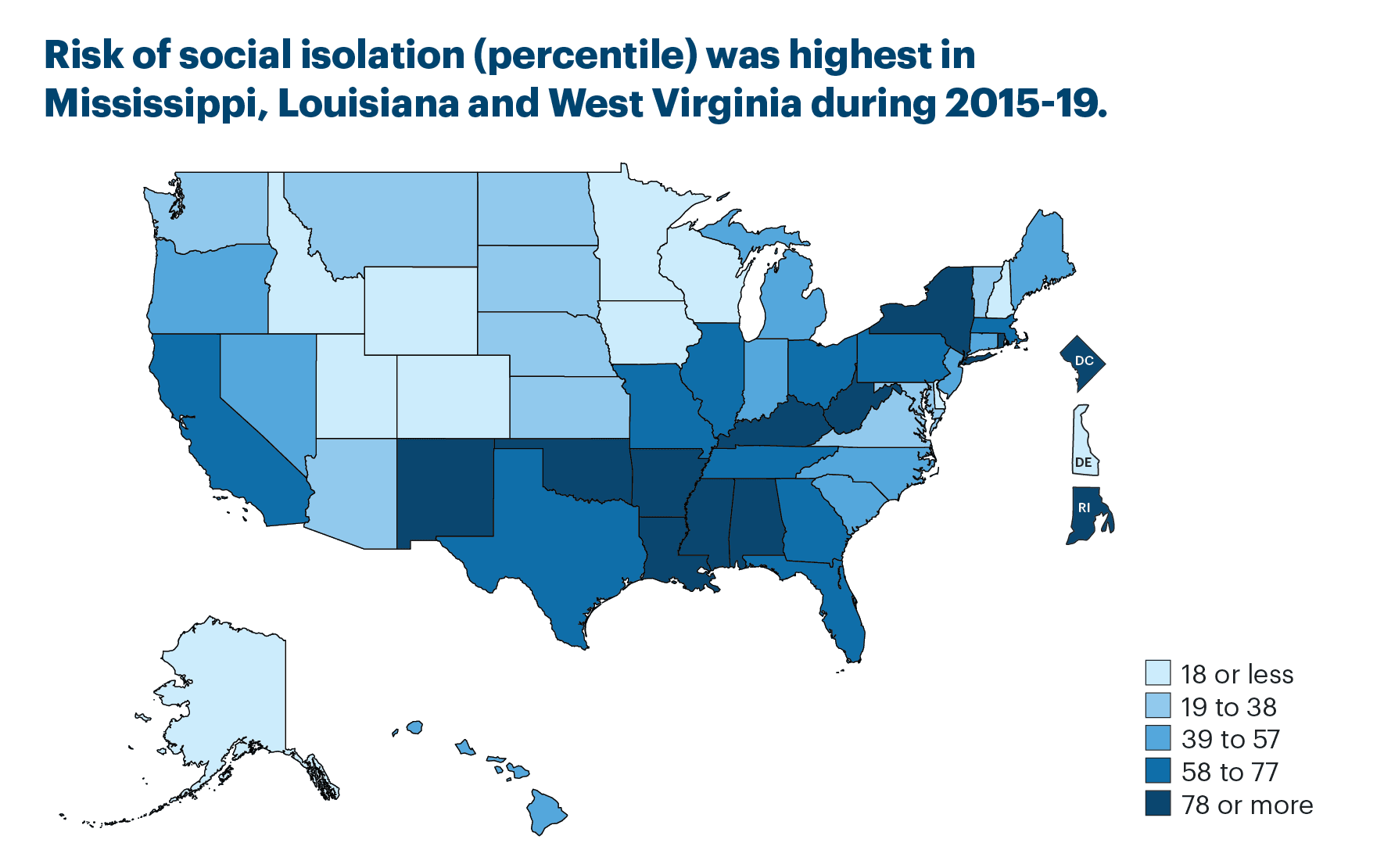
Definition: Percentile of the mean z-scores for the following risk factors in adults ages 65 and older: poverty; living alone; divorced, separated or widowed; never married; disability; and independent living difficulty.
During 2015-2019, states throughout the West and Midwest had the lowest
risk of social isolation among older adults, while states in the South had the highest risk. Older adults in the
District of Columbia,
New Mexico,
New York and
Rhode Island also had higher risk of social isolation. Risk of social isolation was highest in
Mississippi (97) and lowest in
Utah (1). Seniors experiencing social isolation are at
increased risk of dementia, depression, acute and chronic illnesses, poor health status and premature death.
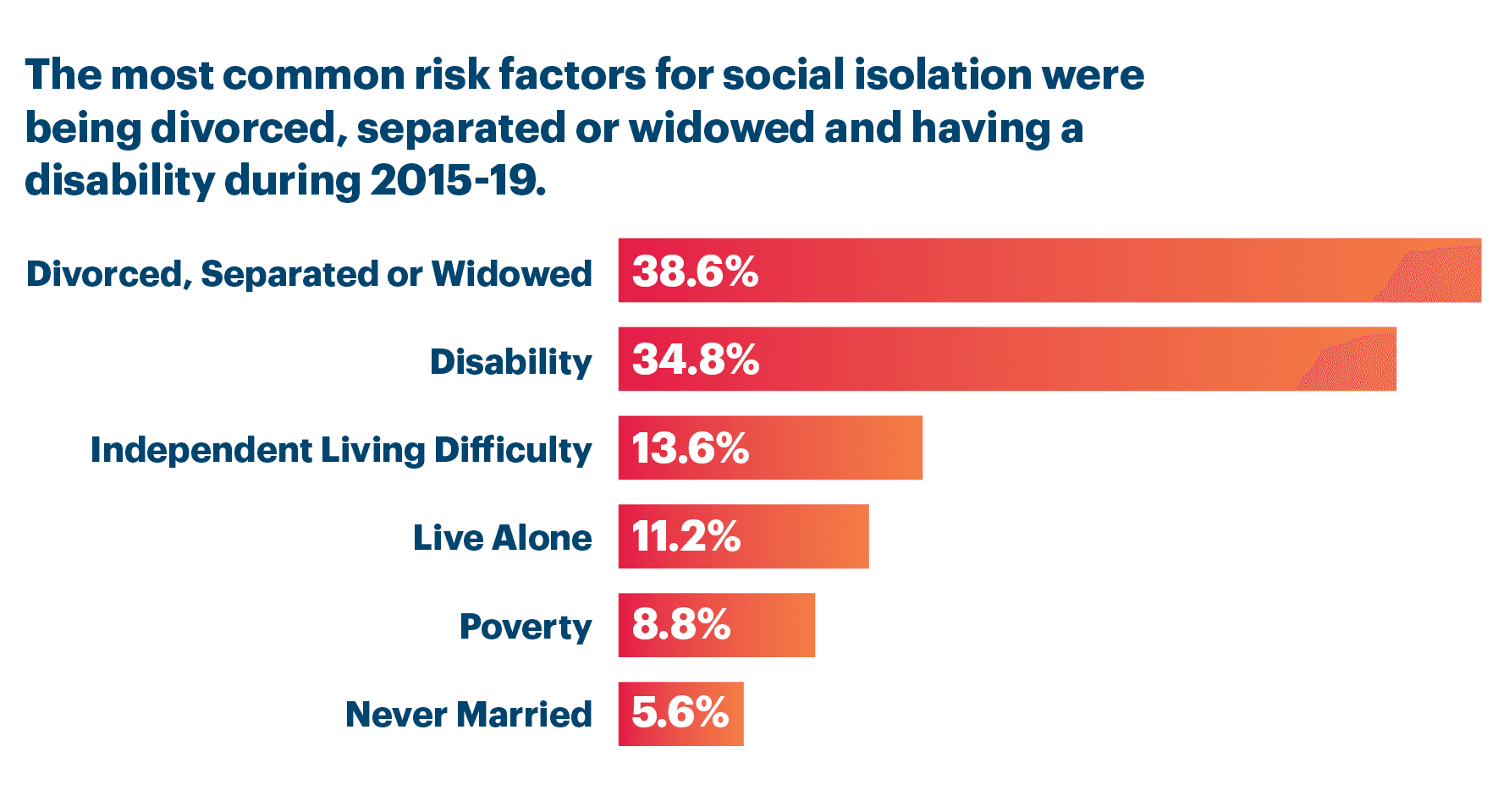
Nationally, the most common risk factors for social isolation were being divorced, separated or widowed, followed by having a disability. Nearly 40% of older adults were divorced, separated or widowed. Having never married was the least common risk factor at 5.6% of adults ages 65 and older.
The COVID-19 pandemic has negatively affected the mental and physical health of seniors from the impact of isolation from social distancing. Before the pandemic, the risk of social isolation for seniors in a given state was positively correlated with higher rates of frequent mental distress (r=0.64), early death (r=0.63), food insecurity (r=0.66) and preventable hospitalizations (r=0.63). However, the increase in high-speed internet among households with an older adult (up 10% between 2016 and 2019, from 71.1% to 78.0%) may have mitigated some of the negative effects of
social isolation exacerbated by the COVID-19 pandemic. Before the pandemic began, states with higher rates of high-speed internet among senior households tended to have lower risk of social isolation (r=-0.59).

 Alabama
 Alaska
 Arizona
 Arkansas
 California
 Colorado
 Connecticut
 Delaware
 District of Columbia
 Florida
 Georgia
 Hawaii
 Idaho
Idaho Illinois
 Indiana
 Iowa
Iowa Kansas
 Kentucky
 Louisiana
 Maine
Maine Maryland
 Massachusetts
 Michigan
 Minnesota
 Mississippi
 Missouri
 Montana
 Nebraska
 Nevada
 New Hampshire
 New Jersey
 New Mexico
 New York
 North Carolina
 North Dakota
 Ohio
Ohio Oklahoma
 Oregon
 Pennsylvania
 Rhode Island
 South Carolina
 South Dakota
 Tennessee
 Texas
Texas Utah
Utah Vermont
 Virginia
 Washington
 West Virginia
 Wisconsin
 Wyoming
 US SummaryAppendixMeasures TableData Source DescriptionsThe Team