We appreciate you taking the time to help America’s Health Rankings better understand our audiences. Your feedback will allow us to optimize our website and provide you with additional resources in the future. Thank you.
Please select one option which best describes your profession or field of expertise
Journalist or media professional
Health Policy Professional
Public health professional (state, local, or community level)
Across the United States, nearly a quarter of adults age 65 and older are at risk for social isolation, defined as the objective absence of social relationships. Along with a variety of physical
risks, social isolation accounts for billions in health care costs, including an estimated $6.7 billion
annually in Medicare expenditures.
Strong social connections play a vital role in improving overall quality of life, supporting independence and contributing to a greater sense of purpose and well-being for older adults.
America’s Health Rankings®measures several factors that contribute to social isolation among older adults, including:
According to America’s Health Rankings, risk of social isolation among adults age 65 and older varies greatly by geography, both among states and at the county level.
States with lower overall risk often have smaller proportions of older adults living in poverty or experiencing disability, while states with higher risk tend to face greater challenges across these and other contributing factors.
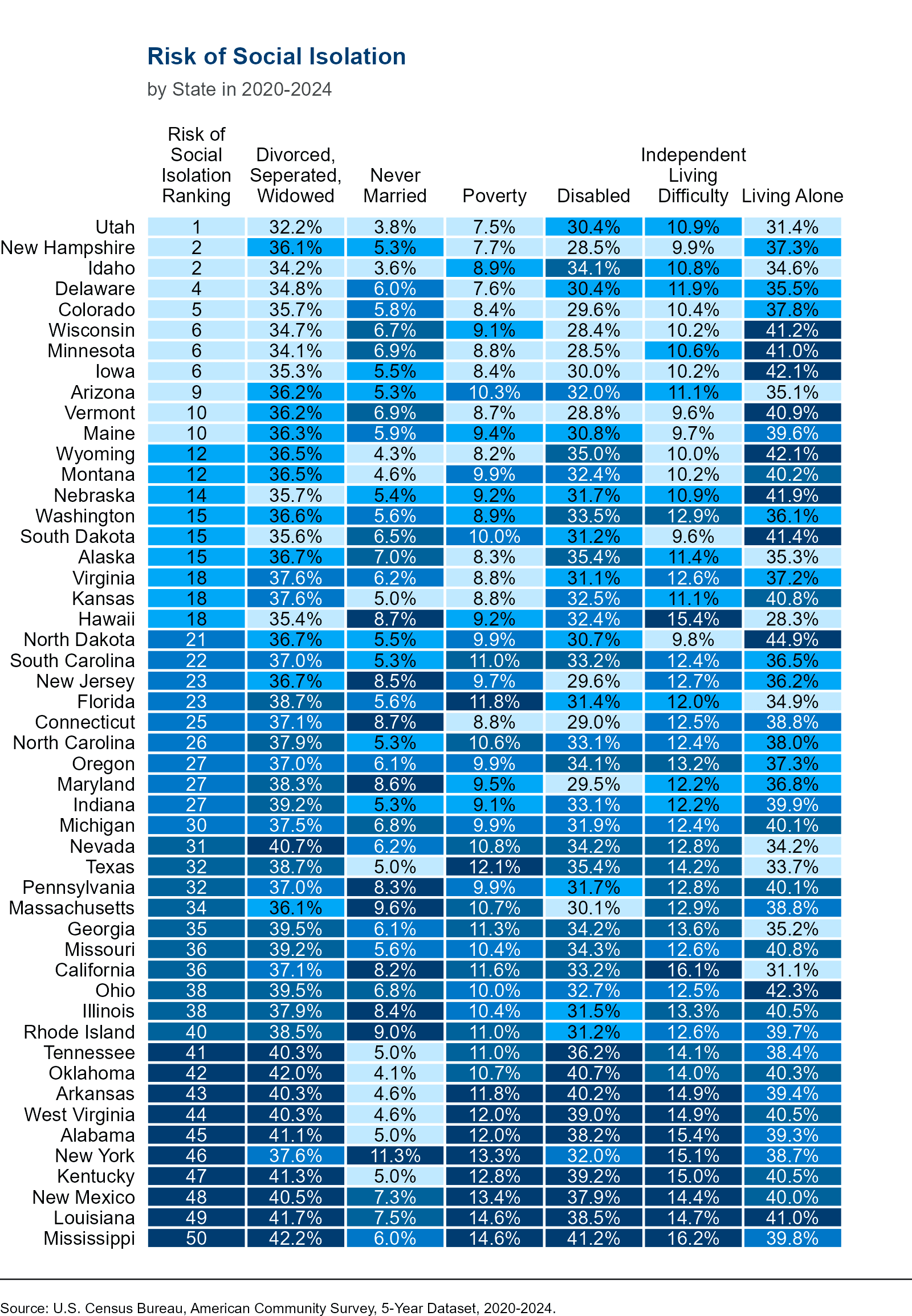
Rates of some of these risk factors were higher than others: 37.9% of adults age 65 and older were divorced, separated or widowed, while 10.8% lived in poverty in 2020-2024.
There were also differences between states. For example, the share of older adults who were divorced, separated or widowed ranged from 32.2% in Utah to 42.2% in Mississippi, while poverty among older adults ranged from 7.5% in Utah to 14.6% in both Louisiana and Mississippi.
Similar variation exists across other factors, including the proportion of older adults who have never married (3.6% in Idaho to 11.3% in New York) and those living alone (28.3% in Hawaii to 44.9% in North Dakota).
These differences illustrate how underlying factors can shape risk of social isolation, and also reinforce that no single factor alone explains variation across states.
County-Level Data Reveal Differences Within States
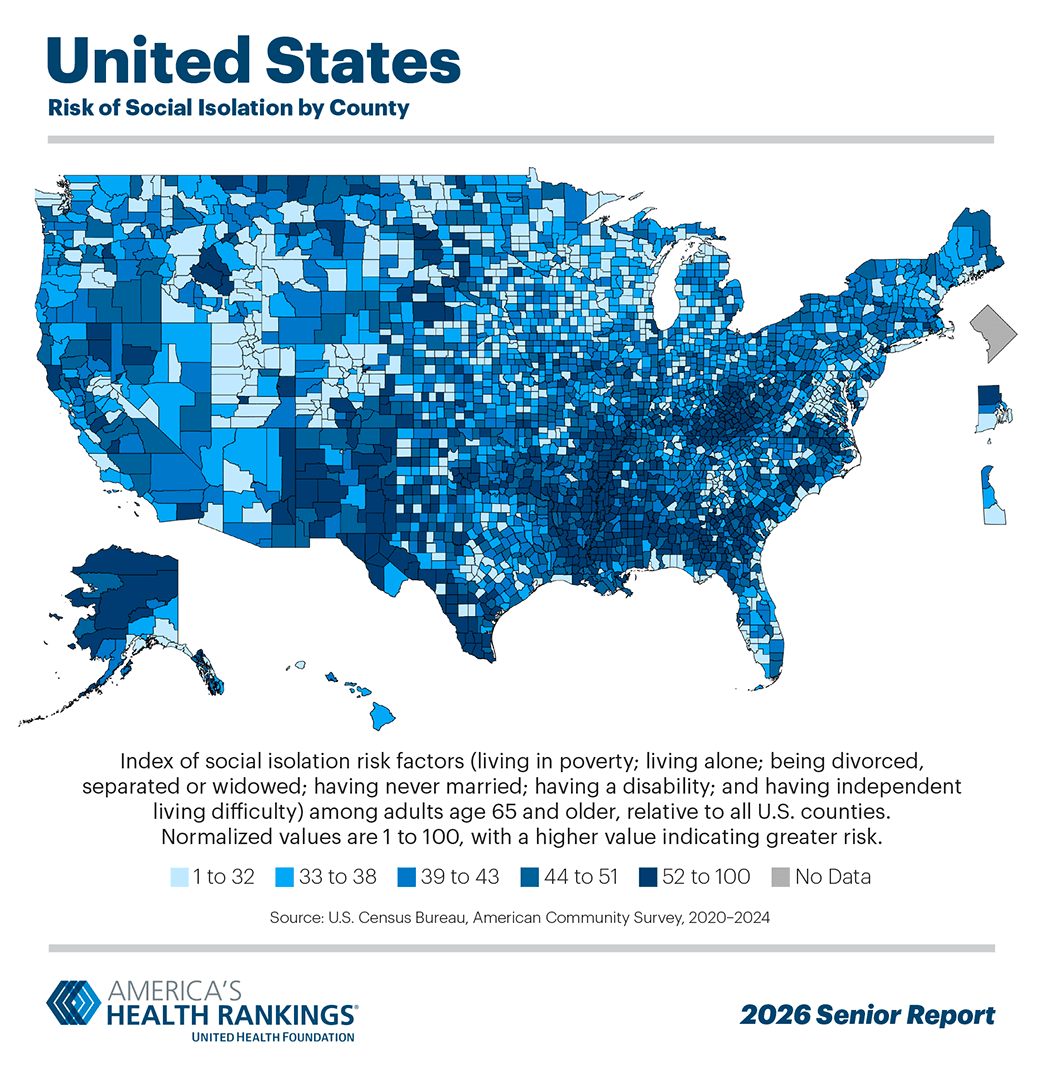
While state rankings provide a high-level view of the landscape for older adults, county-level data show that risk of social isolation can vary widely even within a given state.
A county-level map of the U.S. reveals clusters of higher and lower risk that do not always align neatly with state boundaries. In some states, counties with elevated risk sit alongside those with lower risk, reflecting differences in local economic conditions, population characteristics and access to support systems.
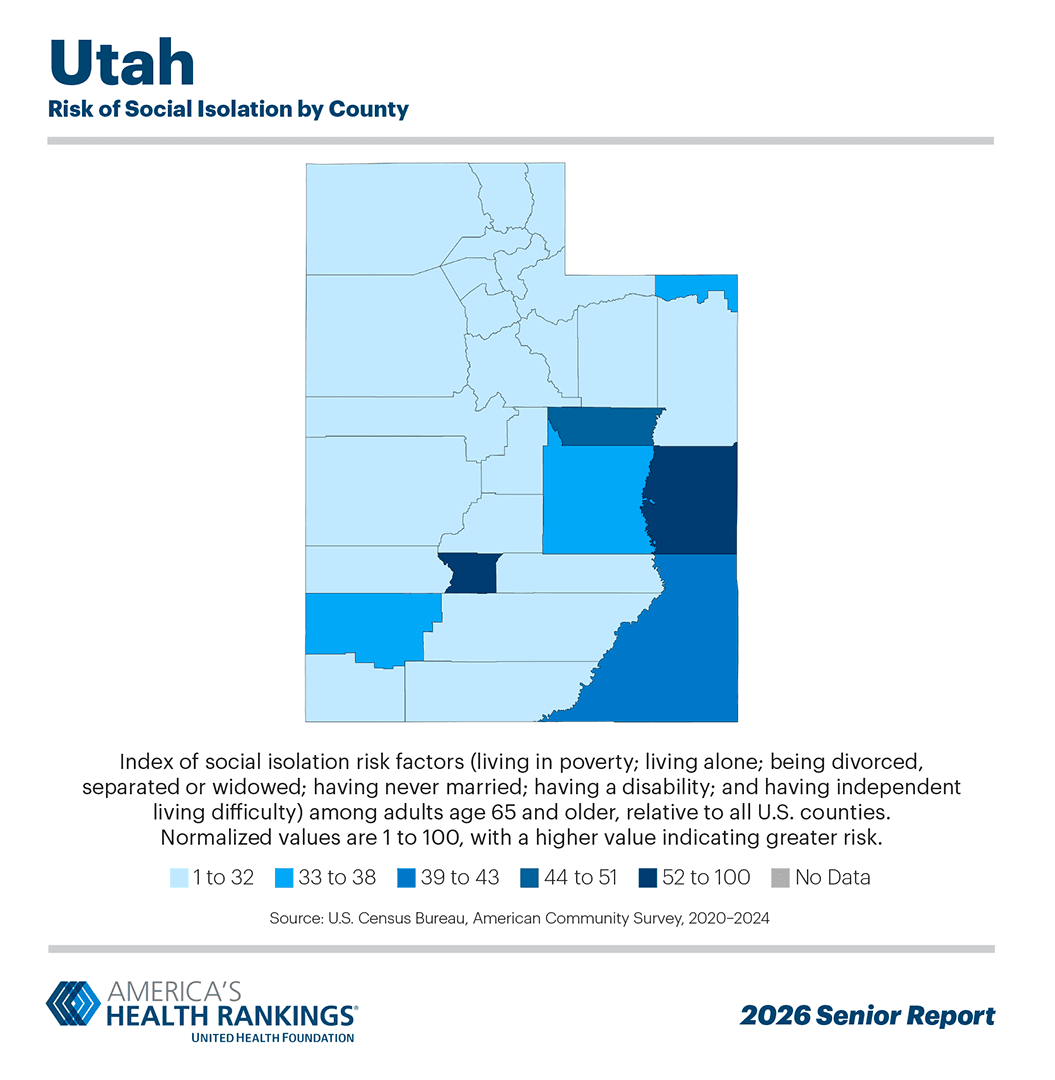
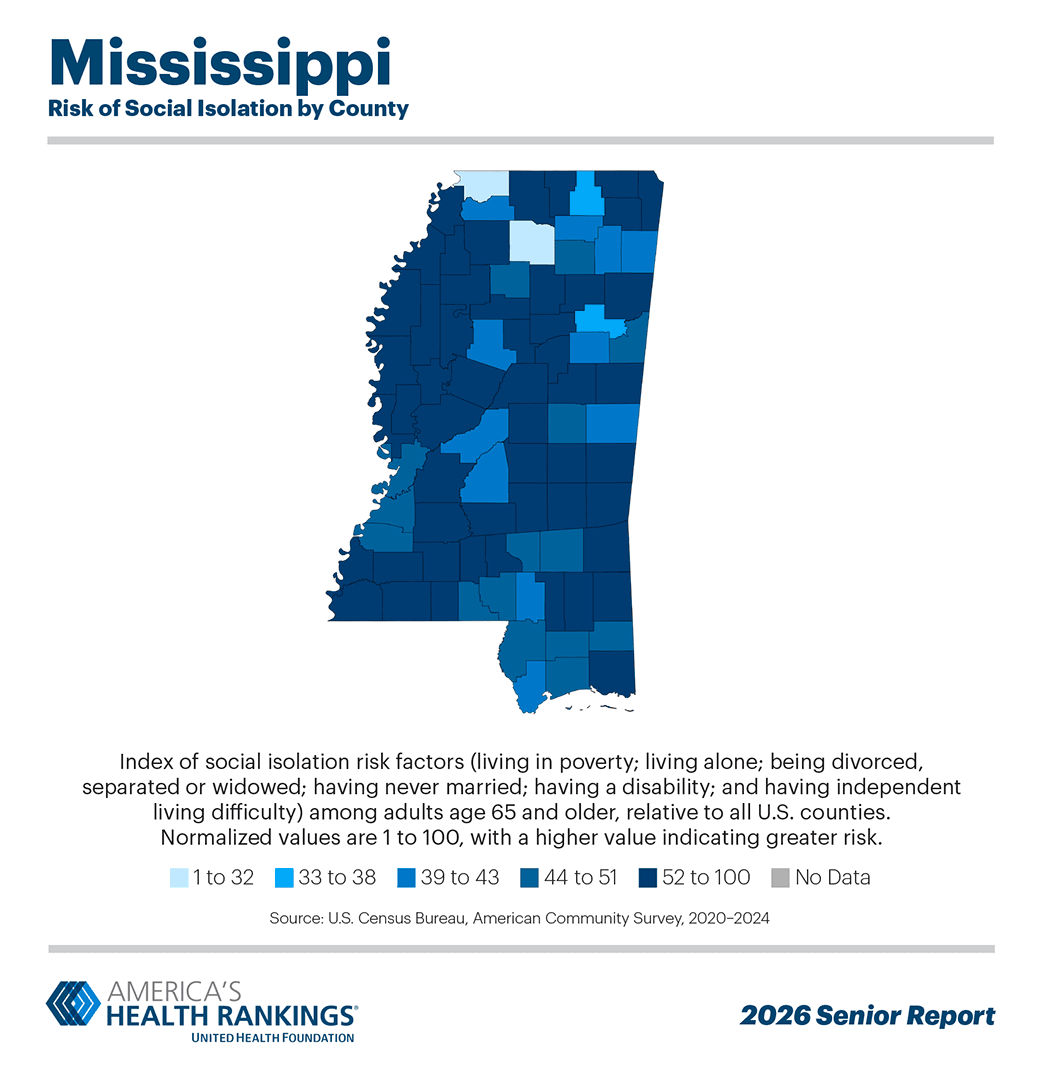
This is true even among the states with the highest and lowest overall risk; county-level data can highlight differences that may be masked in the overall state rank. For example, while Utah ranks among the states with lower risk of social isolation, some counties experience higher levels of risk than others, reflecting differences in local conditions. Similarly, in states with higher overall risk, such as Mississippi, some counties experience more moderate levels of risk relative to others in the state.
These within-state differences highlight why county-level data are critical for understanding how risk of social isolation is distributed — and for identifying opportunities for targeted, local interventions to drive change.
America’s Health Rankings data suggest that states with higher levels of volunteerism among older adults often also experience lower risk of social isolation. For example, in 2023, 44.6% of older adults in Utah reported volunteering, compared with 16.1% in Mississippi.
These differences highlight how opportunities for engagement may contribute to stronger social connections.
Further Explore County-Level Risk of Social Isolation Maps
Beyond the breadth of state-level data that America’s Health Rankings provides, county-level data on the risk of social isolation and other measures can support local leaders in designing targeted strategies that meet the specific needs of communities.
To explore the latest county-level data in your state and view additional measures of older adult health, see the new 2026 Senior Report.