More adults reported exercising, teen births decreased while chlamydia incidence climbed.
Definition: Percentage of adults who met the federal physical activity guidelines (150 minutes of moderate or 75 minutes of vigorous aerobic activity and two days of muscle strengthening per week).
Regular physical activity is a vital element of a healthy lifestyle. Being physically active and reducing sedentary behavior has many
health benefits according to the U.S. Department of Health and Human Services. Regular physical activity (at least 150 minutes a week) is associated with
reduced risk of cardiovascular diseases, type 2 diabetes, certain cancers, anxiety and depression.
Findings
Between 2017 and 2019,
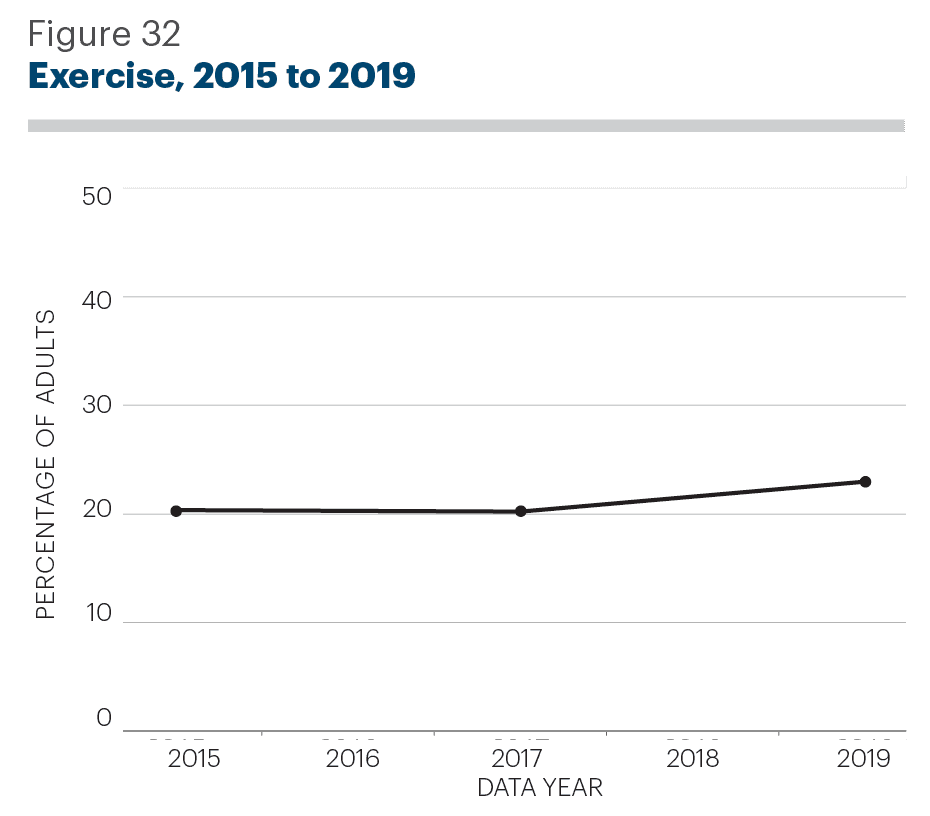
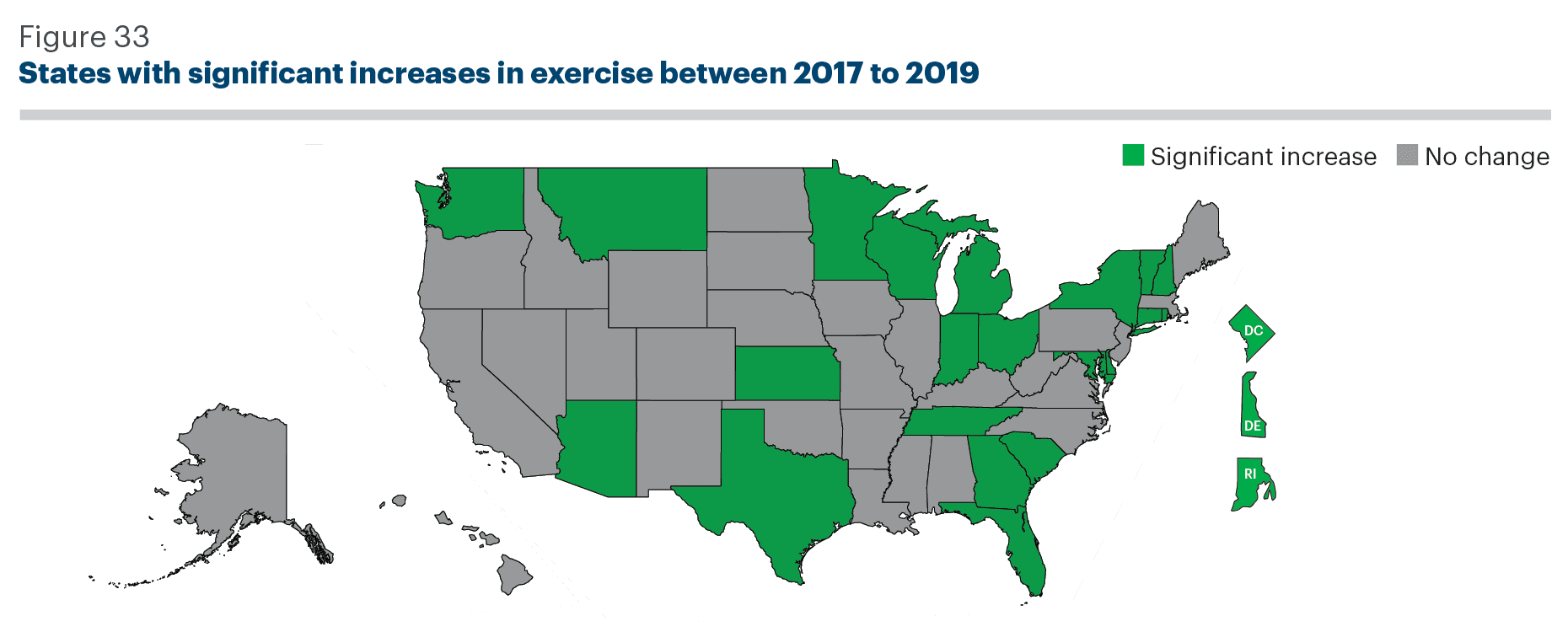
exercise increased 13% nationally from 20.3% to 23.0% (Figure 32), an increase of nearly 4.9 million adults. During this time, significant improvements occurred in 21 states and the District of Columbia (Figure 33). During this two-year period, exercise increased:
Disparities
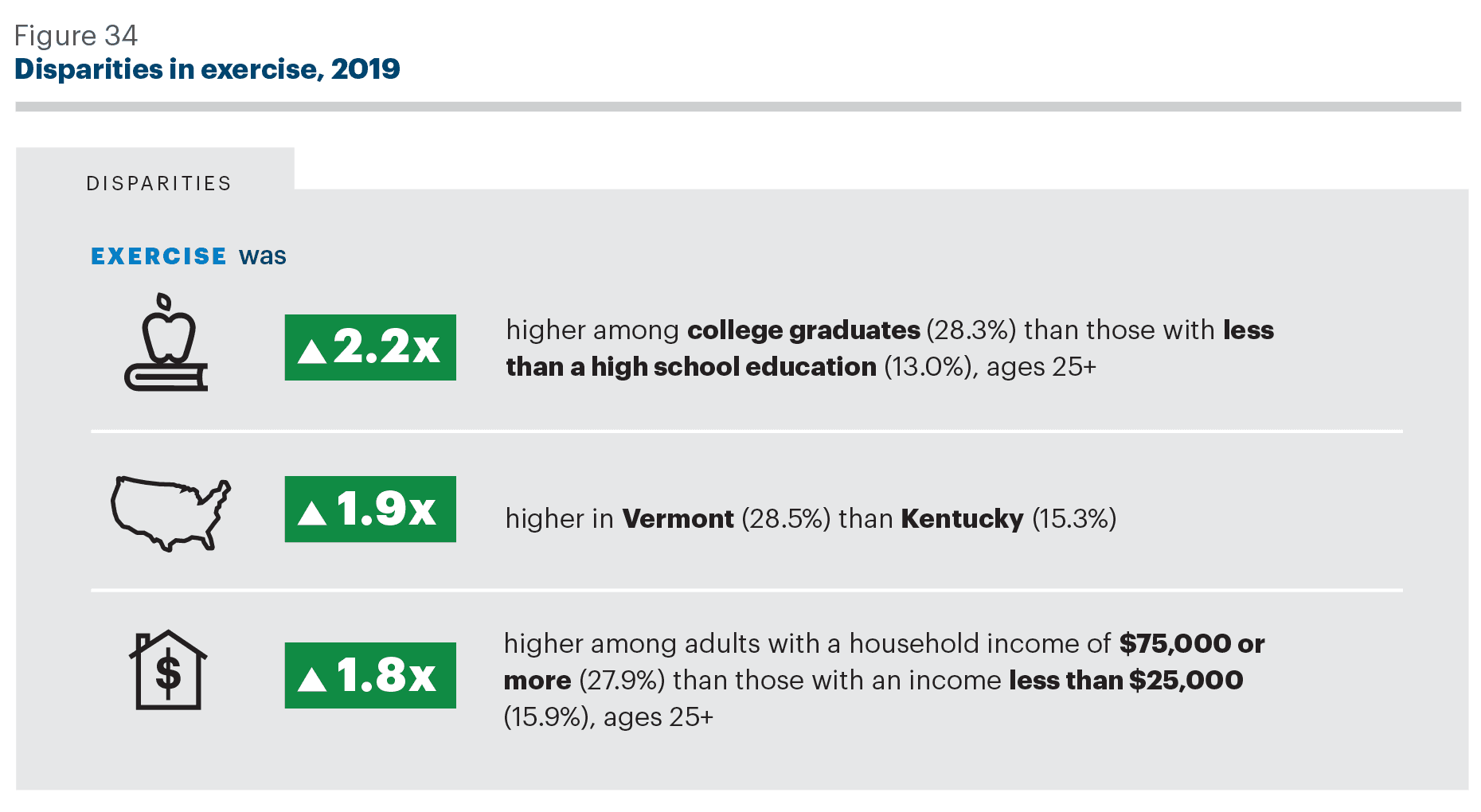
Exercise varies across states and by gender, age, education, income as well as race and ethnicity. The largest differences in the prevalence of exercise were by education, geography and income (Figure 34). In 2019, the prevalence of exercise among adults was highest in
Vermont (28.5%),
Montana (28.3%) and
Colorado (27.4%). It was lowest in
Kentucky (15.3%),
Oklahoma (15.6%) and
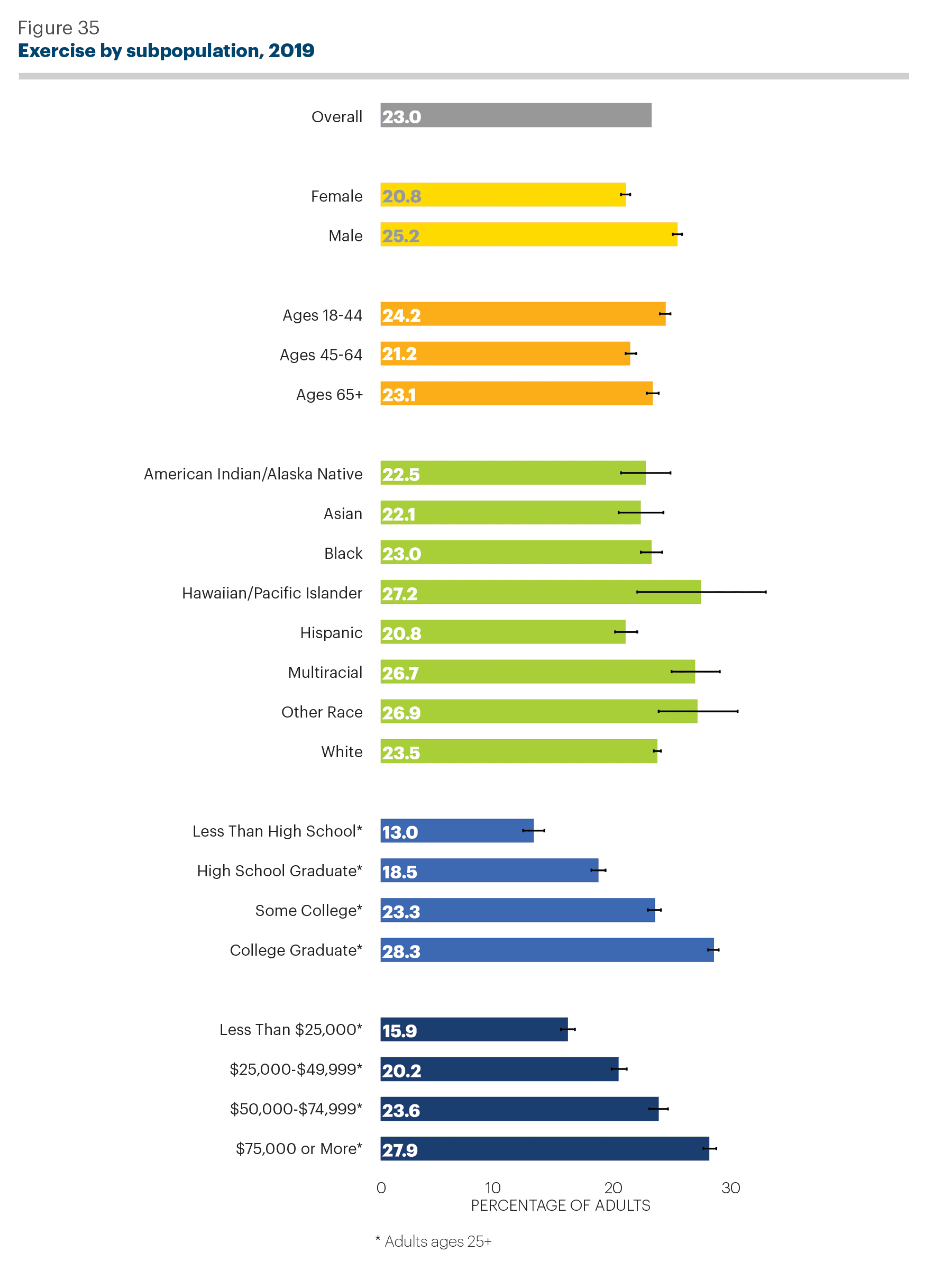
Mississippi (15.7%). In 2019, the prevalence of exercise among adults was higher among (Figure 35):
Definition: Number of new cases of chlamydia per 100,000 population.
Findings
The
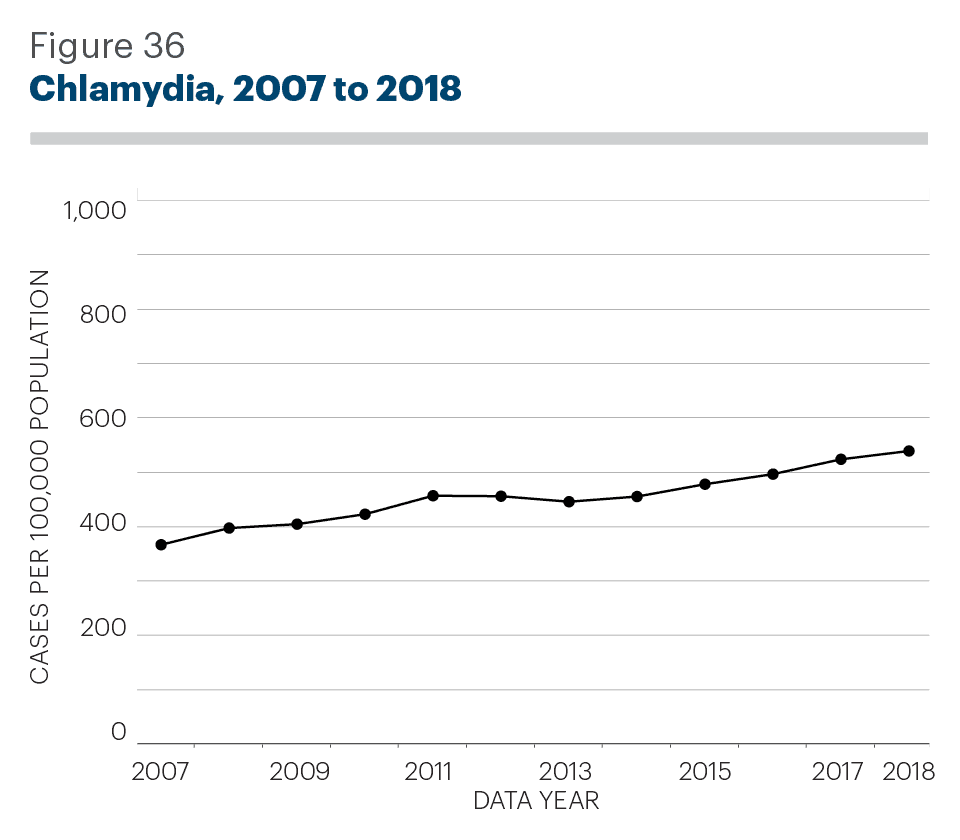
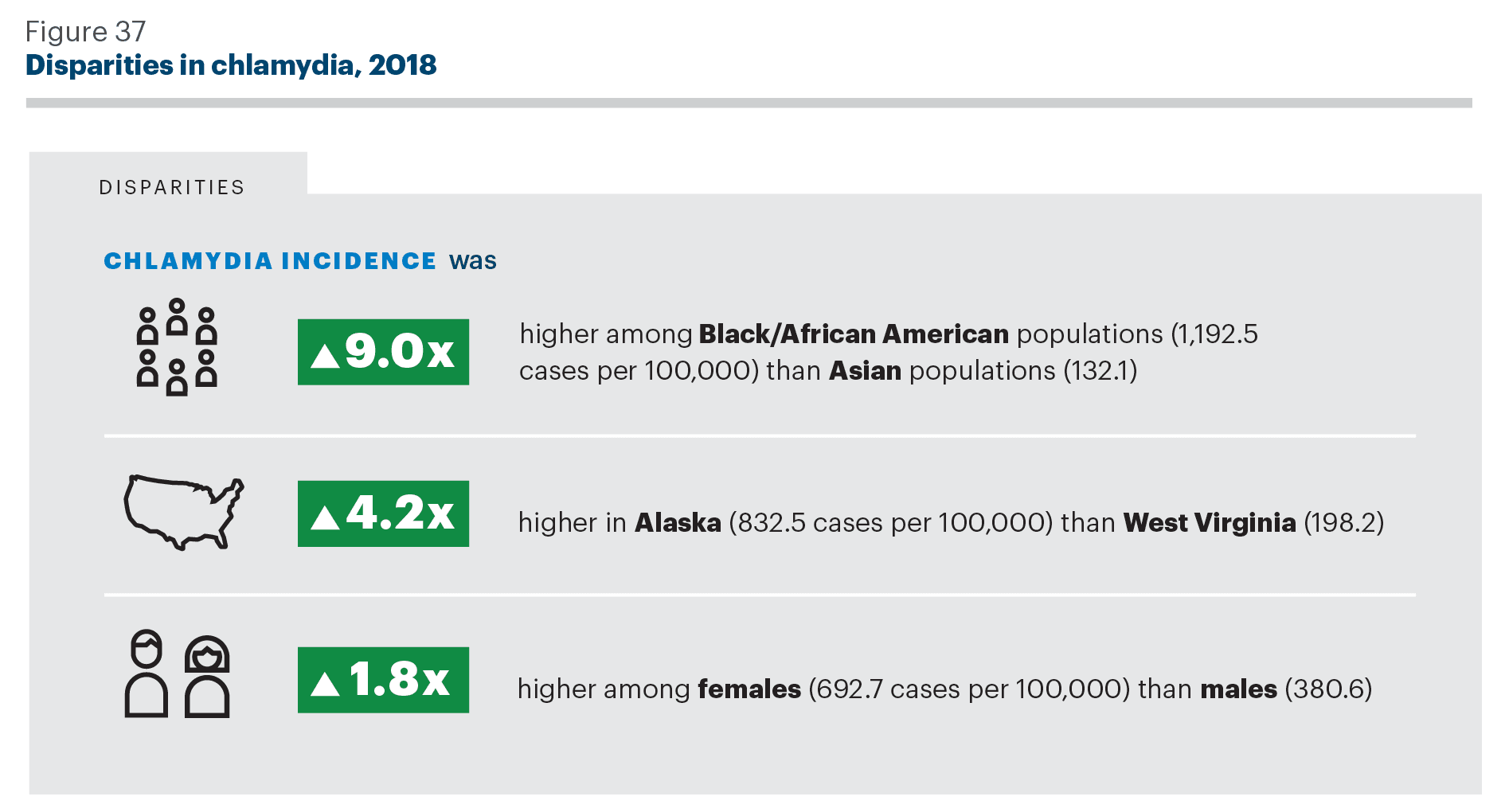
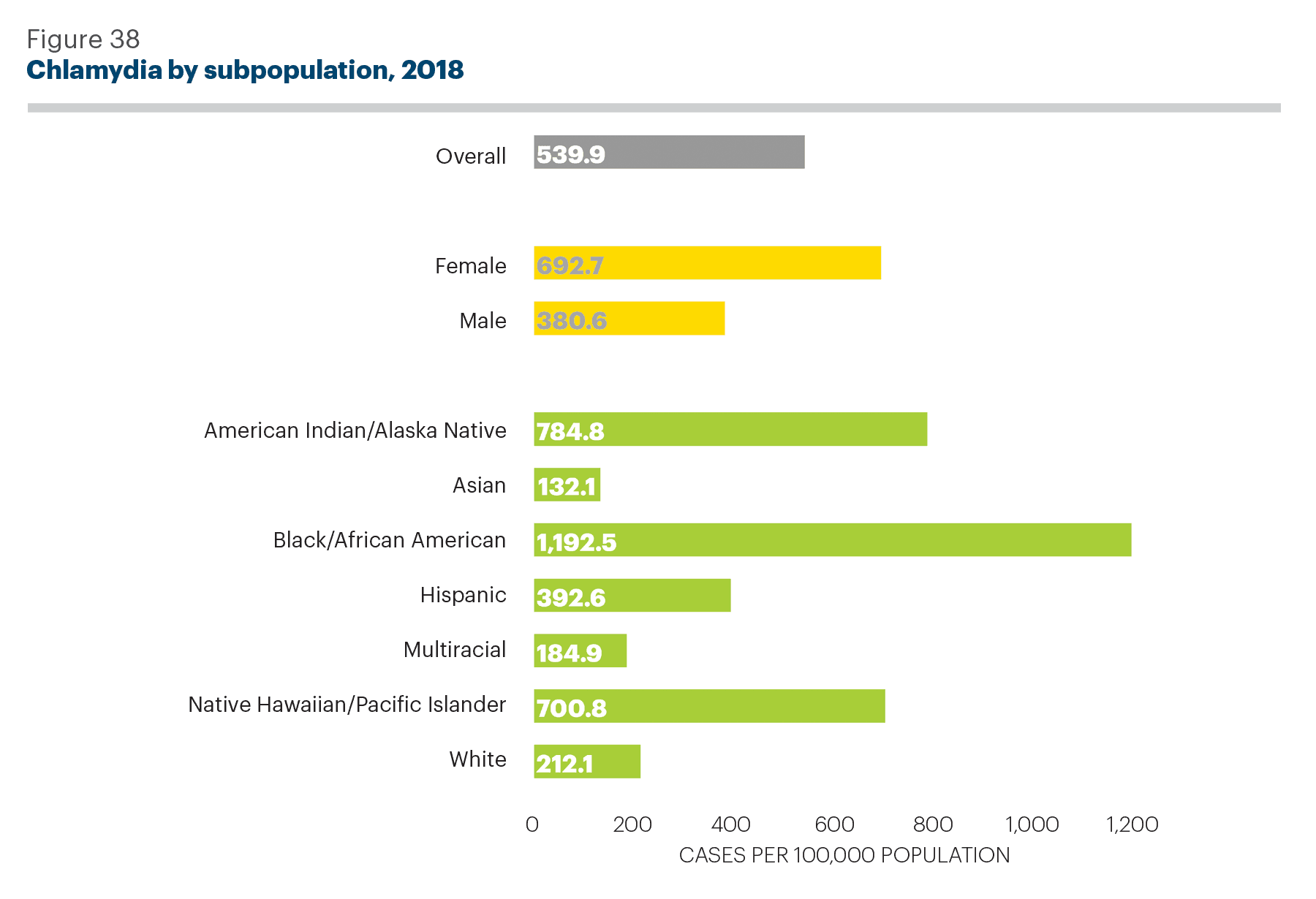
chlamydia incidence rate increased 47% from 367.5 to 539.9 cases per 100,000, between 2007 and 2018 (Figure 36). Between 2017 and 2018, the chlamydia incidence rate increased 3% nationally from 524.6 cases per 100,000. Incidence increased 40 or more cases per 100,000 in
Delaware (560.5 to 627.7 per 100,000),
Hawaii (479.8 to 541.8),
Nevada (542.4 to 584.0) and
Tennessee (522.4 to 569.0).
Disparities
Definition: Number of births per 1,000 females ages 15-19.
Substantial health, social and economic costs are associated with teen pregnancy and childrearing. According to the CDC, teen mothers are significantly
more likely to drop out of high school and face unemployment. Children born to teen mothers are
more likely to have worse educational, behavioral and health outcomes than children born to older parents.
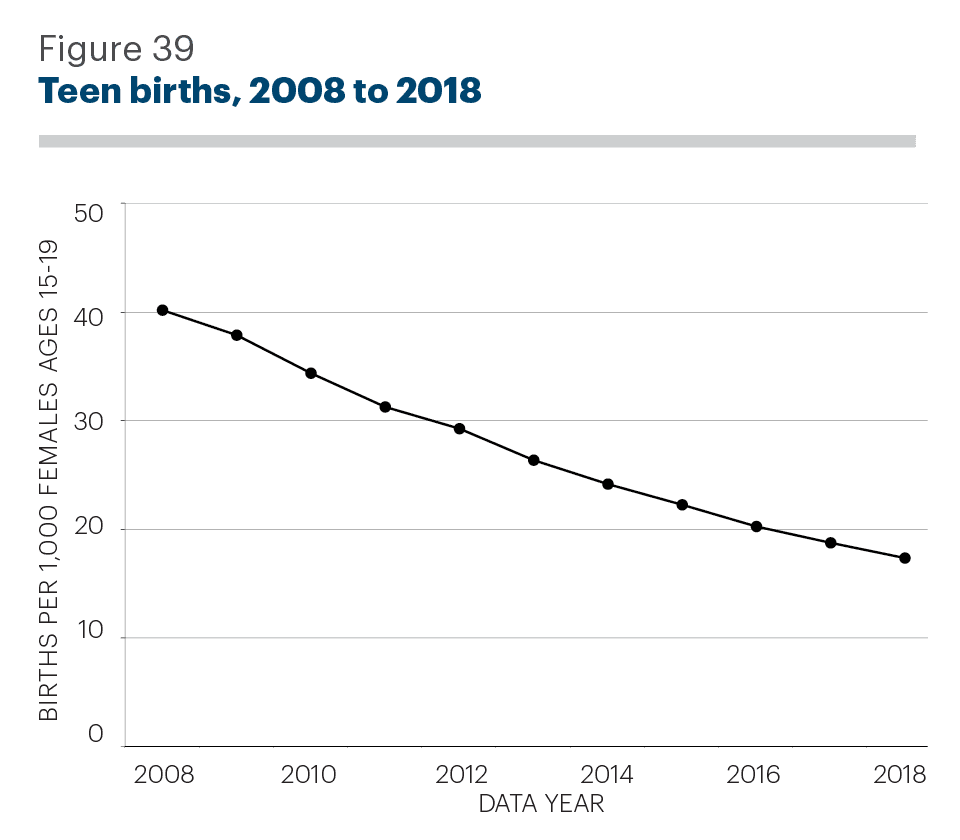
Between 2008 and 2018,
teen births declined 57% from 40.2 to 17.4 births per 1,000 females ages 15-19 (Figure 39). Since 2017, teen births declined 7% nationally from 18.8 births per 1,000 females ages 15-19, or 14,506 fewer births. Rates declined 14% among
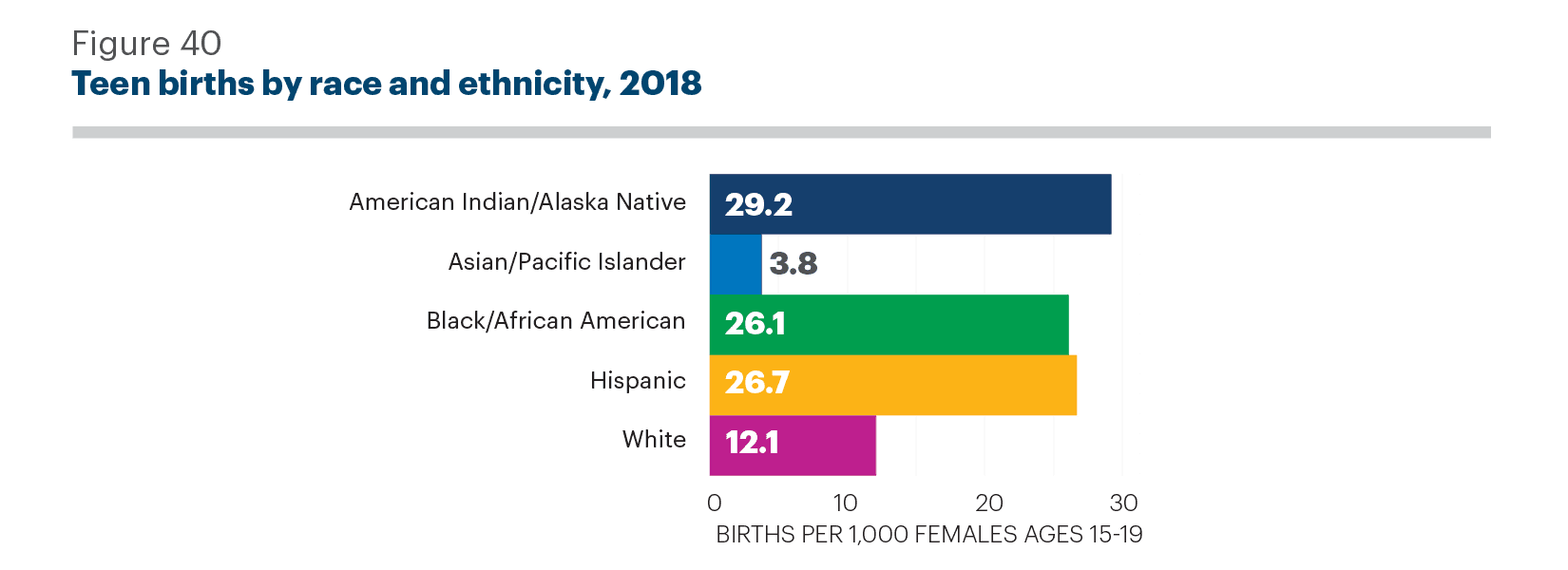
Asian/Pacific Islander teens (4.4 to 3.8 per 1,000); 8% among
American Indian/Alaska Native (31.8 to 29.2),
Hispanic (29.0 to 26.7) and
white teens (13.2 to 12.1); and 5% among
Black teens (27.5 to 26.1). Over the same time period, teen births declined by more than 3.0 births per 1,000 in
Montana (21.0 to 17.2 per 1,000),
Wyoming (24.5 to 20.8) and
Mississippi (30.9 to 27.8).
Disparities
The teen birth rate varies across states and widely by race and ethnicity. In 2018, teen births were highest among American Indian/Alaska Native teens, followed by Hispanic, Black/African American and white teens. Asian/Pacific Islander teens had the lowest rate (Figure 40). The teen birth rate was highest in
Arkansas (30.4 births per 100,000 females ages 15-19),
Mississippi (27.8) and
Louisiana (27.5). It was lowest in
Massachusetts (7.2 births per 100,000 females ages 15-19),
New Hampshire (8.0) and
Connecticut (8.3).

 Alabama
 Alaska
 Arizona
 Arkansas
 California
 Colorado
 Connecticut
 Delaware
 District of Columbia
 Florida
 Georgia
 Hawaii
 Idaho
Idaho Illinois
 Indiana
 Iowa
Iowa Kansas
 Kentucky
 Louisiana
 Maine
Maine Maryland
 Massachusetts
 Michigan
 Minnesota
 Mississippi
 Missouri
 Montana
 Nebraska
 Nevada
 New Hampshire
 New Jersey
 New Mexico
 New York
 North Carolina
 North Dakota
 Ohio
Ohio Oklahoma
 Oregon
 Pennsylvania
 Rhode Island
 South Carolina
 South Dakota
 Tennessee
 Texas
Texas Utah
Utah Vermont
 Virginia
 Washington
 West Virginia
 Wisconsin
 Wyoming
 US SummaryAppendixMeasures TableData Source DescriptionsThe Team