Before the COVID-19 pandemic, food insecurity and unemployment decreased, while per capita income rose.
Definition: Percentage of households unable to provide adequate food for one or more household members due to lack of resources.
Food insecurity has broad effects on health due to the related mental and physical stress. The health-related costs attributed to hunger were conservatively estimated at
$160 billion in 2014. A Centers for Disease Control and Prevention (CDC) study found that food-insecure adults had, on average, annual health care expenditures
$1,834 higher than food-secure adults.
Findings
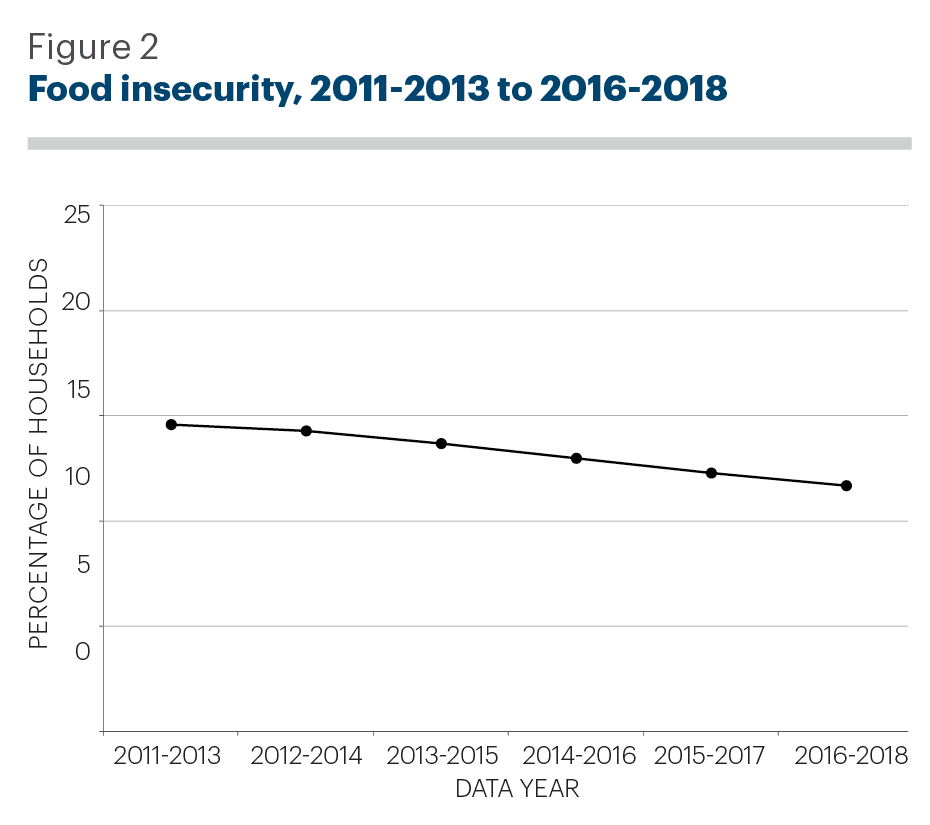
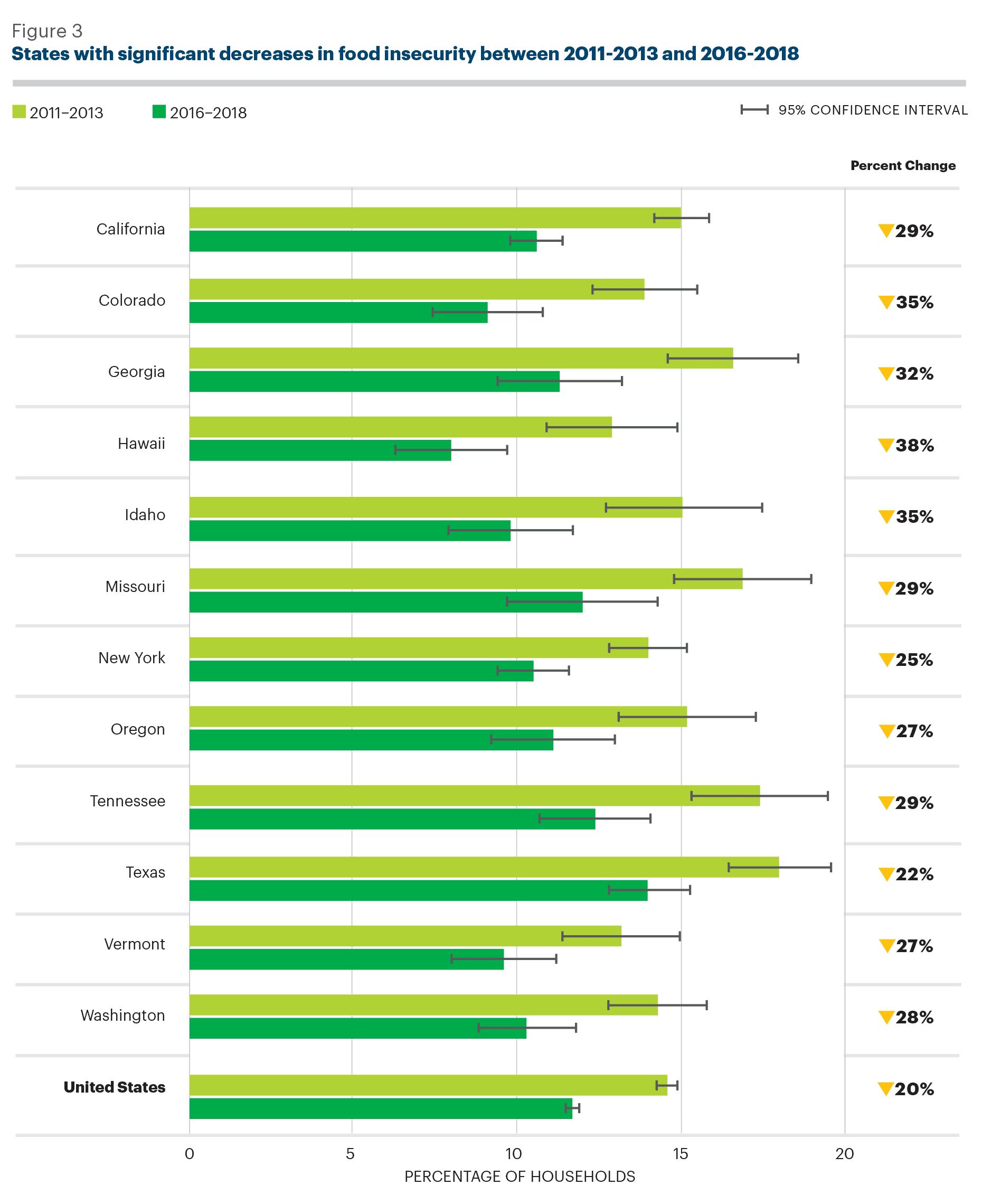
The percentage of households that were food insecure decreased 20% between 2011-2013 and 2016-2018, from 14.6% to 11.7% of households (Figure 2). During this time, food insecurity among households declined significantly in 12 states, led by Hawaii (12.9% to 8.0%), Colorado (13.9% to 9.1%) and Idaho (15.1% to 9.8%) (Figure 3).
Disparities
Definition: Compares the economic condition of one state relative to another based on crowded housing, dependency, education, income, poverty and unemployment; normalized index scores range from 0 to 100, with a higher score indicating worse economic conditions.
Combining the six population-level social and economic measures provides a more complete picture of the difficulties faced in a community than a single measure could provide. A higher score on the economic hardship index is associated with
lower life expectancy. Low income causes
chronic stress that contributes to
poor health through decreased life expectancy,
educational attainment and social mobility as well as increased mental illness, obesity, infant mortality, teenage births, homicides and imprisonment.
Definition: Per capita income in the past 12 months, in inflation-adjusted dollars to data year.
Income impacts a household’s ability to support a healthy lifestyle with quality food, housing, education, preventive medicine and curative care. Individuals with a low household income tend to
have a higher prevalence of diseases and die earlier compared with people with higher household incomes. There is increased stress associated with being in the lower end of the income spectrum, which is associated with
unhealthy behaviors and outcomes.
Findings
Between 2017 and 2019,
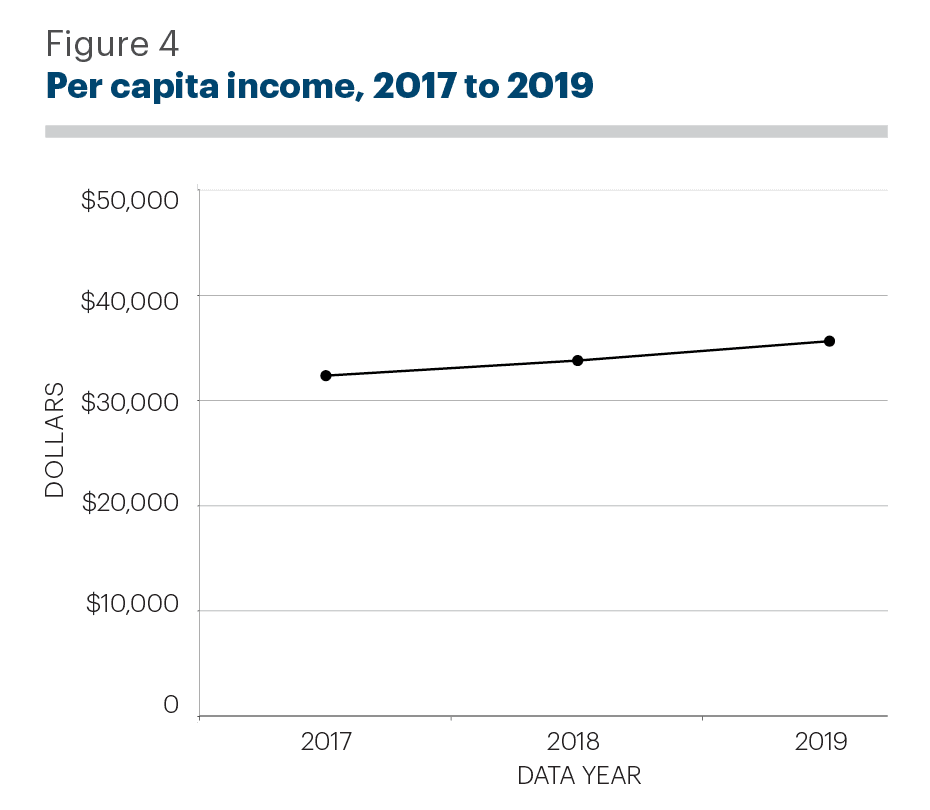
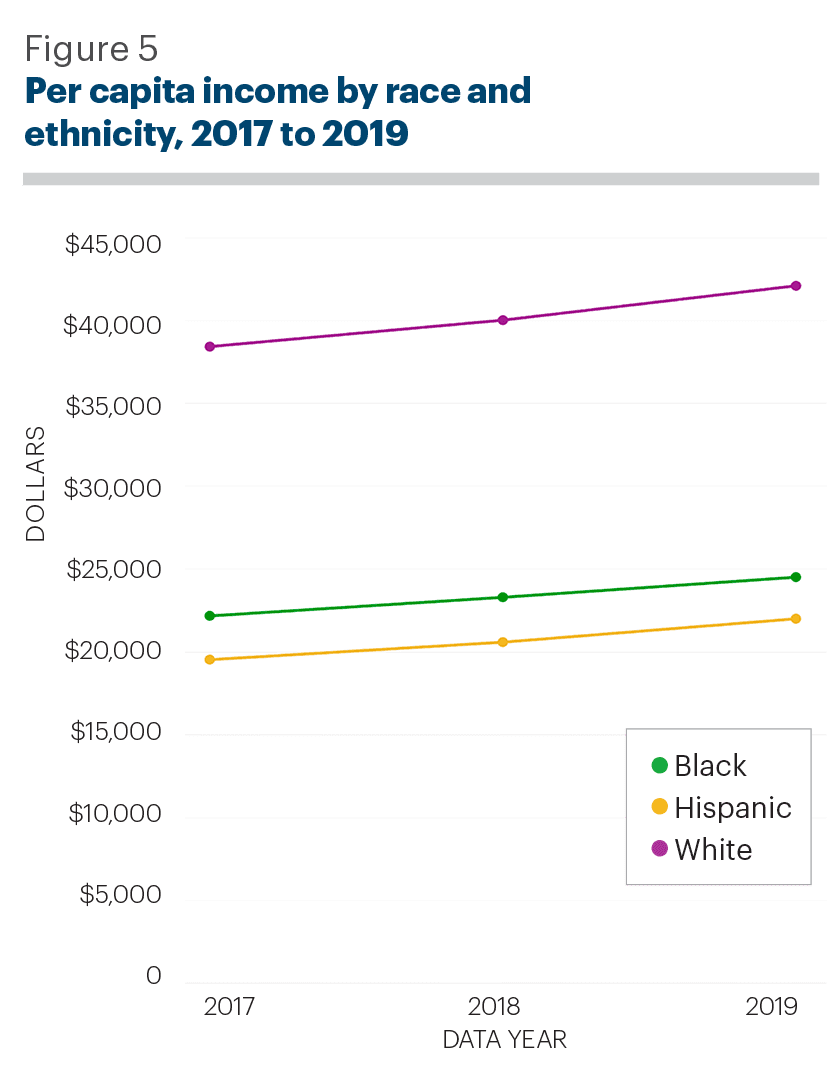
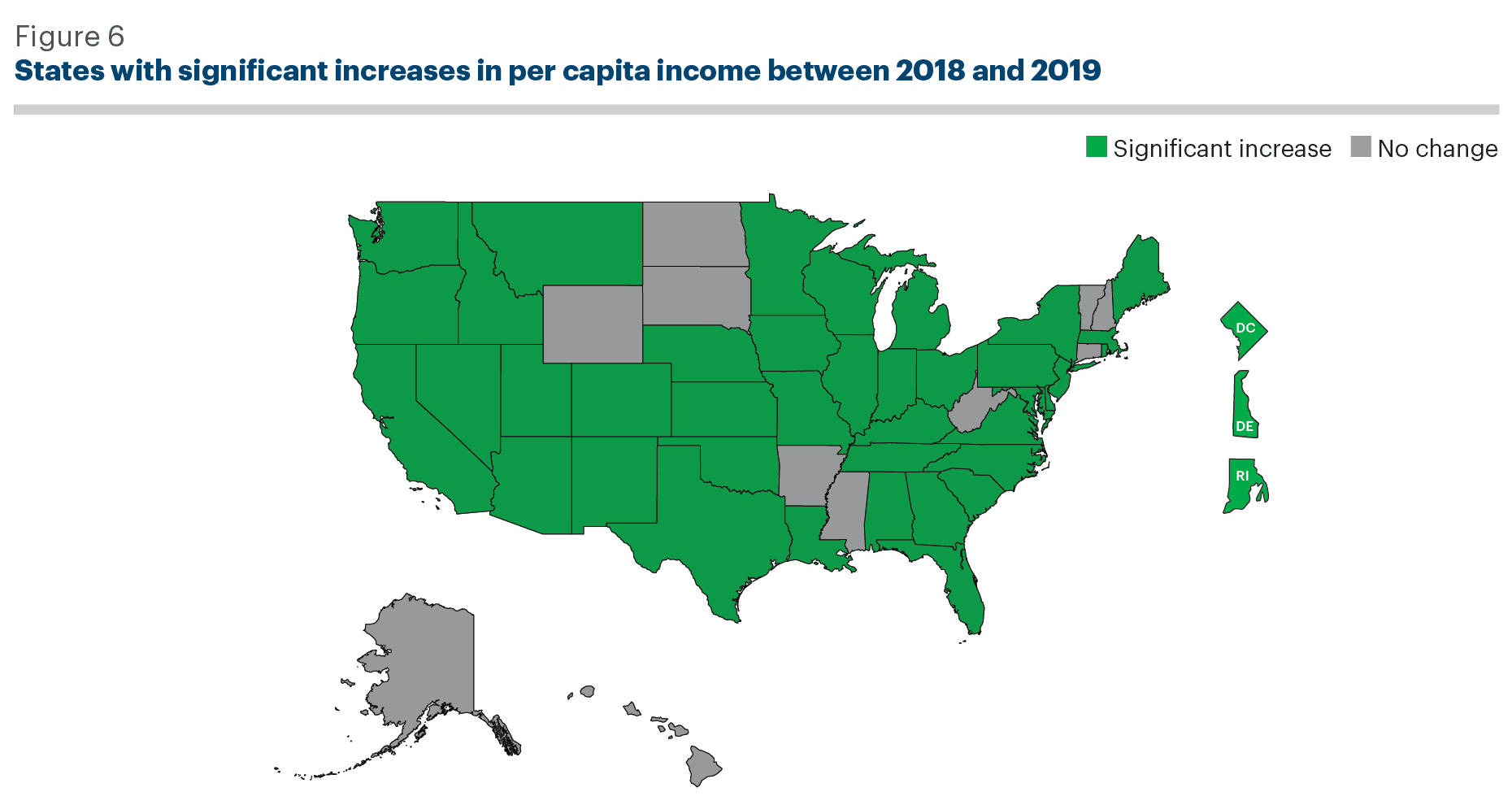
per capita income, one of the six components of the new economic hardship index measure, increased 10% from $32,397 to $35,672 (Figure 4). During this time, it also increased 13% among Hispanic ($19,537 to $22,002), 11% among Black ($22,175 to $24,509) and 10% among white residents ($38,437 to $42,106) (Figure 5). Between 2018 and 2019, significant increases occurred in 39 states and the District of Columbia (Figure 6). Delaware had the largest increase of 9% from $33,745 to $36,858.
Disparities
Per capita income varies across states and by race and ethnicity. In 2019, per capita income was highest in
Massachusetts ($46,241), followed by
Connecticut ($45,359) and
New Jersey ($44,888). It was lowest in
Mississippi at $25,301, followed by
Arkansas ($27,274) and
West Virginia ($27,446).
White residents had the highest per capita income at $42,106, followed by
Black residents ($24,509) and
Hispanic residents ($22,002).
Definition: Percentage of civilian population ages 16-64 that are unemployed.
Findings
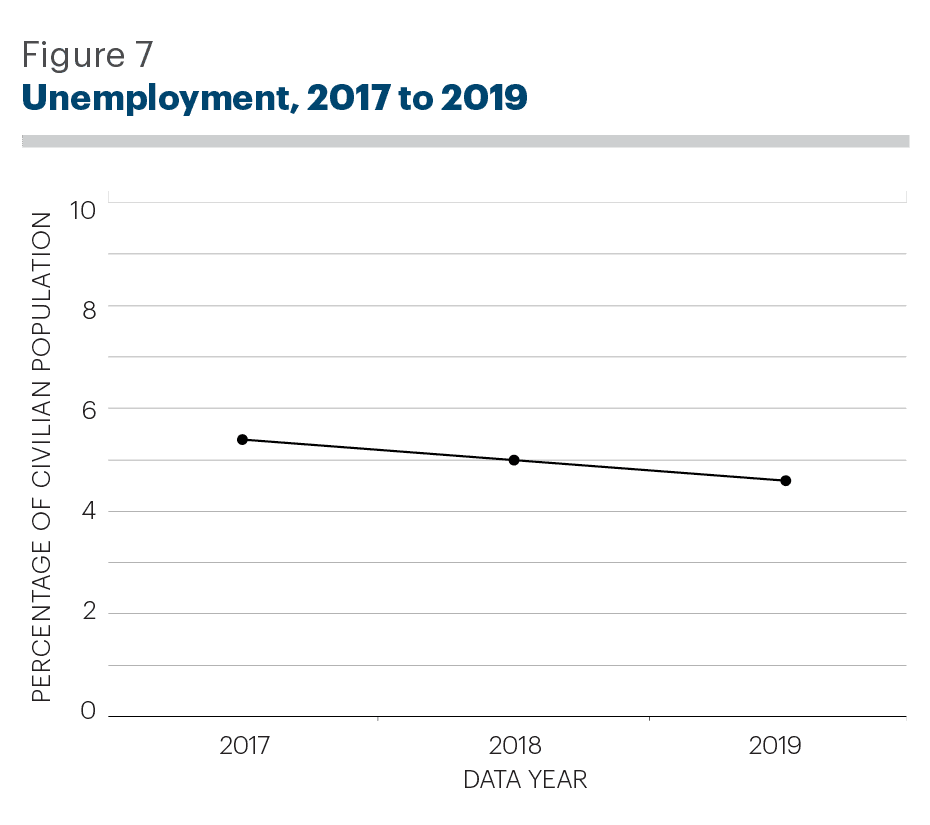
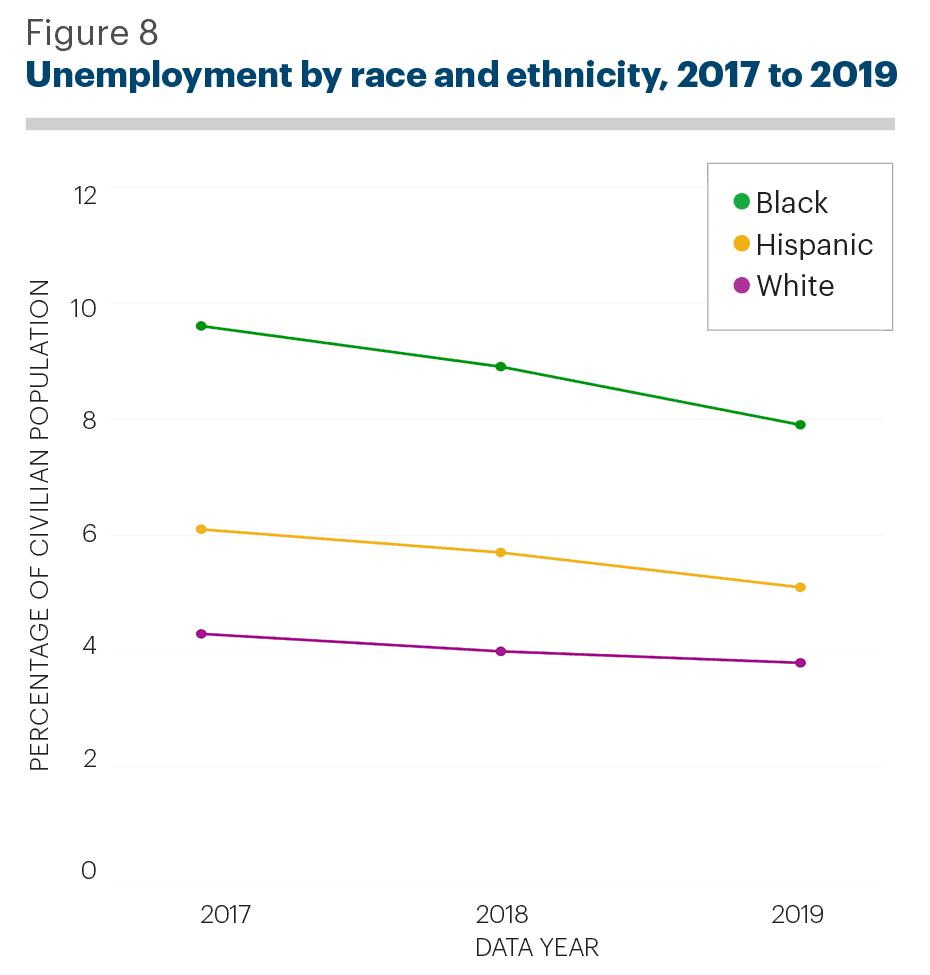
Unemployment, another component of the new economic hardship index measure, declined 15% between 2017 and 2019, from 5.4% to 4.6% (Figure 7). During the same timeframe, it decreased 18% among
Black (9.6% to 7.9%), 16% among
Hispanic (6.1% to 5.1%) and 12% among
white (4.3% to 3.8%) civilians (Figure 8).
Disparities
High school graduation and racial gap
High school graduation rates improved and progress was made in reducing the racial gap.
Definitions
High school graduation: Percentage of high school students who graduated with a regular high school diploma within four years of starting ninth grade.
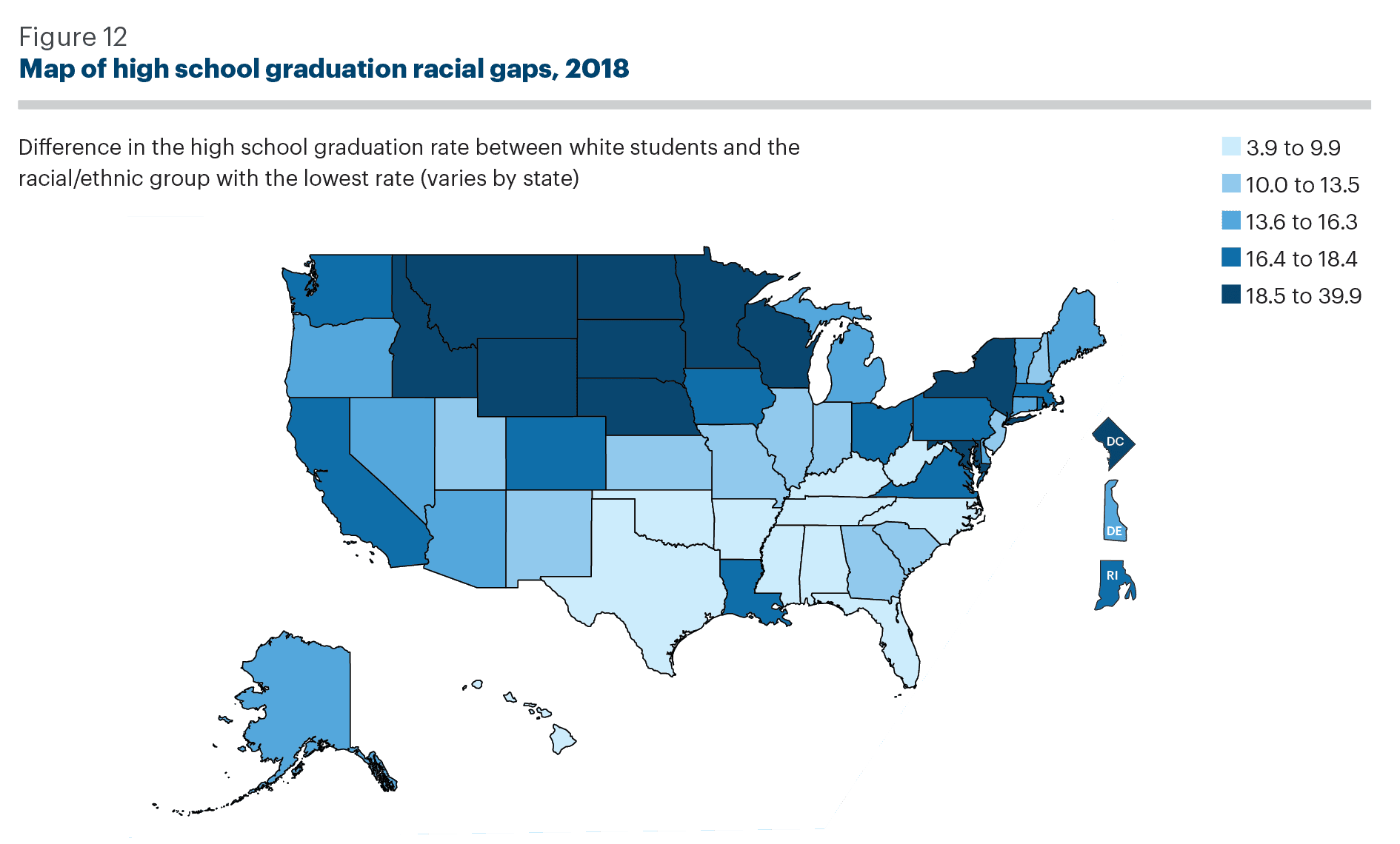
High school graduation racial gap: Difference in the high school graduation rate between white students and the racial/ethnic group with the lowest rate (varies by state).
Findings
Between 2011 and 2018,
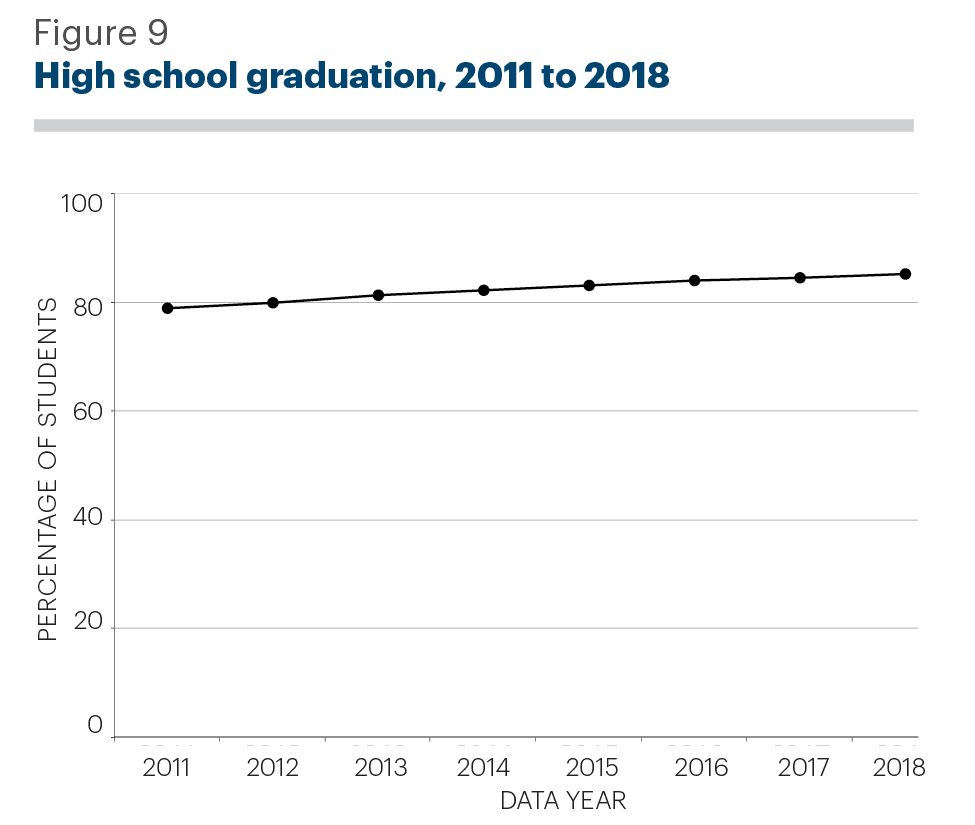
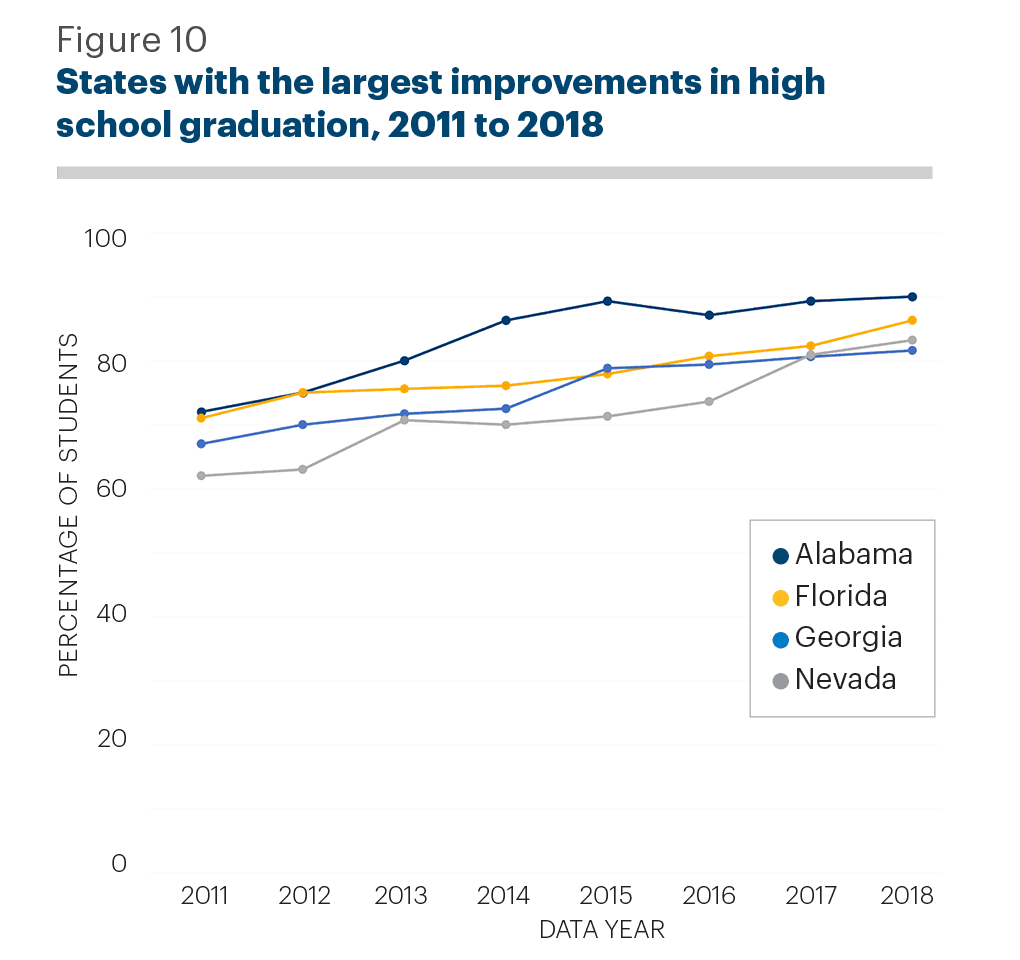
high school graduation increased 8%, from 79.0% to 85.3% (Figure 9). Over this time period, four states improved 20% or more (Figure 10):
Nevada (34% from 62.0% to 83.2%),
Alabama (25% from 72.0% to 90.0%),
Florida (22% from 71.0% to 86.3%) and
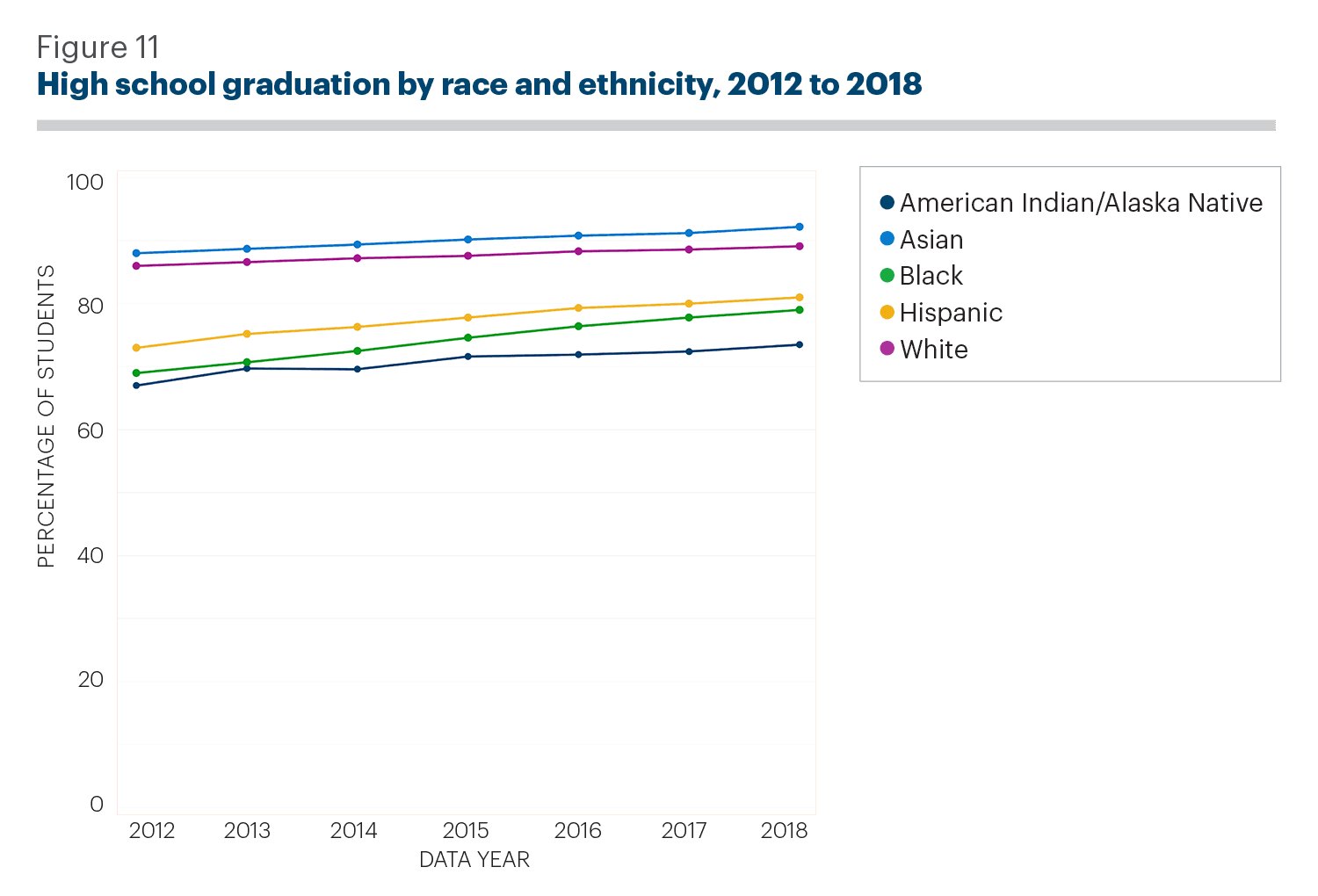
Georgia (22% from 67.0% to 81.6%). Between 2012 and 2018, high school graduation increased among all racial and ethnic groups (Figure 11). It increased most among
Black (14% from 69.0% to 79.0%),
Hispanic (11% from 73.0% to 81.0%) and
American Indian/Alaska Native (10% from 67.0% to 73.5%) students.
Disparities
In 2018, the
high school graduation racial gap — the difference in graduation rates between American Indian/Alaska Native students and white students — was 15.6 percentage points, a 4% decline since 2017, from 16.2 percentage points. The racial gap was 10.2 times higher in
South Dakota at 39.9 percentage points between American Indian/Alaska Native (50.0%) and white (89.9%) students than in
Alabama at 3.9 percentage points between Black (87.7%) and white (91.5%) students (Figure 12).
Households with high-speed internet rose, essential for work and school engagement during the COVID-19 pandemic.
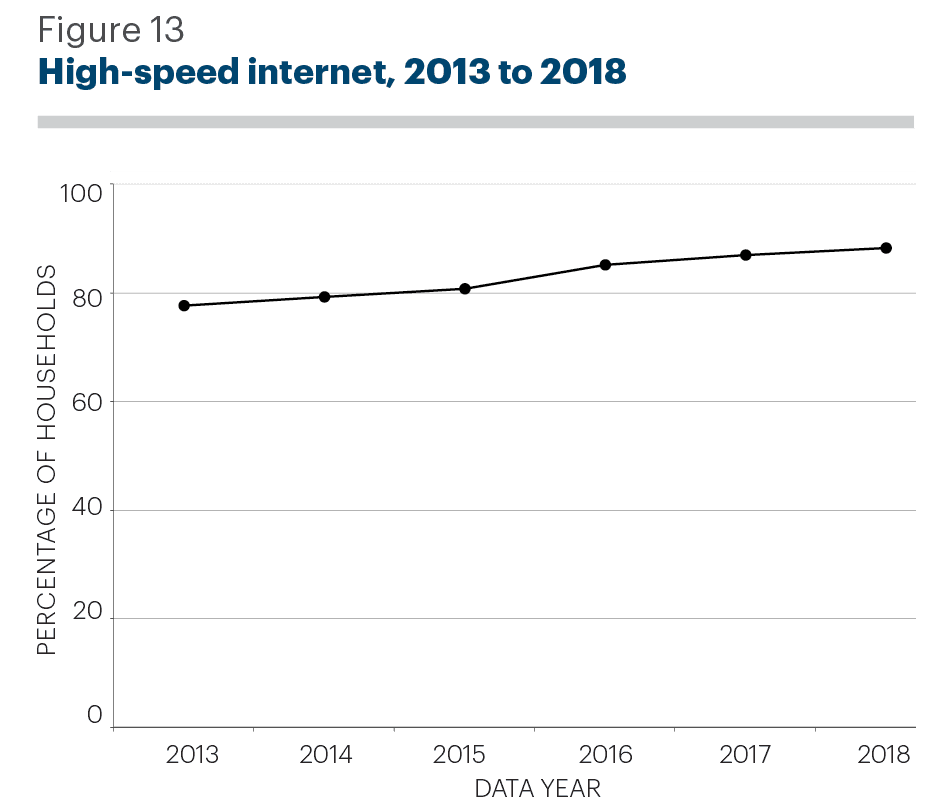
Definition: Percentage of households that have a broadband internet subscription and a computer, smartphone or tablet.
High-speed internet is an important resource for work, education and effective communication. Access to the internet is
a basic human right according to the United Nations, citing its value for social and economic development. It is especially crucial during the COVID-19 pandemic as many employers and educators transition to remote work and learning. Moreover, according to the CDC, having high-speed internet is vital for receiving health care via
telehealth, which is becoming increasingly common during the COVID-19 pandemic.
Findings
The percentage of households that report having
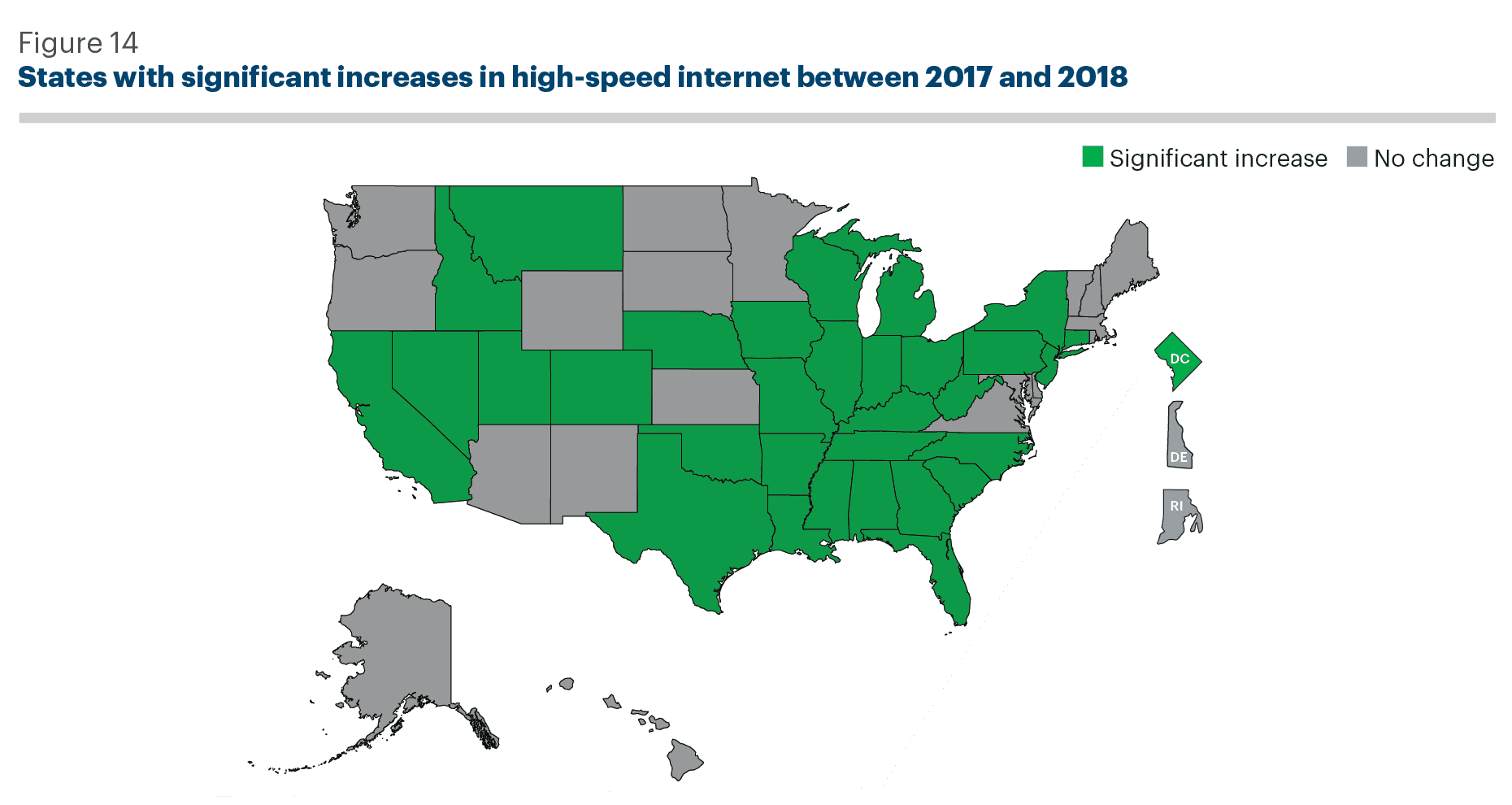
high-speed internet and a computer, smartphone or tablet increased 14% between 2013 and 2018, from 77.7% to 88.3% of households (Figure 13). Since 2017, households with high-speed internet increased significantly nationally by 1% and in 31 states and the District of Columbia (Figure 14). The largest improvements occurred in
Arkansas (77.1% to 80.8%) and the
District of Columbia (84.1% to 88.3%), both improving 5% between 2017 and 2018.
Disparities
High-speed internet varies across states and by race and ethnicity. In 2018, the percentage of households with high-speed internet was highest in
Utah (92.9%),
Washington (92.6%) and
New Hampshire (92.4%), and lowest in
New Mexico (79.4%),
Mississippi (80.6%) and
Arkansas (80.8%). In the same year,
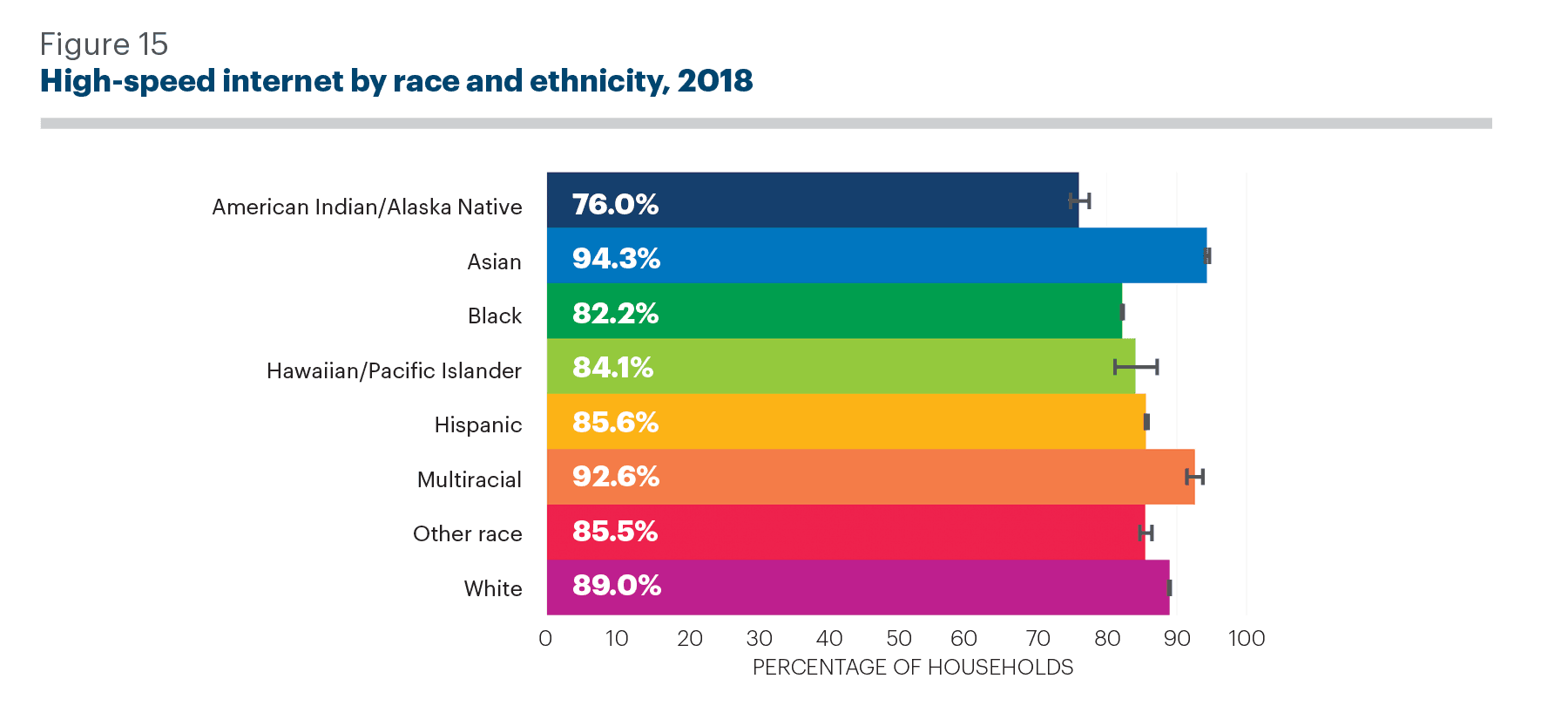
Asian households had the highest prevalence at 94.3%, significantly higher than all other racial and ethnic groups (Figure 15).
American/Indian Alaska Native households had the lowest percentage at 76.0%.

 Alabama
 Alaska
 Arizona
 Arkansas
 California
 Colorado
 Connecticut
 Delaware
 District of Columbia
 Florida
 Georgia
 Hawaii
 Idaho
Idaho Illinois
 Indiana
 Iowa
Iowa Kansas
 Kentucky
 Louisiana
 Maine
Maine Maryland
 Massachusetts
 Michigan
 Minnesota
 Mississippi
 Missouri
 Montana
 Nebraska
 Nevada
 New Hampshire
 New Jersey
 New Mexico
 New York
 North Carolina
 North Dakota
 Ohio
Ohio Oklahoma
 Oregon
 Pennsylvania
 Rhode Island
 South Carolina
 South Dakota
 Tennessee
 Texas
Texas Utah
Utah Vermont
 Virginia
 Washington
 West Virginia
 Wisconsin
 Wyoming
 US SummaryAppendixMeasures TableData Source DescriptionsThe Team