Mental and behavioral health challenges continued to impact Americans.
Definition: Percentage of adults who reported their mental health was not good 14 or more days in the past 30 days.
Frequent mental distress is a measure based on self-reported
poor mental health days. The measure spotlights the population experiencing persistent, and likely severe, mental health issues, which may have a significant impact on health-related quality of life and overall wellness. A healthy mental state is essential to overall positive health and well-being. In some cases, poor mental health may lead to suicide.
Findings
The prevalence of
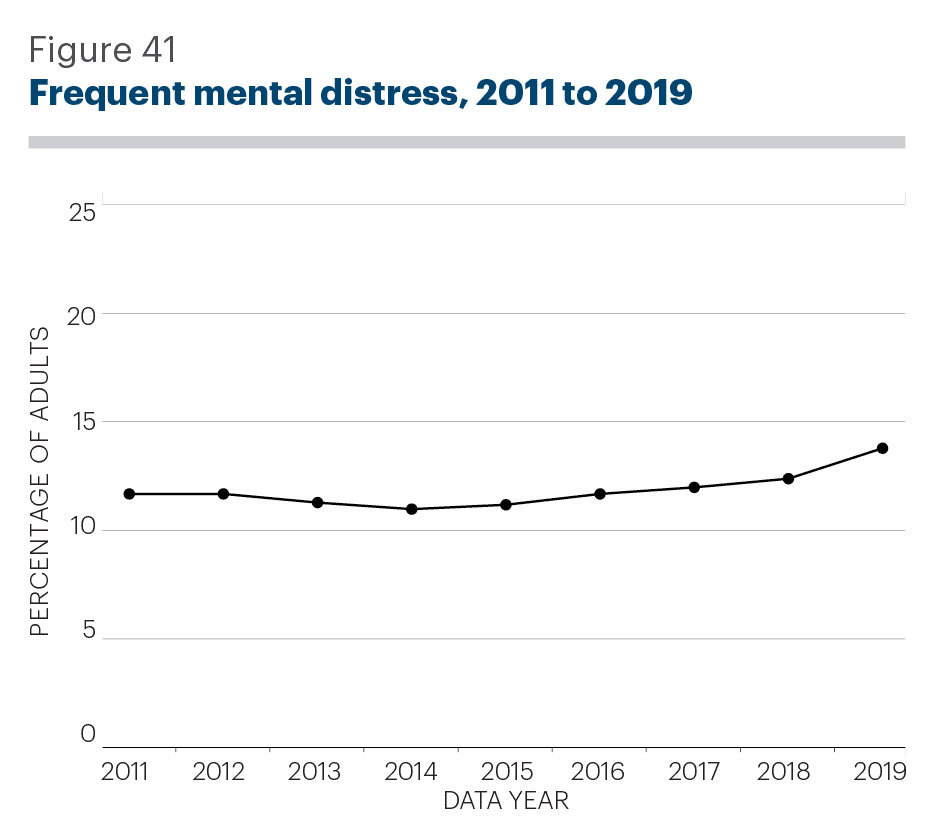
frequent mental distress increased 25% nationally between 2014 and 2019, from 11.0% to 13.8% (Figure 41). Since 2018, it increased 11% from 12.4%, an increase of 1.3 million adults. Between 2018 and 2019, the prevalence of frequent mental distress increased:
During this time, significant increases occurred in
Iowa (10.2% to 12.3%),
Utah (12.2% to 14.2%) and
Washington (12.0% to 13.6%).
Disparities
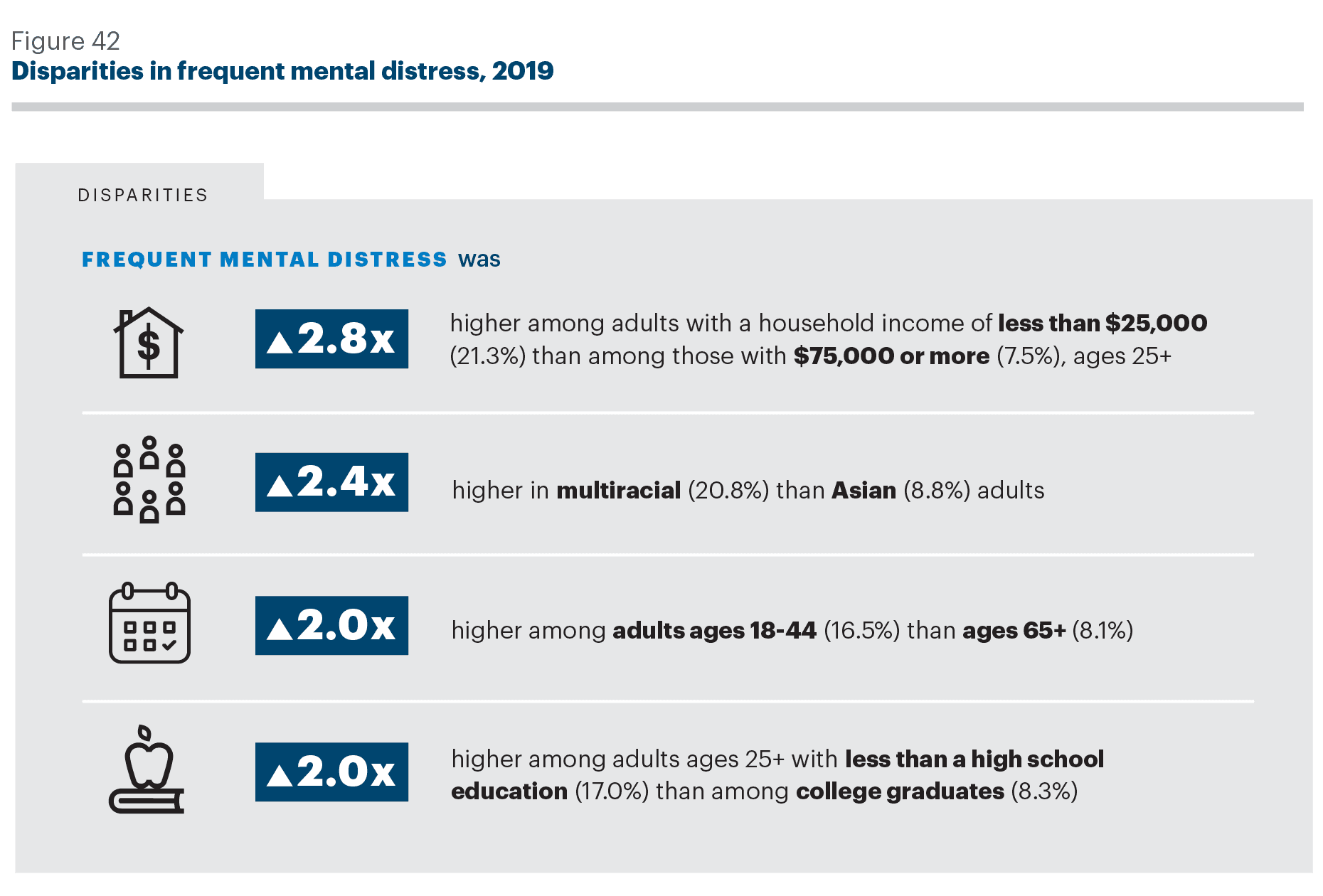
The prevalence of frequent mental distress varies across states and by age, gender, education, income as well as race and ethnicity. In 2019, frequent mental distress was highest in
West Virginia (20.6%),
Louisiana (18.5%) and
Arkansas (17.8%). It was lowest in
South Dakota (10.6%) followed by
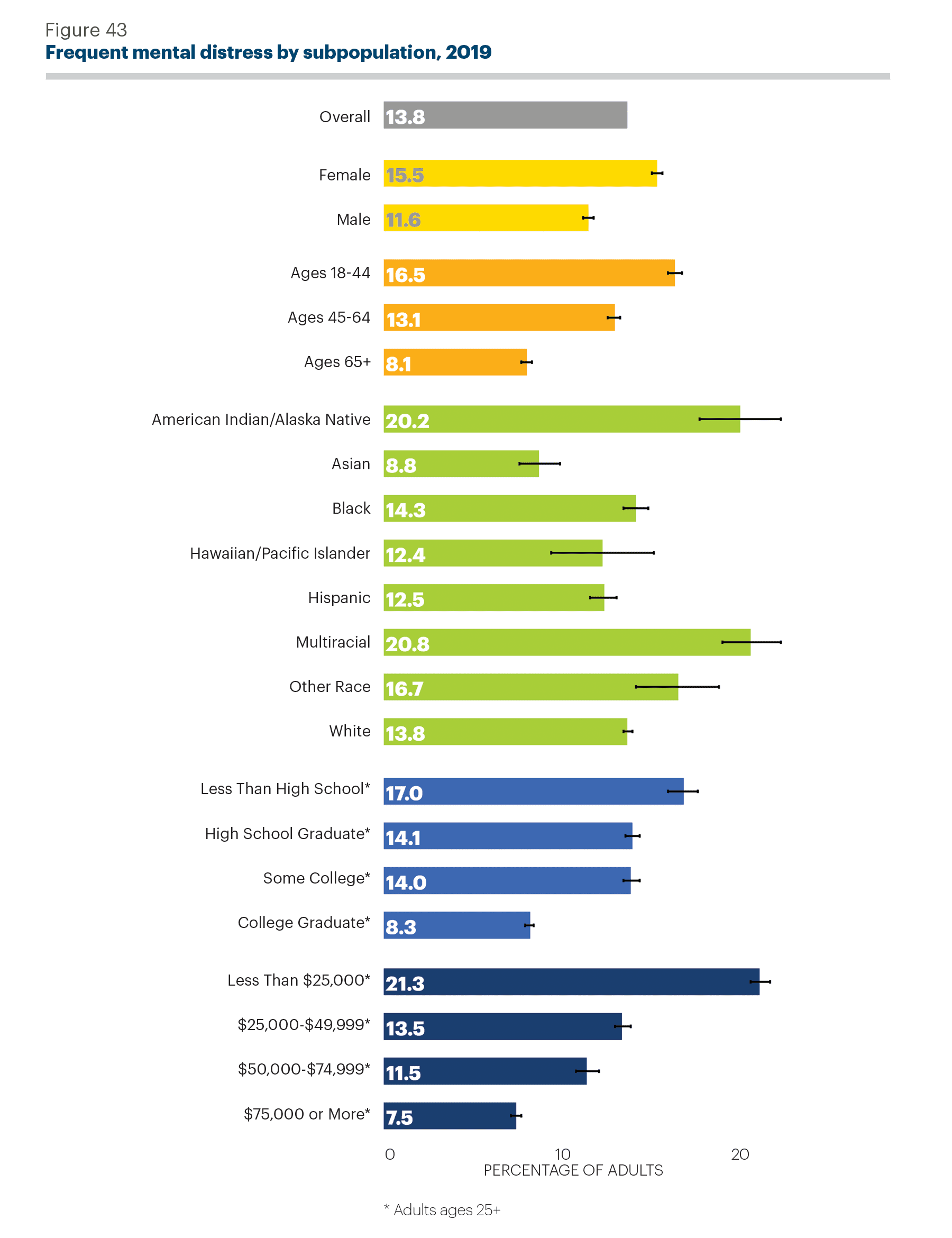
Hawaii (11.1%). The largest differences were by income, race and ethnicity, age and education (Figure 42). In 2019, the prevalence of frequent mental distress was higher among (Figure 43):
Definition: Percentage of adults who used prescription drugs (pain relievers, stimulants, sedatives) non-medically or illicit drugs (excluding cannabis) in the last 30 days.
The use of illicit drugs, including using prescription drugs without a doctor's guidance, can be dangerous and have lasting consequences.
Short-term effects include heart attack, stroke, psychosis, overdose and death according to the National Institute on Drug Abuse. The institute also cites longer-term effects such as
contracting a disease like HIV, hepatitis and
endocarditis or developing a
medical condition such as heart disease, certain cancers and mental illness. Substance abuse can also lead to addiction, called a substance use disorder, which often requires
lifelong management.
Findings
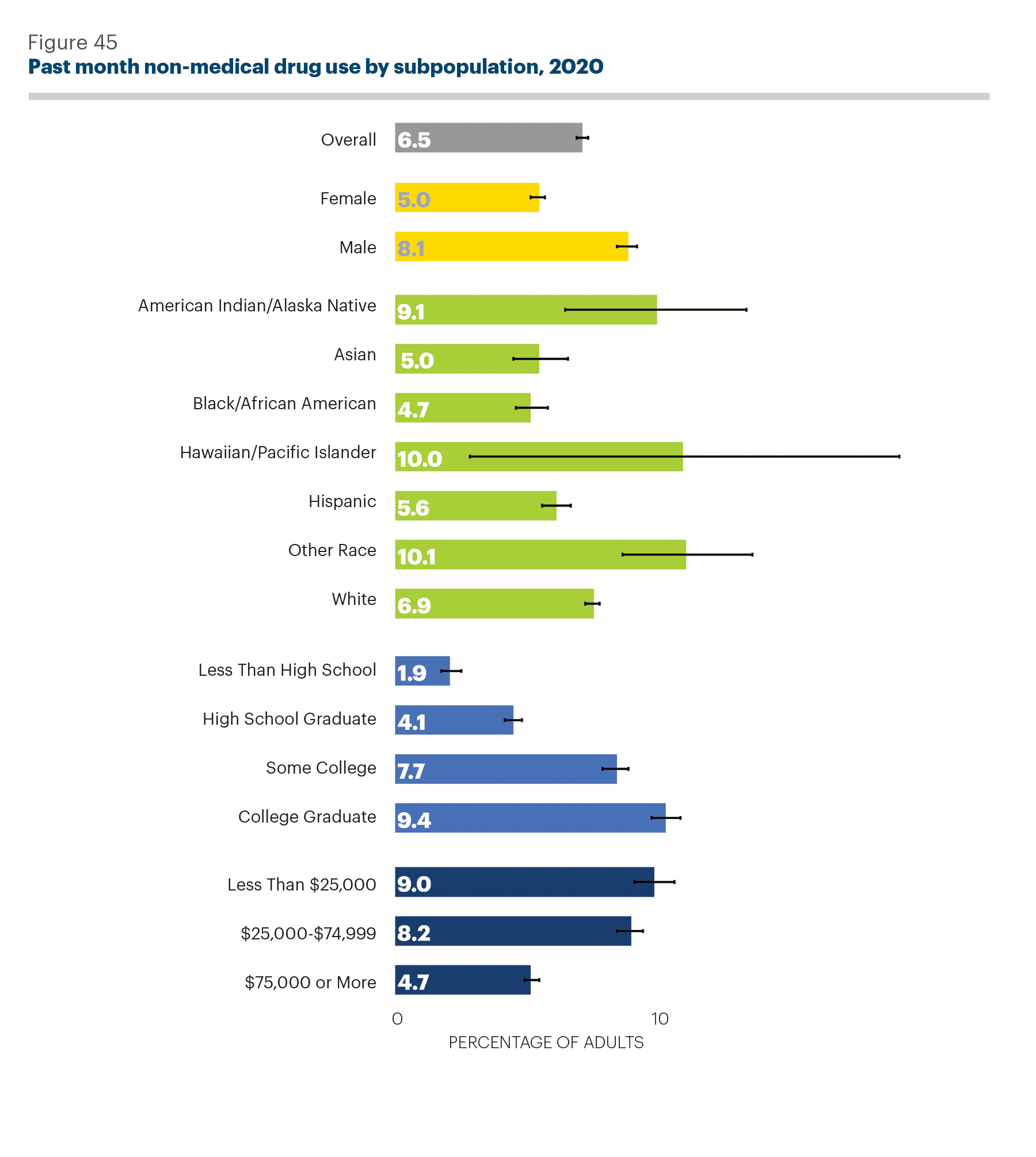
Adults who reported past month non-medical drug use increased 10% between 2019 and 2020, from 5.9% to 6.5% adults.
Disparities
The percentage of adults who reported past month
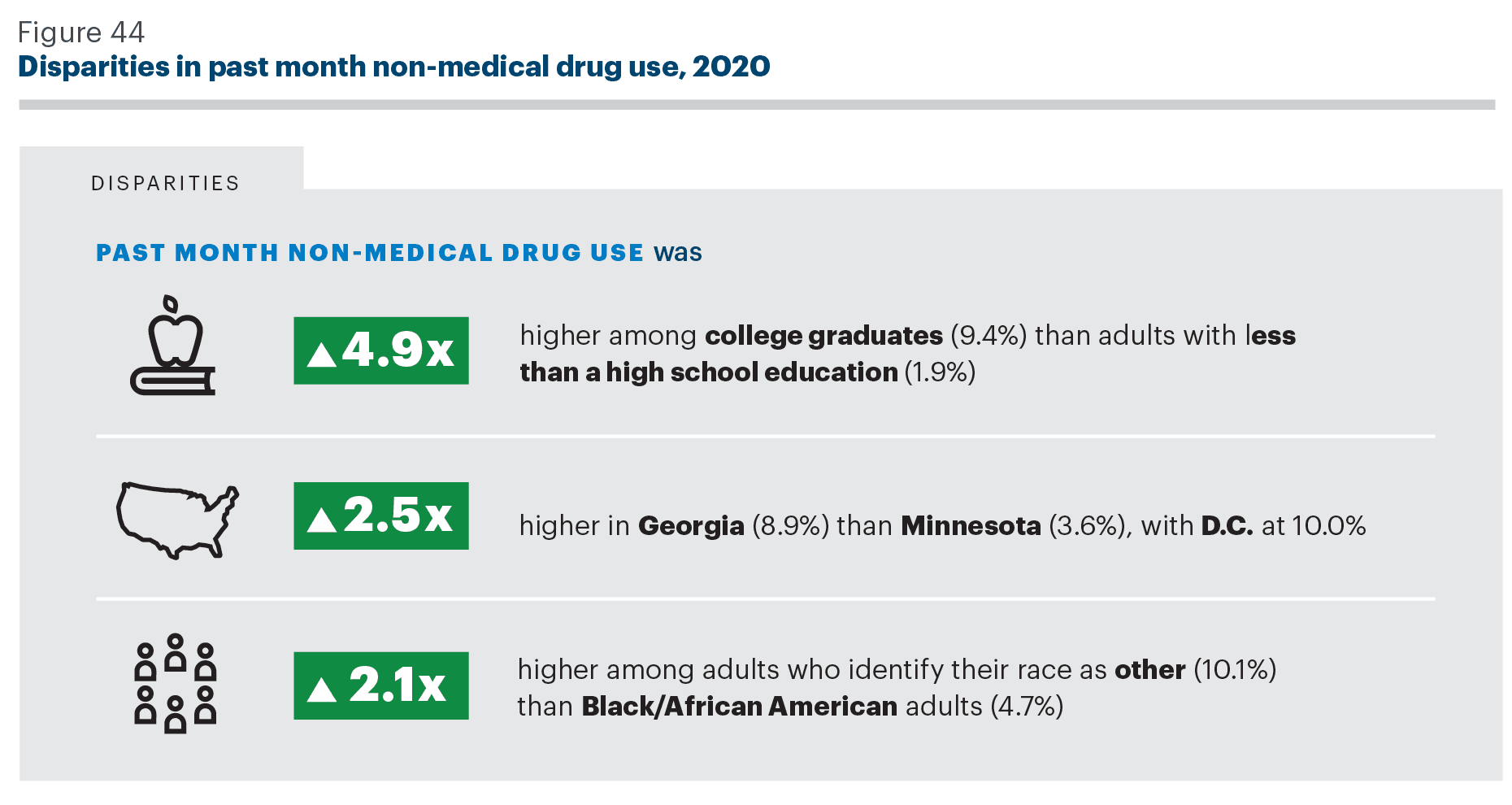
non-medical drug use varies across states and by gender, education, income as well as race and ethnicity. The largest disparities were by education, geography as well as race and ethnicity (Figure 44). Use was highest in
Georgia (8.9%),
Oklahoma and
Florida (both 8.8%). It was lowest in
Minnesota (3.6%), followed by
New Jersey (3.7%). In 2020, the percentage of adults who reported past month non-medical drug use was higher among (Figure 45):
Premature death and drug deaths dropped for the first time since 2012, while deaths by suicide continued to rise.
Definition: Number of deaths due to drug injury (unintentional, suicide, homicide or undetermined) per 100,000 population.
The United States has been experiencing a terrible drug crisis. According to the U.S. Drug Enforcement Administration’s 2018 National Drug Threat Assessment, drug overdose deaths
have risen steadily over the past two decades and have become a leading cause of injury death. Though these statistics reflect all drug deaths, opioids (i.e. painkillers) are the most significant contributor. Drug misuse and overdoses burden individuals, families, their communities, the health care system and the economy. According to Healthy People, the
effects of substance misuse contribute to significant public health problems including crime, homicide, suicide, teenage pregnancy, sexually transmitted infections, HIV/AIDS, domestic violence, child abuse and motor vehicle accidents.
Findings
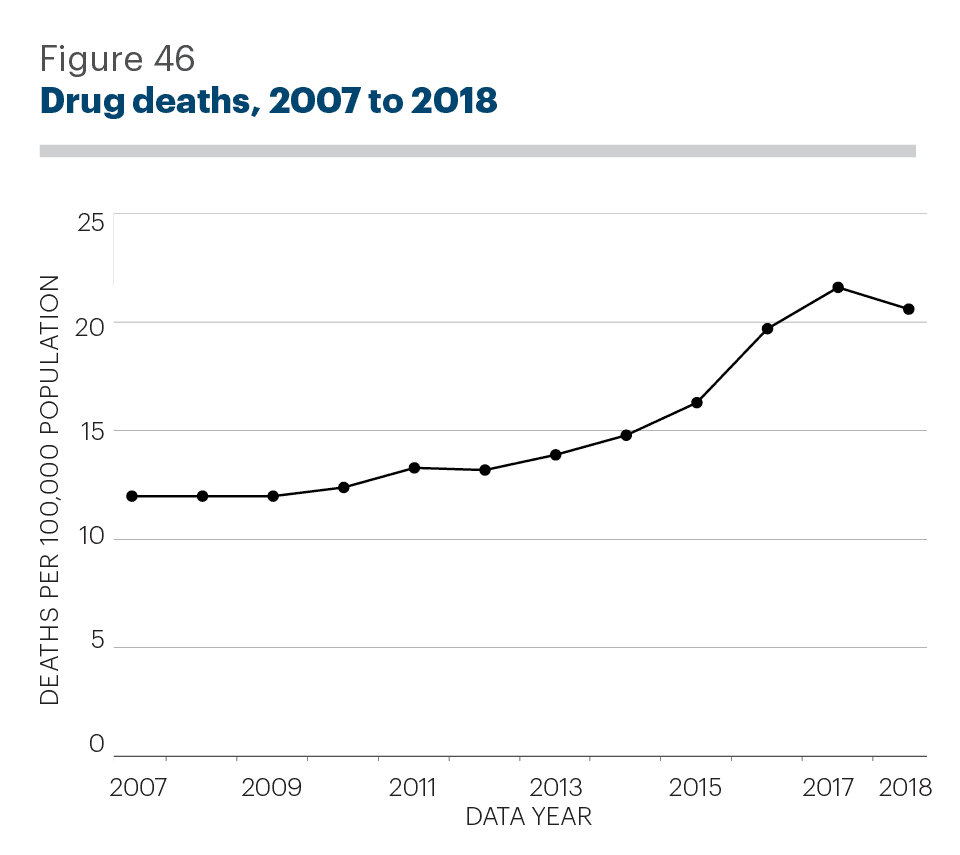
Between 2017 and 2018,
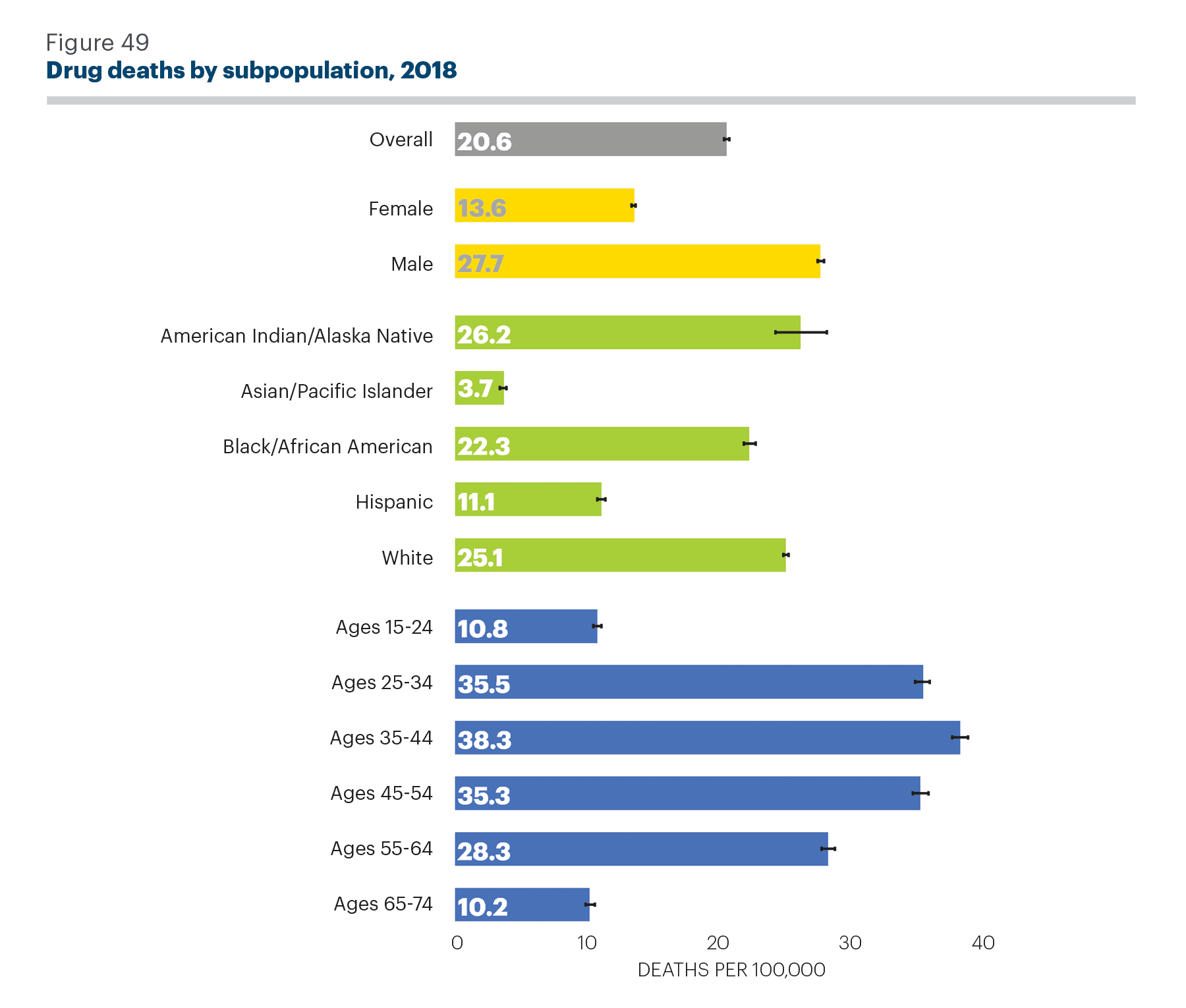
drug deaths decreased for the first time since 2012 (Figure 46). The drug death rate declined 5% nationally from 21.6 to 20.6 deaths per 100,000. During the same time period, drug deaths declined:
- 4% among males (28.8 to 27.7 per 100,000) and 6% among females (14.4 to 13.6).
- 14% among ages 15-24 (12.6 to 10.8 per 100,000), 8% among ages 25-34 (38.4 to 35.5) and 6% among ages 45-54 (37.7 to 35.3).
- 7% among the white population (26.9 to 25.1 per 100,000).
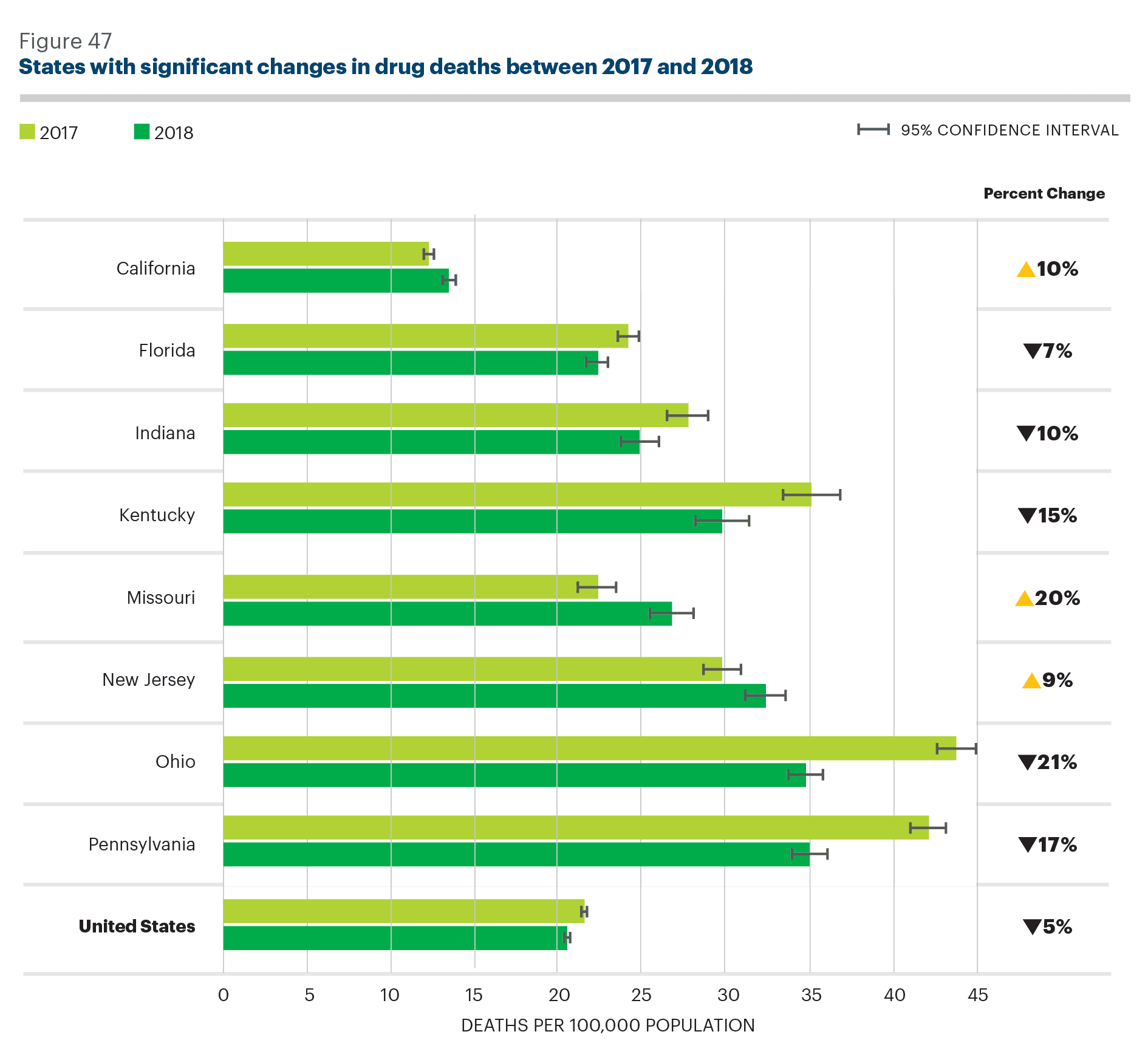
Between 2017 and 2018, drug deaths decreased significantly in
Florida (24.2 to 22.4 per 100,000 population),
Indiana (27.8 to 24.9),
Kentucky (35.2 to 29.8),
Ohio (43.8 to 34.8) and
Pennsylvania (42.1 to 35.0) (Figure 47). Over the same time period, the drug death rate increased in
California (12.3 to 13.5 per 100,000 population),
Missouri (22.4 to 26.8) and
New Jersey (29.8 to 32.4). Drug deaths also increased 11% among adults
ages 65-74 (9.2 to 10.2 per 100,000 population).
Disparities
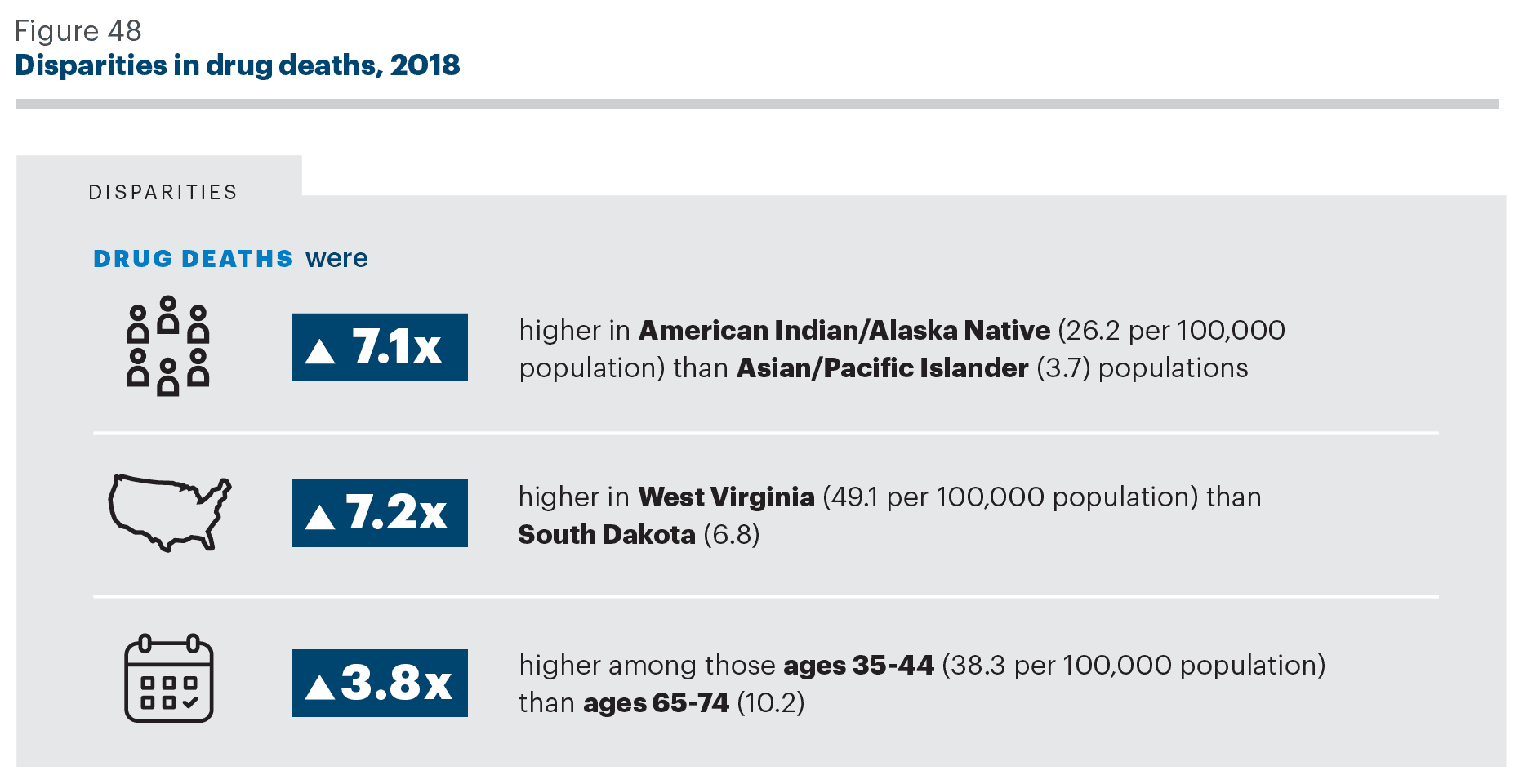
The drug death rate varies widely across states and by gender, age as well as race and ethnicity. The largest disparities were by race and ethnicity, geography and age (Figure 48). In 2018, the
American Indian/Alaska Native population had the highest drug death rate at 26.2 deaths per 100,000 population, followed by
white and
Black/African American populations (Figure 49). The
Asian/Pacific Islander population had the lowest rate. The same year, the drug death rate was highest in
West Virginia (49.1 deaths per 100,000 population),
Delaware (42.4) and
Maryland (37.7). It was lowest in
South Dakota (6.8 deaths per 100,000 population) and
Nebraska (7.4). By age groups, adults
ages 35-44 had the highest rate, followed by those ages
25-34,
45-54,
55-64 and
15-24. Adults ages 65-74 had the lowest drug death rate. Drug deaths were also higher among
males than females.
Premature death and racial inequality
Definitions
Premature Death: Number of years of potential life lost (YPLL) before age 75 per 100,000 population.
Premature Death Racial Inequality: Ratio of the racial/ethnic group with the highest premature death rate before age 75 (varies by state) to the white population.
Deaths at younger ages contribute more to the premature death rate than deaths occurring closer to age 75. According to the National Center for Health Statistics WISQARS Years of Potential Life Lost
(YPLL) Report, cancer, unintentional injury, heart disease, suicide, deaths in the perinatal period and homicide were the leading causes of years of potential life lost before age 75 in 2018. Many premature deaths may be
preventable through lifestyle modifications such as smoking cessation, healthy eating and exercise. The CDC estimates that
20%-40% of premature deaths are preventable.
Findings
Premature death
Between 2017 and 2018,
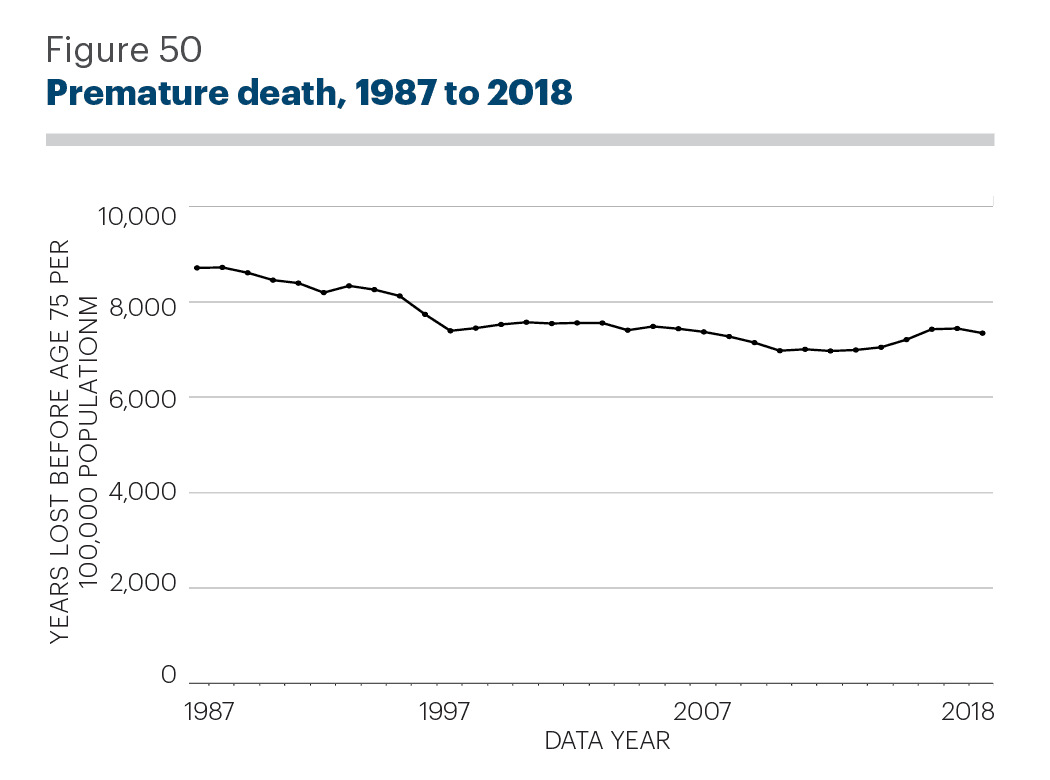
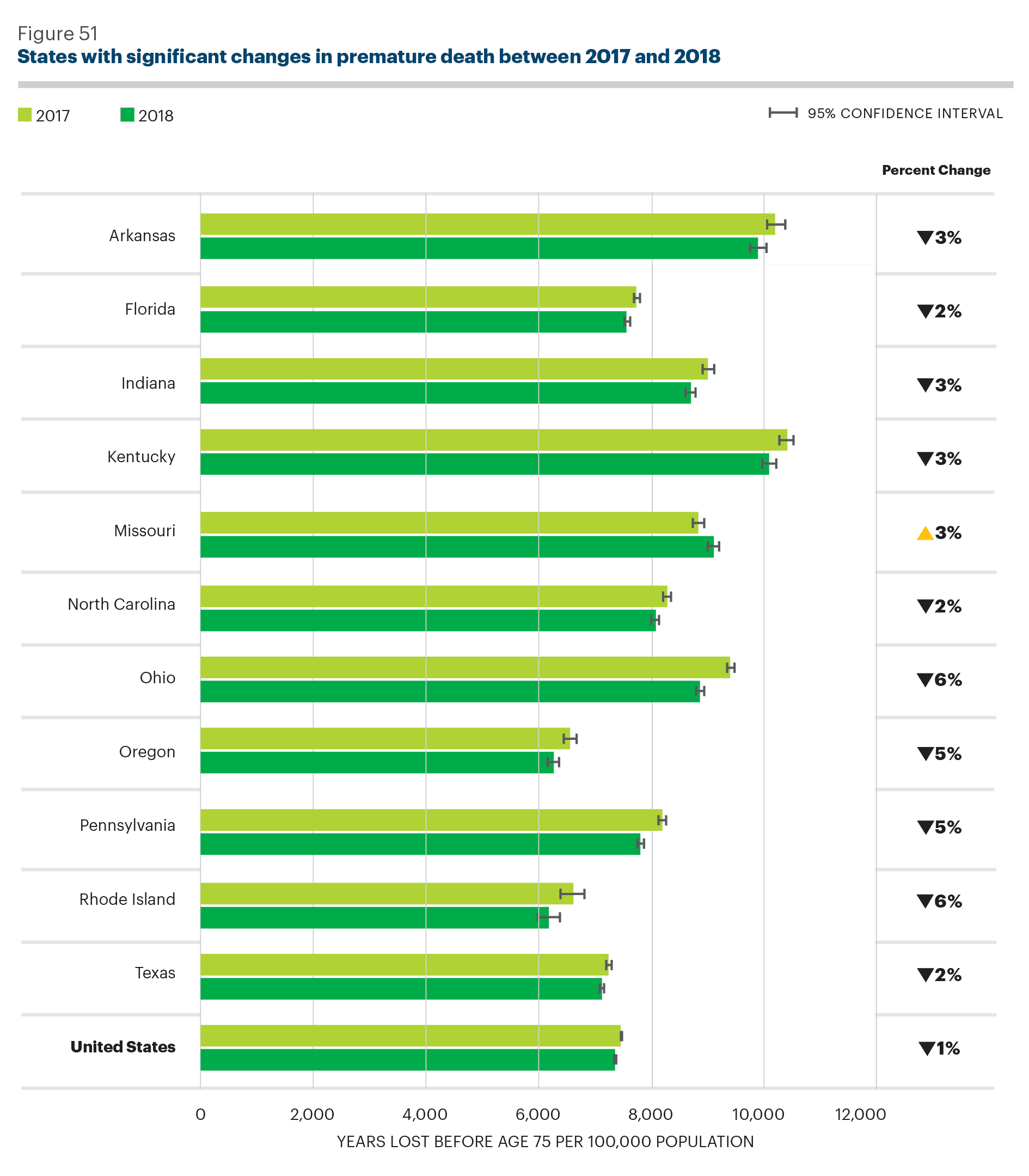
premature death decreased nationally for the first time since 2012, declining 1% from 7,447 to 7,350 years lost before age 75 per 100,000 population (Figure 50). The rate declined significantly in 10 states (Figure 51), led by
Ohio (9,399 to 8,857 years lost per 100,000) and
Rhode Island (6,602 to 6,174). Between 2017 and 2018, the premature death rate increased significantly in
Missouri (8,828 to 9,112 years lost per 100,000 population).
Disparities
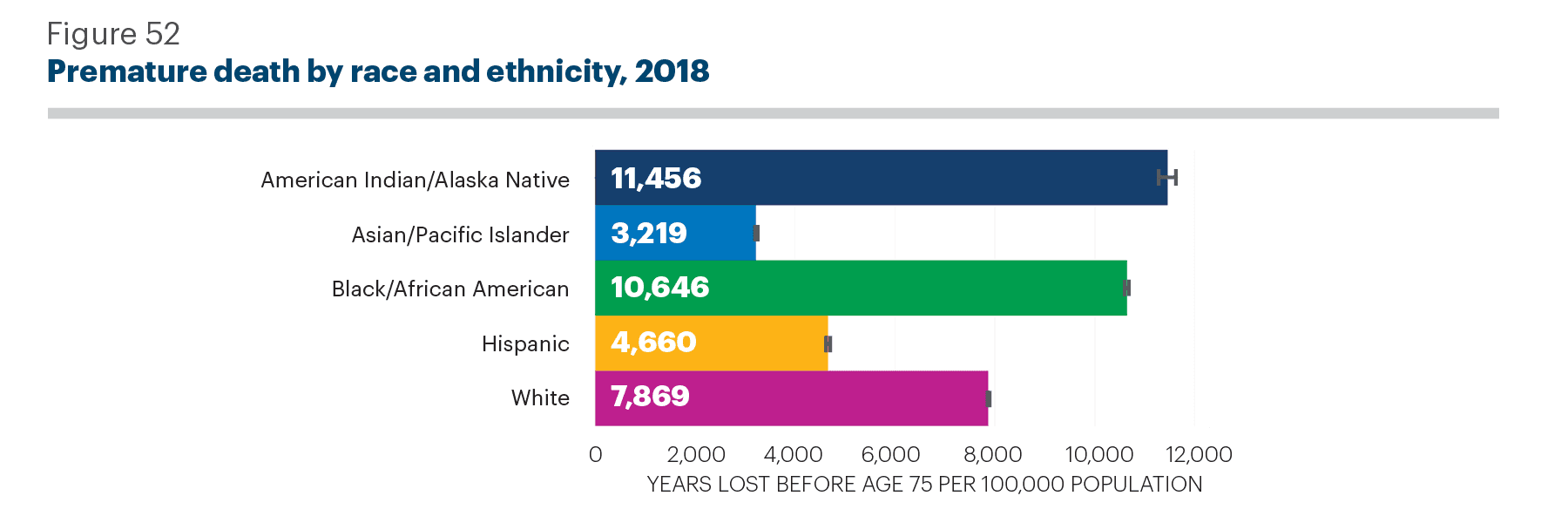
The premature death rate varies across states and by race and ethnicity. In 2018, the premature death rate was highest among the
American Indian/Alaska Native population, followed by Black/African American,
white and
Hispanic populations. The rate was lowest among the
Asian/Pacific Islander population (Figure 52). This same year, the premature death rate was highest in
West Virginia (11,338 years lost before age 75 per 100,000),
Mississippi (11,011) and
Alabama (10,421). It was lowest in
Minnesota (5,648 years lost per 100,000),
California (5,650) and
New York (5,800).
Premature death racial inequality
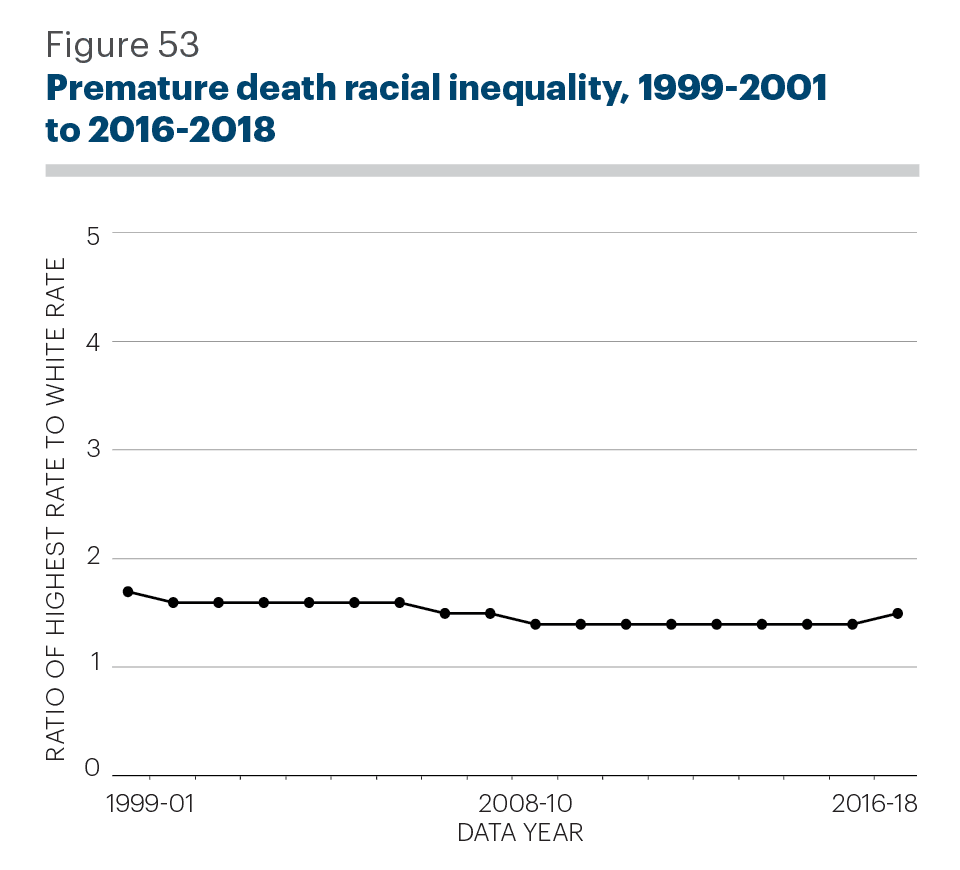
The ratio of the racial group with the highest premature death rate, which nationally is the American Indian/Alaska Native population, to the white premature death rate increased 7% between 2010-2012 and 2016-2018, from 1.4 to 1.5 (Figure 53). The racial group with the highest premature death rate varies by state. The
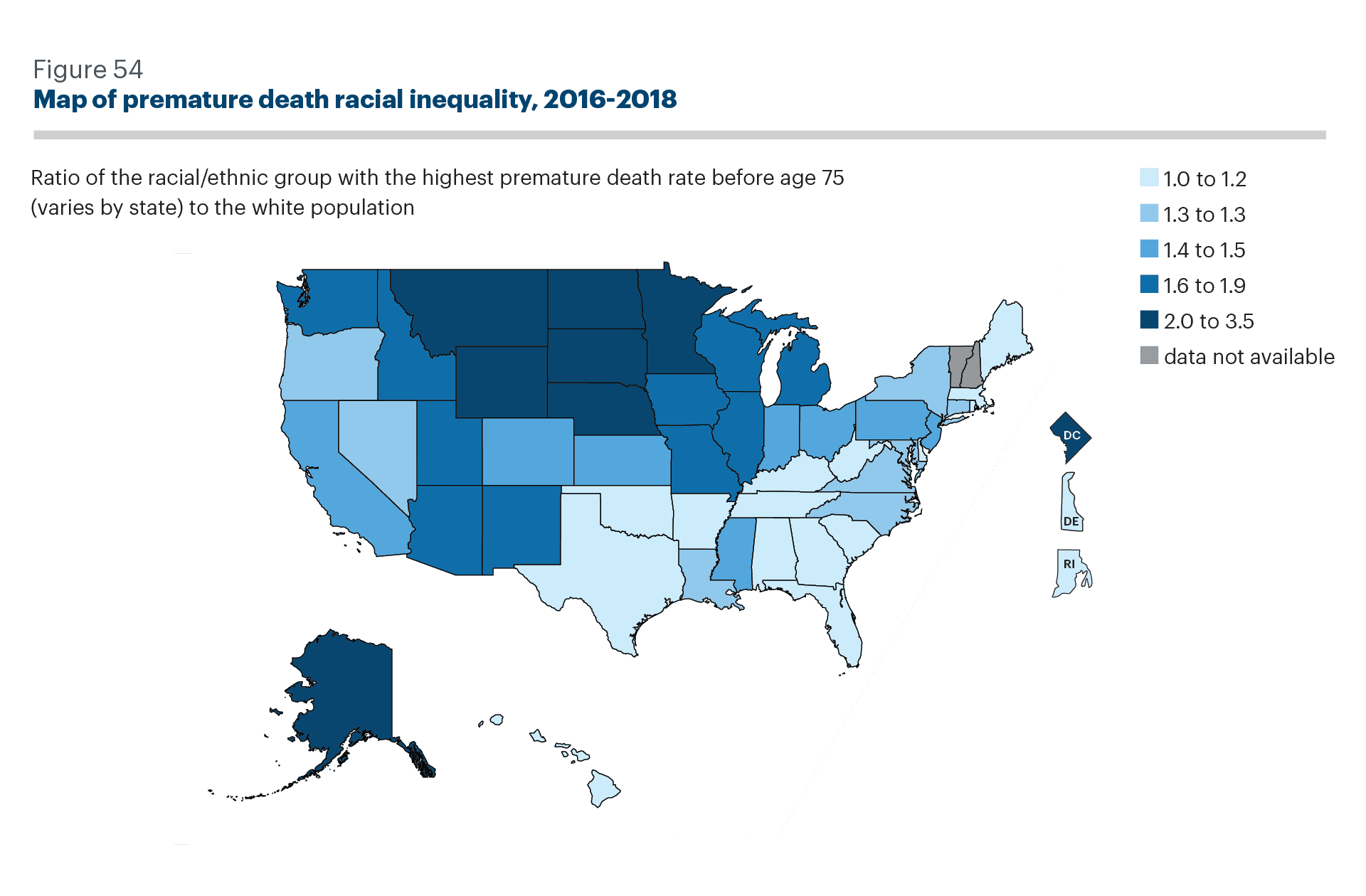
premature death racial inequality ratio varies from 1.0 (no difference between Black/African American and white population) in
Hawaii,
Maine and
Rhode Island to 3.5 in
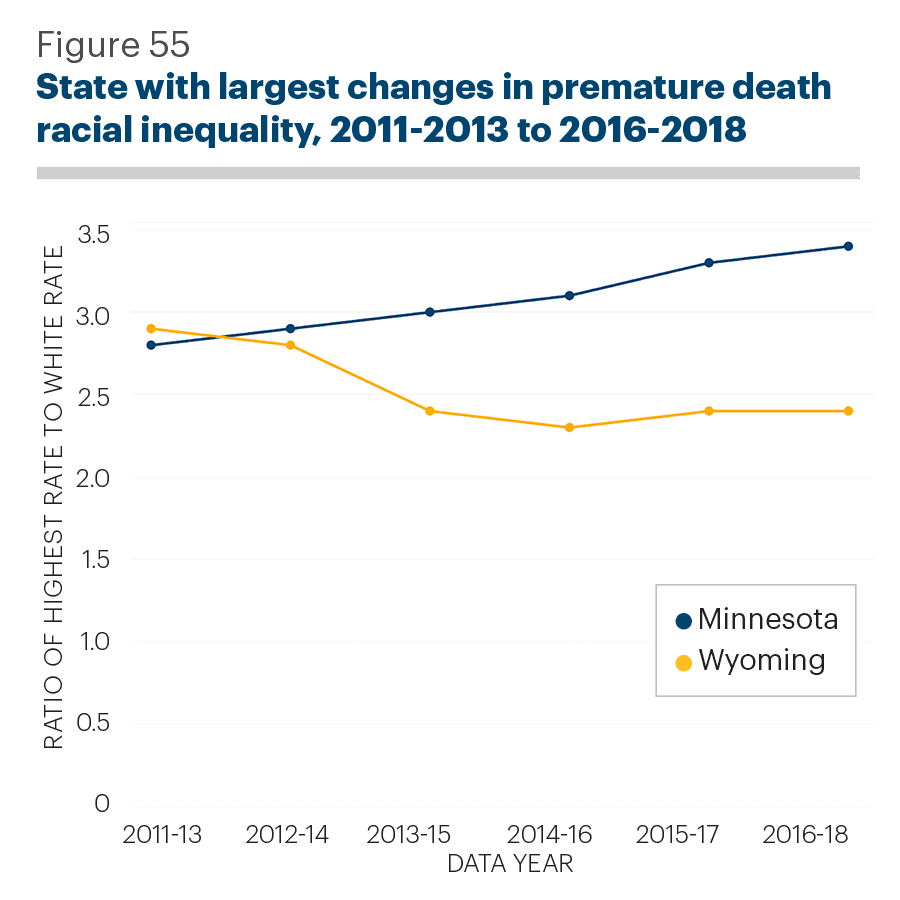
South Dakota between American Indian/Alaska Native and white populations (Figure 54). Since 2011-2013, the largest increase in premature death racial inequality was in
Minnesota (2.8 to 3.4 ratio between American Indian/Alaska Native and white populations), and the largest improvement during the same time period was in
Wyoming (2.9 to 2.4 ratio between American Indian/Alaska Native population and white populations. (Figure 55).
Definition: Number of deaths due to intentional self-harm per 100,000 population.
In 2018, there were an estimated 1.4 million suicide attempts and more than
48,000 deaths by suicide, making it the 10th-leading cause of death in the United States and the
second-leading cause of death in the United States for youth and adults ages 15-34 according to the CDC. Societal costs associated with suicide were estimated at
$70 billion, including lifetime medical fees and lost work costs.
Findings
Between 2017 and 2018, deaths by
suicide increased 2% nationally (14.5 to 14.8 deaths per 100,000 population) and 9% in
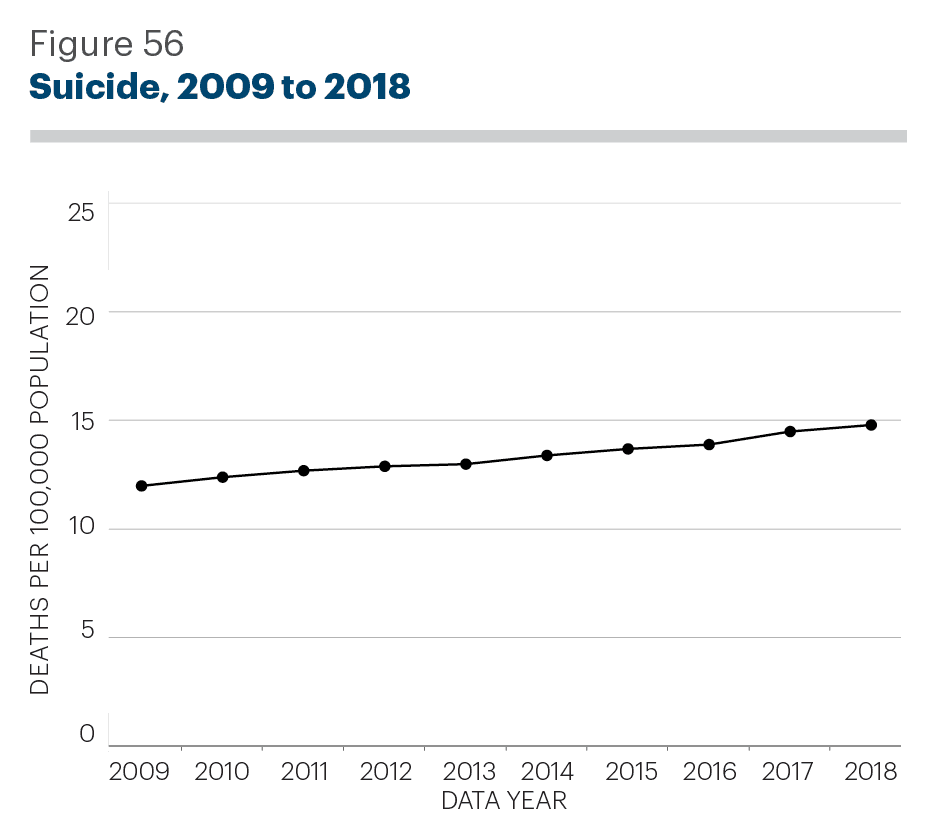
Florida (14.7 to 16.0), the one state with a significant past year increase. The suicide rate has been increasing consistently for the past decade. Nationally, the suicide rate increased 23% between 2009 and 2018, from 12.0 to 14.8 deaths per 100,000 (Figure 56). During this time, suicide increased:
- 28% among females (5.0 to 6.4 per 100,000 population) and 21% among males (19.7 to 23.8).
- Among all age groups except adults ages 45-54. In particular, suicide increased 45% among ages 15-24 (10.0 to 14.5 per 100,000 population) and 34% among ages 25-34 (13.1 to 17.6).
- Across all racial and ethnic groups. In particular, suicide increased 41% among the American Indian/Alaska Native population (15.4 to 21.7 per 100,000 population) and 36% among the Black/African American population (5.3 to 7.2).
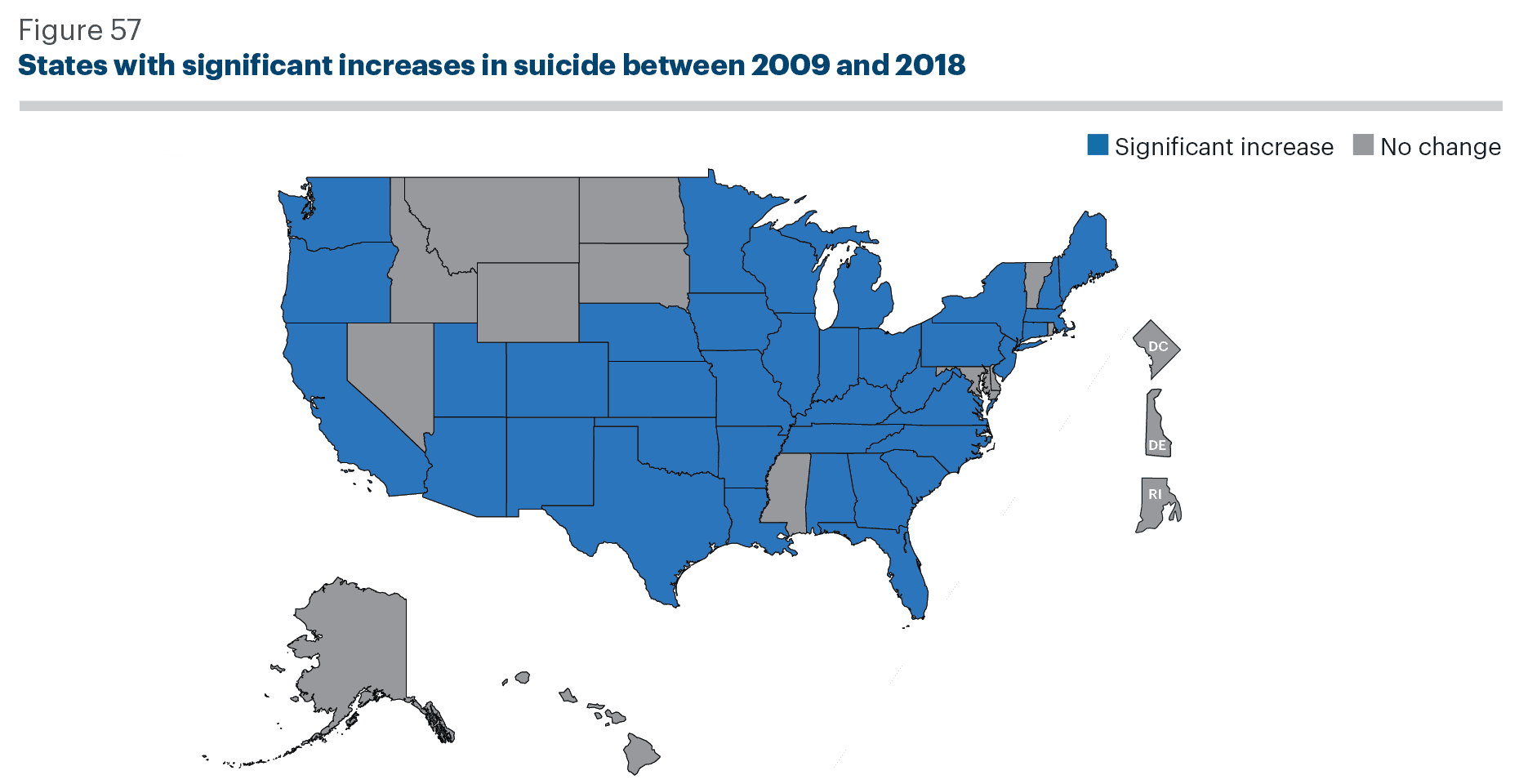
Between 2009 and 2018, suicide increased significantly in 37 states, ranging from a 7% increase in
California (10.7 to 11.5 per 100,000 population) to increases of 62% in both
New Hampshire (12.2 to 19.8) and
West Virginia (13.3 to 21.6) (Figure 57).
Disparities
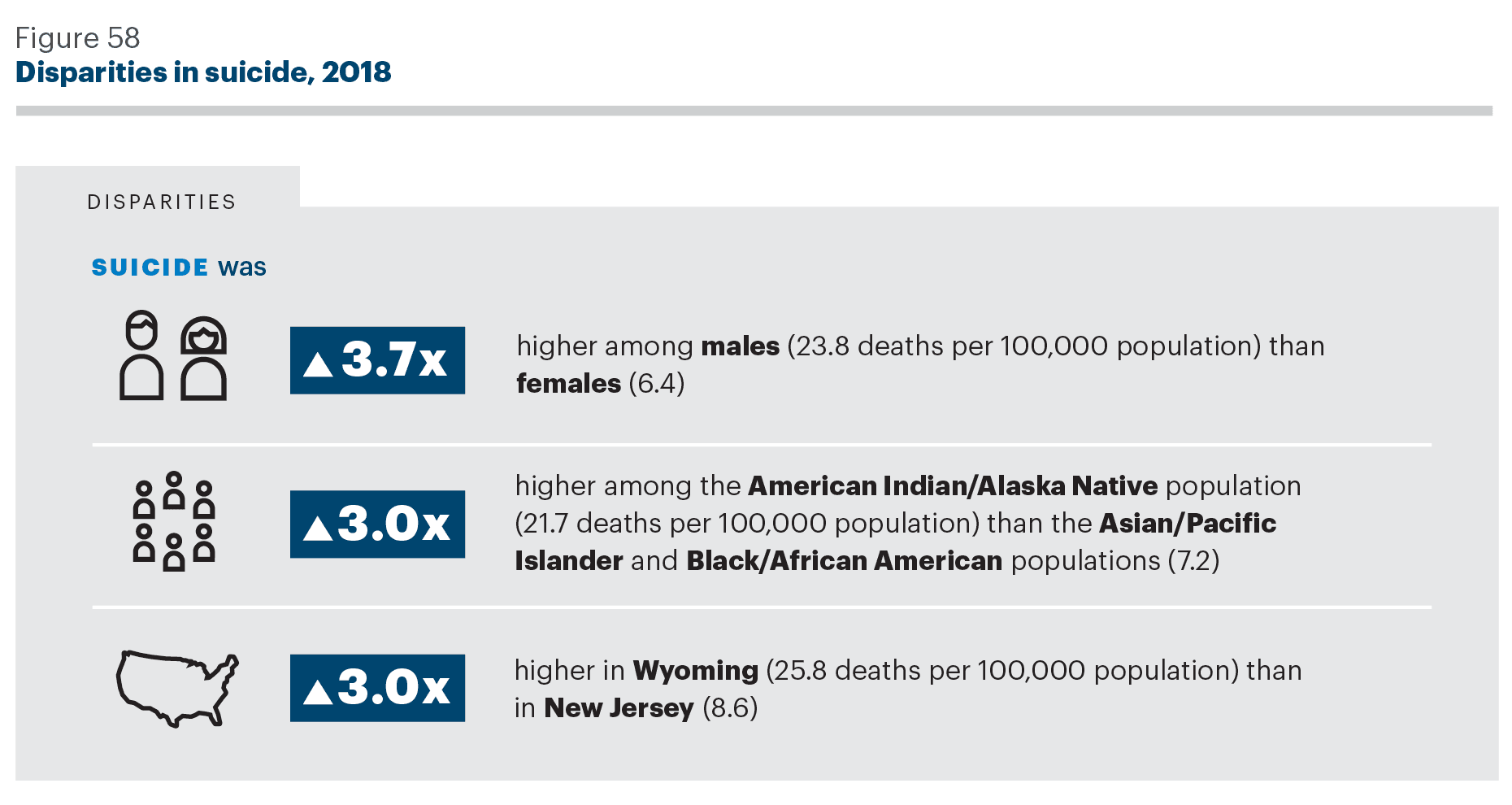
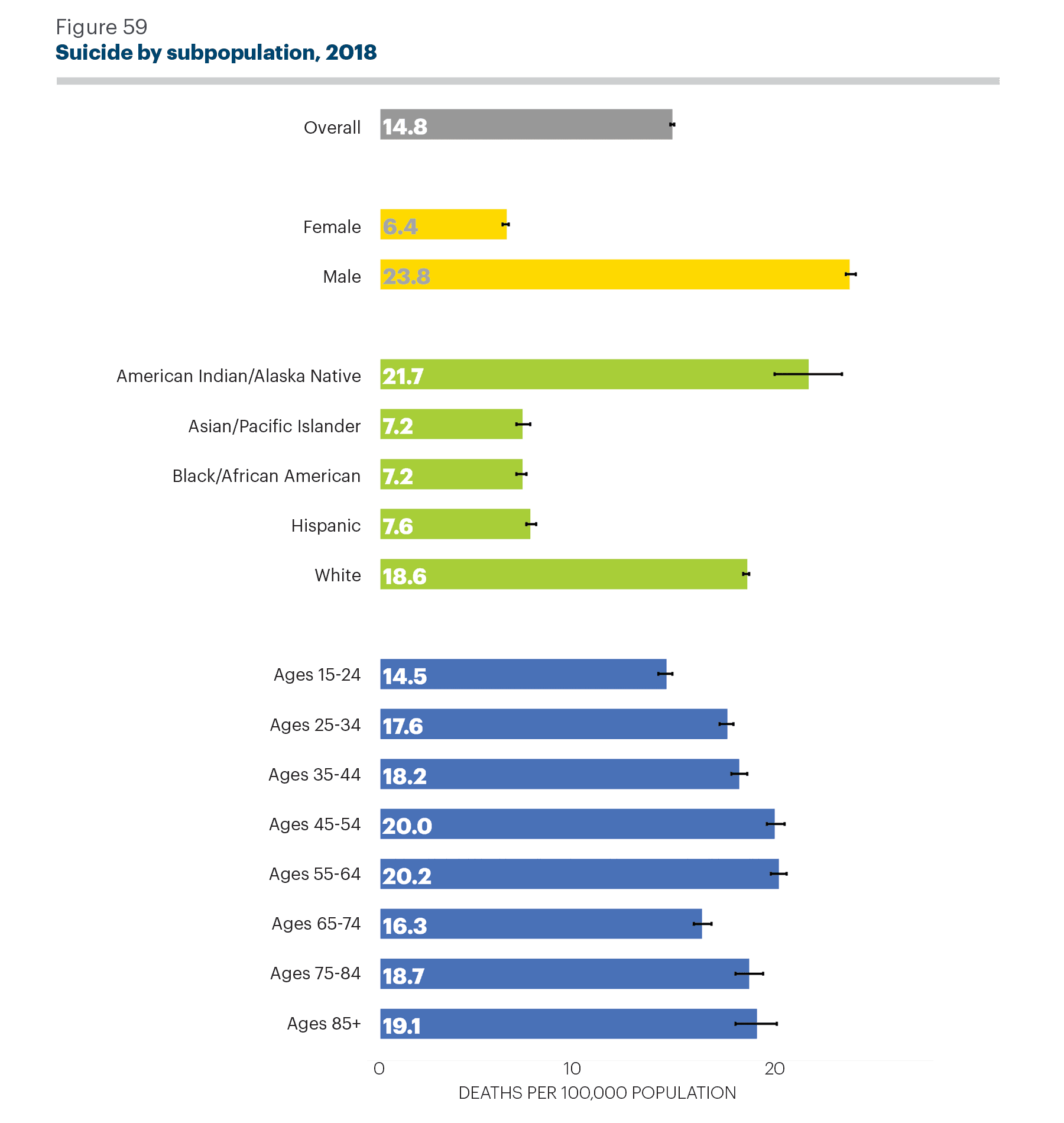
Suicide rates vary across states and by gender, age as well as race and ethnicity. The largest differences in 2018 were by gender, geography as well as race and ethnicity (Figure 58). The suicide rate was higher among males than
females (Figure 59). By race and ethnicity, the
American Indian/Alaska Native population had the highest suicide rate, followed by
white and
Hispanic populations.
Asian/Pacific Islander and
Black/African American populations had the lowest rates. By state, the suicide rate was highest in
Wyoming (25.8 deaths per 100,000 population),
New Mexico (25.7) and
Alaska (25.2). It was lowest in
New Jersey (8.6 deaths per 100,000 population),
New York (8.7) and
Rhode Island (9.8). By age, the suicide rate was highest among adults
ages 55-64 and lowest among adults
ages 15-24.
Measured progress made on the prevalence of multiple chronic conditions, driven largely by improvements in the prevalence of cardiovascular disease. However, obesity reached a new national high. All three conditions are risk factors for more severe illness from COVID-19.
Multiple chronic conditions
Definition: Percentage of adults who have three or more of the following chronic health conditions: arthritis; asthma; chronic kidney disease; chronic obstructive pulmonary disease (COPD); cardiovascular disease (heart disease, heart attack or stroke); cancer (excluding skin); depression; diabetes.
Chronic conditions are medical conditions that last more than a year, require ongoing medical attention and/or limit activities of daily living. Adults with multiple chronic conditions represent one of the highest-need segments of the population as each of their chronic conditions is likely to
require extra medication and monitoring according to The Agency for Healthcare Research and Quality. The economic burden of multiple chronic conditions is substantial. Adults who have five or more chronic conditions spend
14 times more on health services compared with adults who have no chronic conditions. The Agency for Healthcare Research and Quality estimates that
71 cents of every dollar of health care spending goes toward treating people with multiple chronic conditions.
According to the CDC,
people with certain conditions such as chronic kidney disease, COPD, cardiovascular disease, cancer and diabetes are at increased risk of severe illness from COVID-19. People with asthma might be at increased risk for severe illness.
Findings
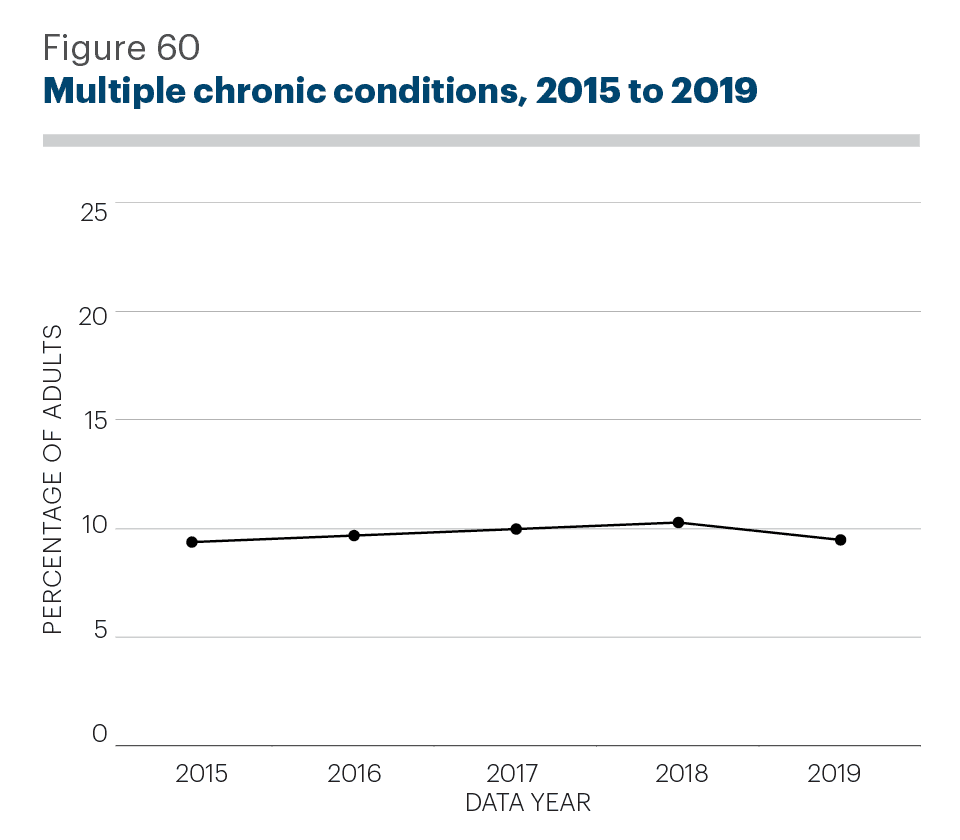
Between 2018 and 2019, the prevalence of
multiple chronic conditions declined 8% nationally from 10.3% to 9.5% of adults (Figure 60), affecting nearly 26.2 million adults.
Oregon (12.4% to 10%) and
New Hampshire (11.3% to 9.3%) had significant one-year declines. During this time period, the prevalence of multiple chronic conditions decreased:
- 5% among adults ages 65 and older (21.7% to 20.6%), who make up the majority of Americans living with multiple chronic conditions.
- 18% among Hispanic adults (6.7% to 5.5%).
- 11% among adults ages 25 and older with less than a high school education (18.6% to 16.6%).
Disparities
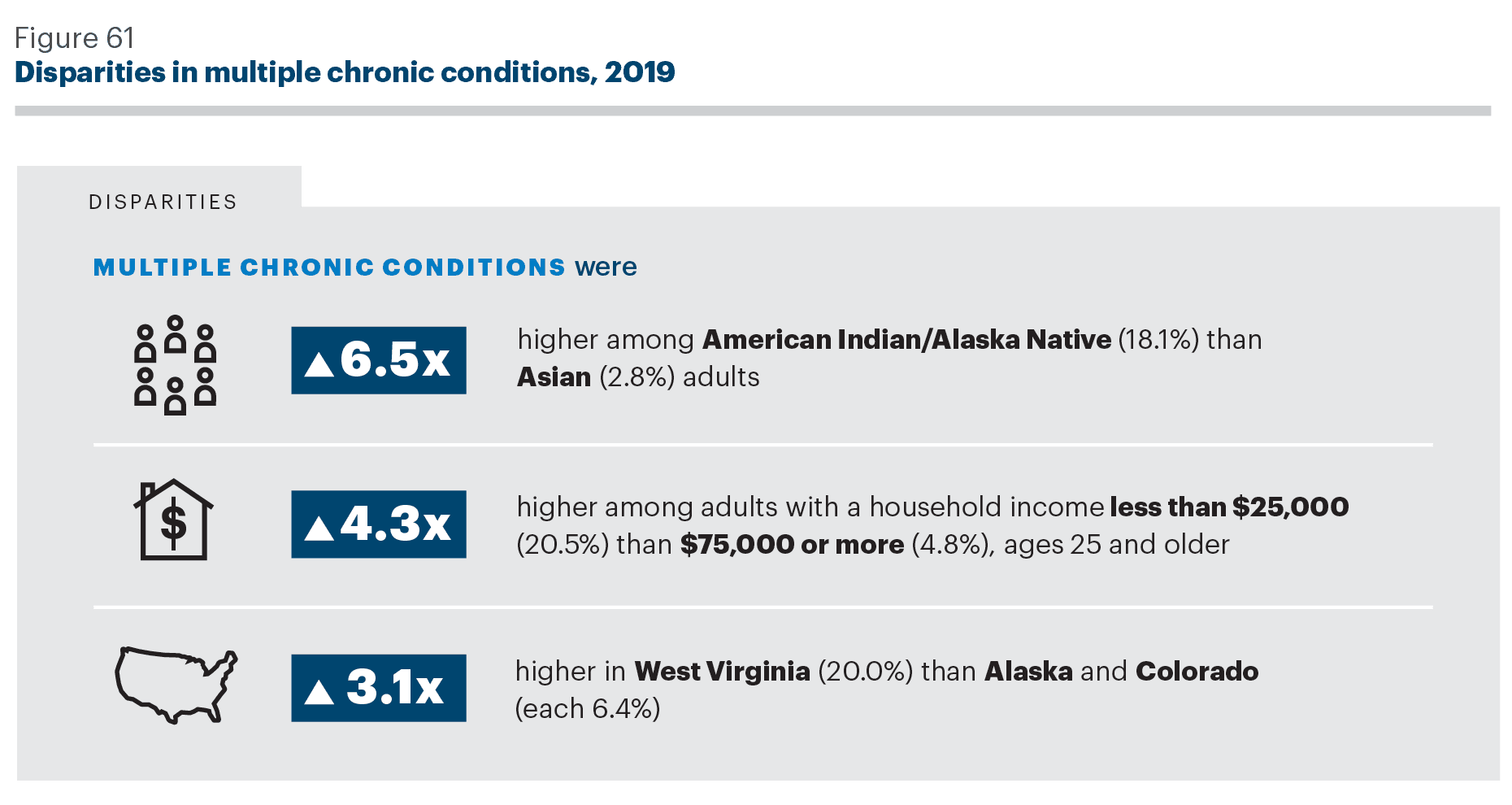
The prevalence of multiple chronic conditions varies across states and by gender, age, education, income as well as race and ethnicity. Age is a major risk factor for multiple chronic conditions. The prevalence was 7.1 times higher among adults
ages 65 and older than adults
ages 18-44. Disparities by race and ethnicity, income as well as geography were also particularly large (Figure 61). In 2019, the prevalence of multiple chronic conditions among adults was highest in
West Virginia (20.0%),
Kentucky (15.1%) and
Tennessee (14.6%). It was lowest among adults in
Alaska and
Colorado (each 6.4%),
Hawaii (6.5%) and
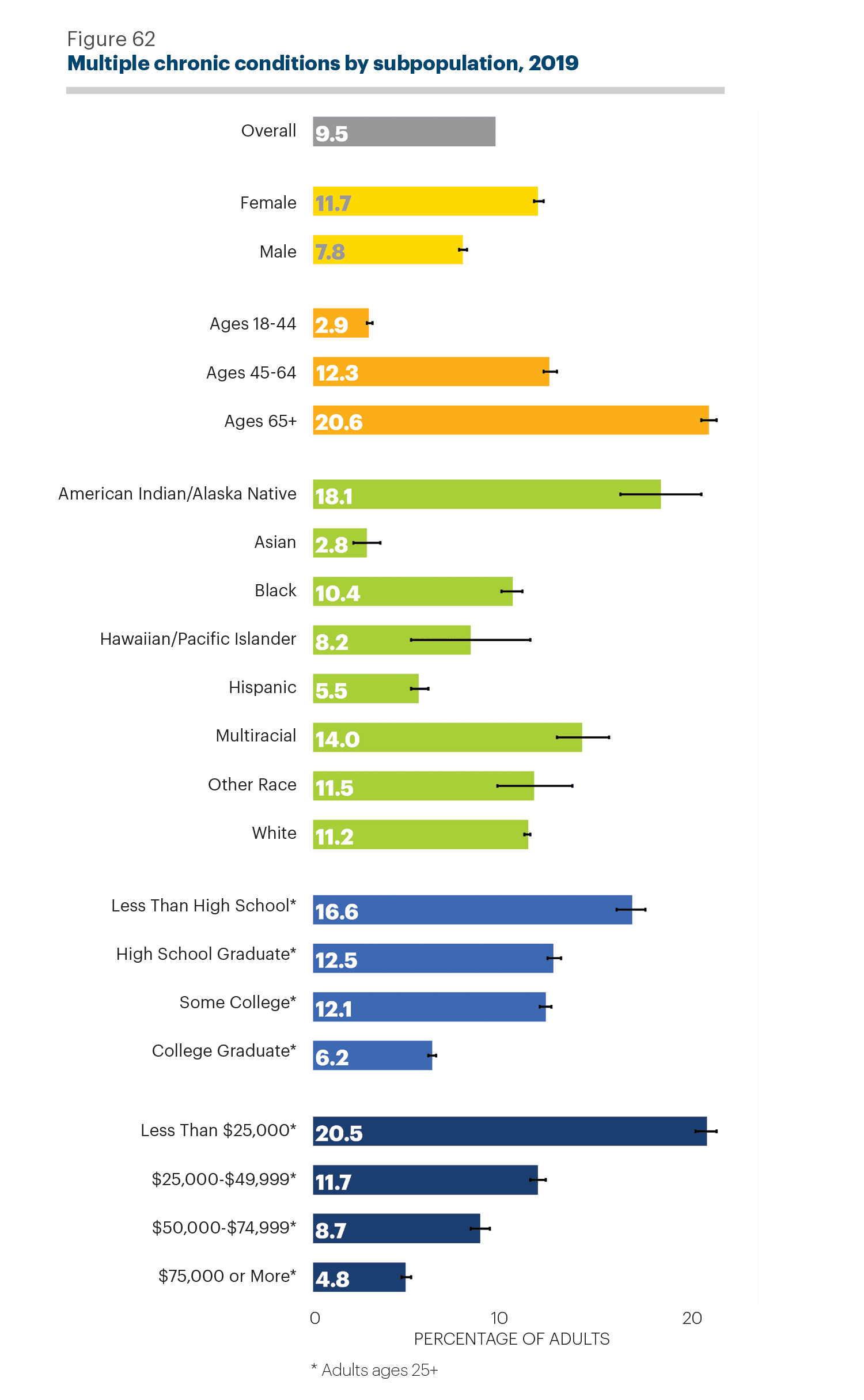
California (6.9%). The prevalence of multiple chronic conditions was higher among (Figure 62):
- Older adults (ages 65 and older) compared with younger adults, and adults ages 45-64 compared with those ages 18-44.
- American Indian/Alaska Native adults compared with all other race and ethnicity groups. Multiracial adults compared to adults identifying their race as other, white, Black, Hawaiian/Pacific Islander, Hispanic and Asian adults. Prevalence is higher among white adults than Black, Hispanic and Asian adults.
- Adults ages 25 and older with a household income less than $25,000 compared to adults with higher household incomes. Prevalence decreases with each increase in income level.
- Adults ages 25 and older with less than a high school education compared with adults with higher education levels.
- Females compared with males.
Progress in multiple chronic conditions largely driven by improvements in cardiovascular disease prevalence
Cardiovascular disease, which includes heart disease — the leading cause of death in the United States, decreased 7% between 2018 and 2019 from 9.0% to 8.4%, affecting nearly 21.2 million adults. Large disparities exist in cardiovascular disease by race and ethnicity as well as income. The prevalence is 3.1 times higher among
American Indian/Alaska Native adults (14.4%) than
Asian adults (4.7%). Among adults ages 25 and older, cardiovascular disease is 3.1 times higher among those with a household income
less than $25,000 (16.0%) than those with a household income of
$75,000 or more (5.1%).
The prevalence of the eight chronic conditions that comprise multiple chronic conditions varies by state. For a state-level view of the conditions and more, see
Explore Health Topics where users can view and compare state values for groups of related measures.
Definition: Percentage of adults with a body mass index of 30.0 or higher based on reported height and weight.
According to the CDC, adults who have obesity, when compared with adults at a healthy weight, are more likely to have a decreased quality of life and have an increased risk of developing
serious health conditions.
Weight stigma, or discrimination and stereotyping based on an individual’s weight, may also negatively influence psychological and physical health according to the National Eating Disorders Association. The costs associated with obesity and obesity-related health problems are staggering. One study estimated the medical costs of obesity to be
$342.2 billion (in 2013 dollars). Beyond direct medical costs, the indirect costs of decreased productivity tied to obesity are estimated at
$8.65 billion per year.
Findings
Nationally,
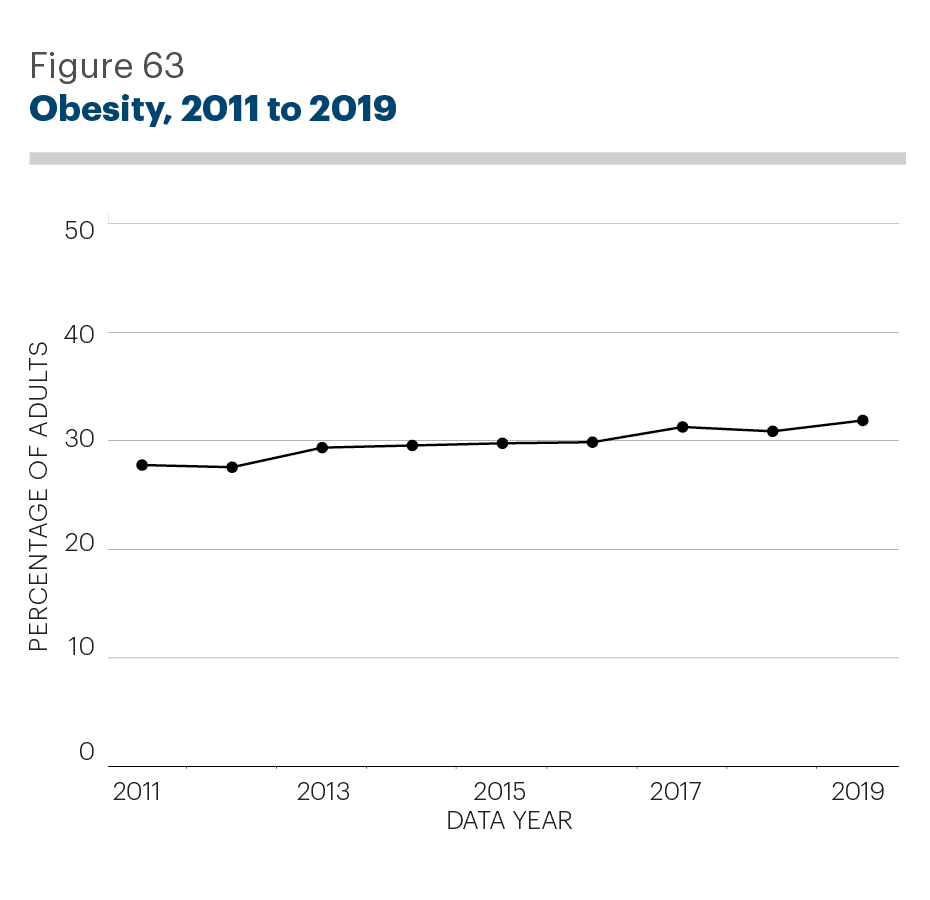
obesity increased 15% between 2011 and 2019, from 27.8% to 31.9% of adults, affecting 70.4 million adults, a new national high (Figure 63). During this time, obesity increased among
males and
females as well as across all age groups. Obesity also increased across all racial and ethnic groups. In particular, obesity increased 71% among
Hawaiian/Pacific Islander (25.0% to 42.8%), 31% among
Asian (8.7% to 11.4%) adults and 30% among adults who identify their race as
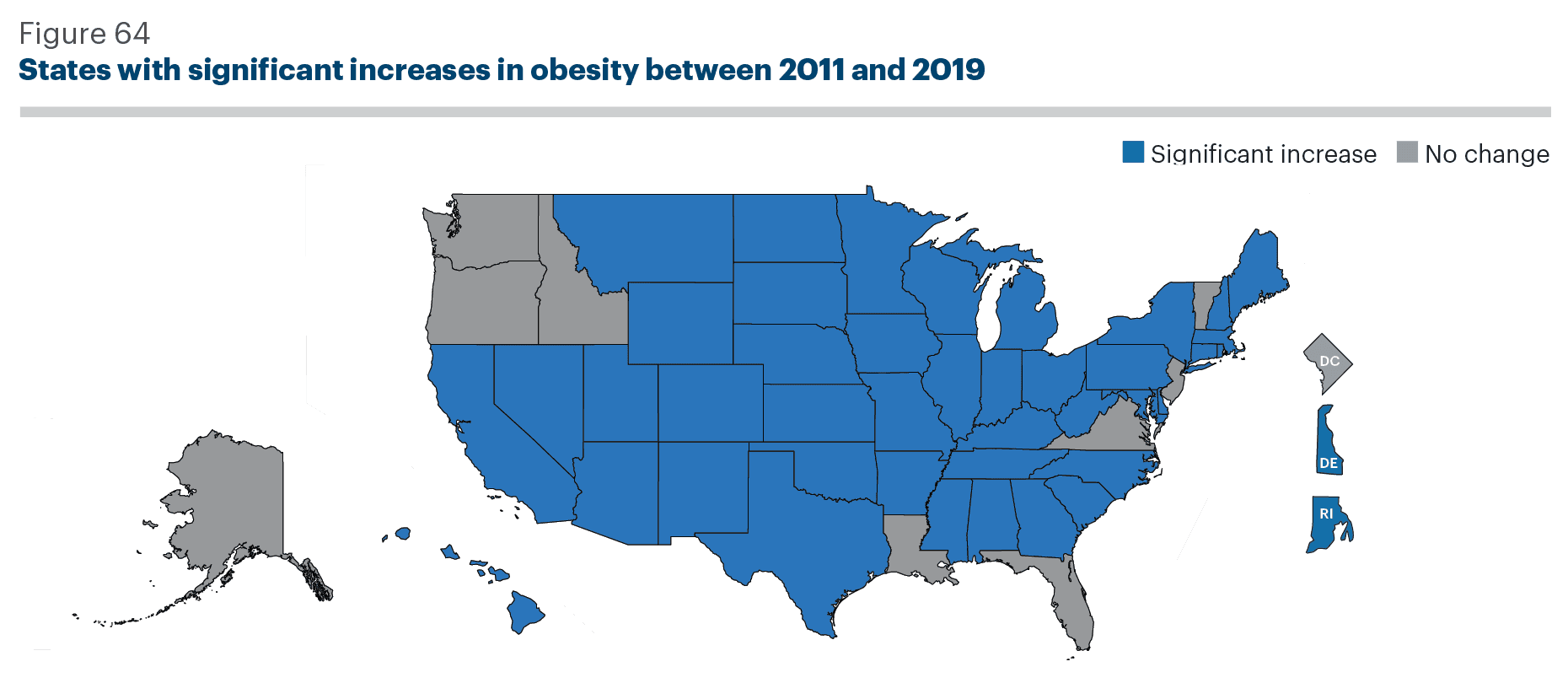
other (21.9% to 28.4%). Between 2011 and 2019, obesity increased significantly in 41 states (Figure 64), ranging from a 10% increase in
California (23.8% to 26.1%) to increases of 25% in
Arizona (25.1% to 31.4%),
Nevada (24.5% to 30.6%),
North Dakota (27.8% to 34.8%) and
Tennessee (29.2% to 36.5%). More recently, between 2018 and 2019 obesity increased 3% nationally (30.9% to 31.9%) and 9% in
Michigan (33.0% to 36.0%). Obesity decreased 12% in
Florida (30.7% to 27.0%).
Disparities
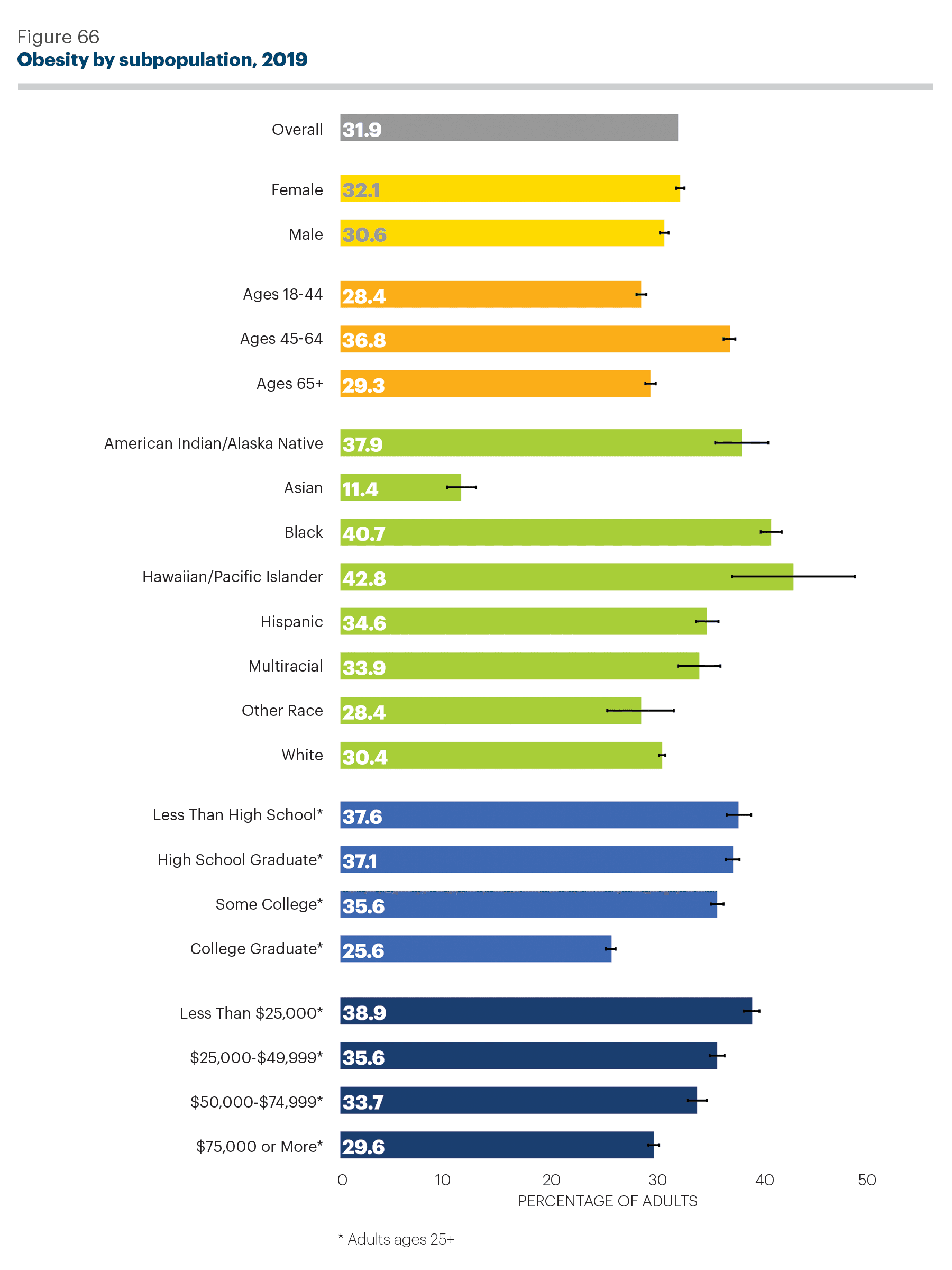
Obesity prevalence varies across states and by gender, age, education, income as well as race and ethnicity. The largest disparities in 2019 were by race and ethnicity, geography and education (Figure 65). Obesity prevalence was highest in
Mississippi (40.8%),
West Virginia (39.7%) and
Arkansas (37.4%), and lowest in
Colorado and the
District of Columbia (each 23.8%),
Hawaii (25.0%) and
Massachusetts (25.2%). In 2019, the prevalence of obesity was higher among (Figure 66):
Low birthweight and racial gap
No progress was made in reducing low birthweight or the low birthweight racial gap.
Definitions
Low birthweight: Percentage of infants weighing less than 2,500 grams (5 pounds, 8 ounces) at birth.
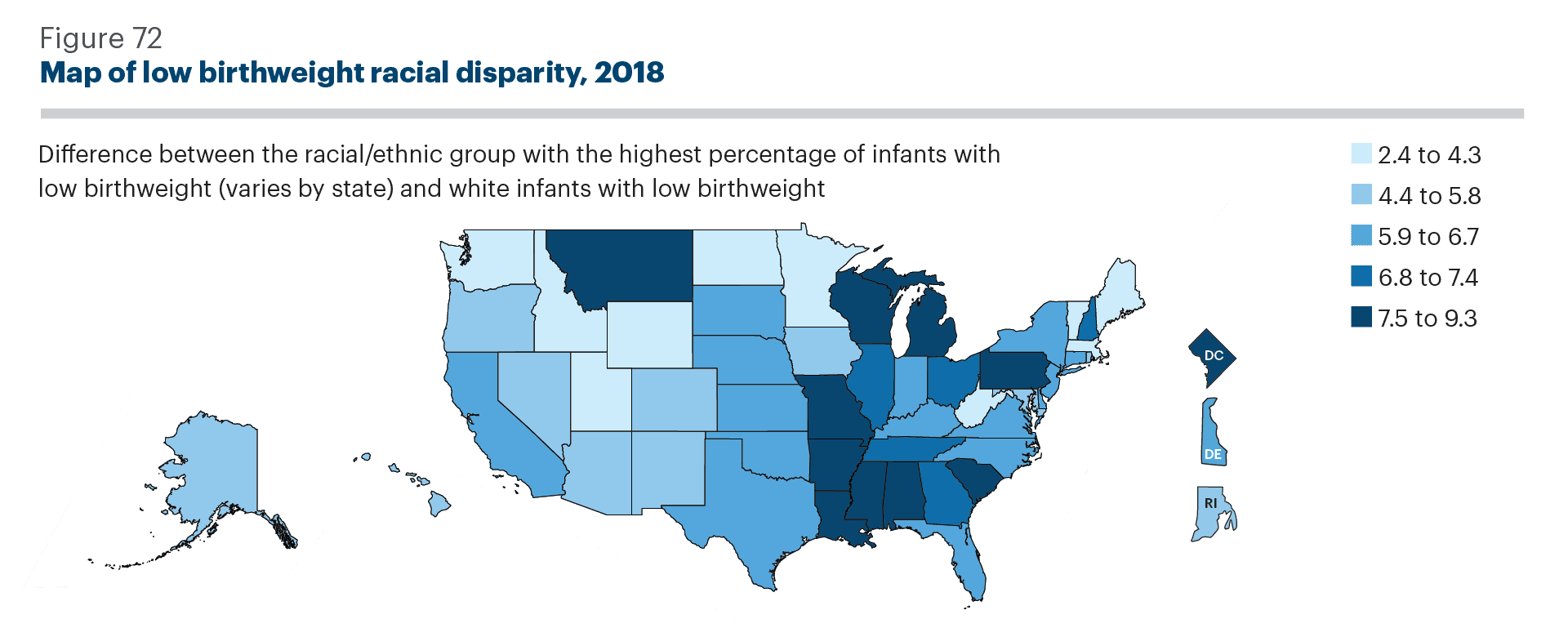
Low birthweight racial gap: Difference between the racial/ethnic group with the highest percentage of infants with low birthweight (varies by state) and white infants with low birthweight.
Low birthweight infants — weighing less than 2,500 grams at birth — are at
increased risk of infant mortality and a host of short- and long-term complications. For infants,
health conditions related to low birthweight include respiratory distress syndrome, bleeding in the brain, heart problems, intestinal disorders and retinopathy according to the March of Dimes. Health conditions for children and adults who were born with low birthweight include vision or hearing loss, breathing problems,
cerebral palsy, learning and
behavioral problems, Type 2 diabetes, heart disease, high blood pressure and obesity.
Findings
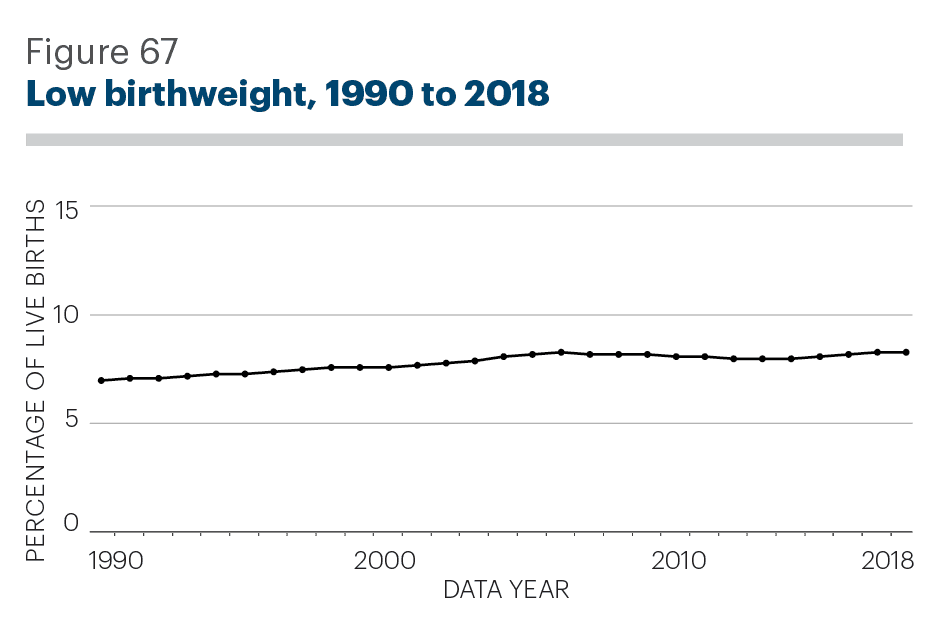
Nationally, the percentage of infants born
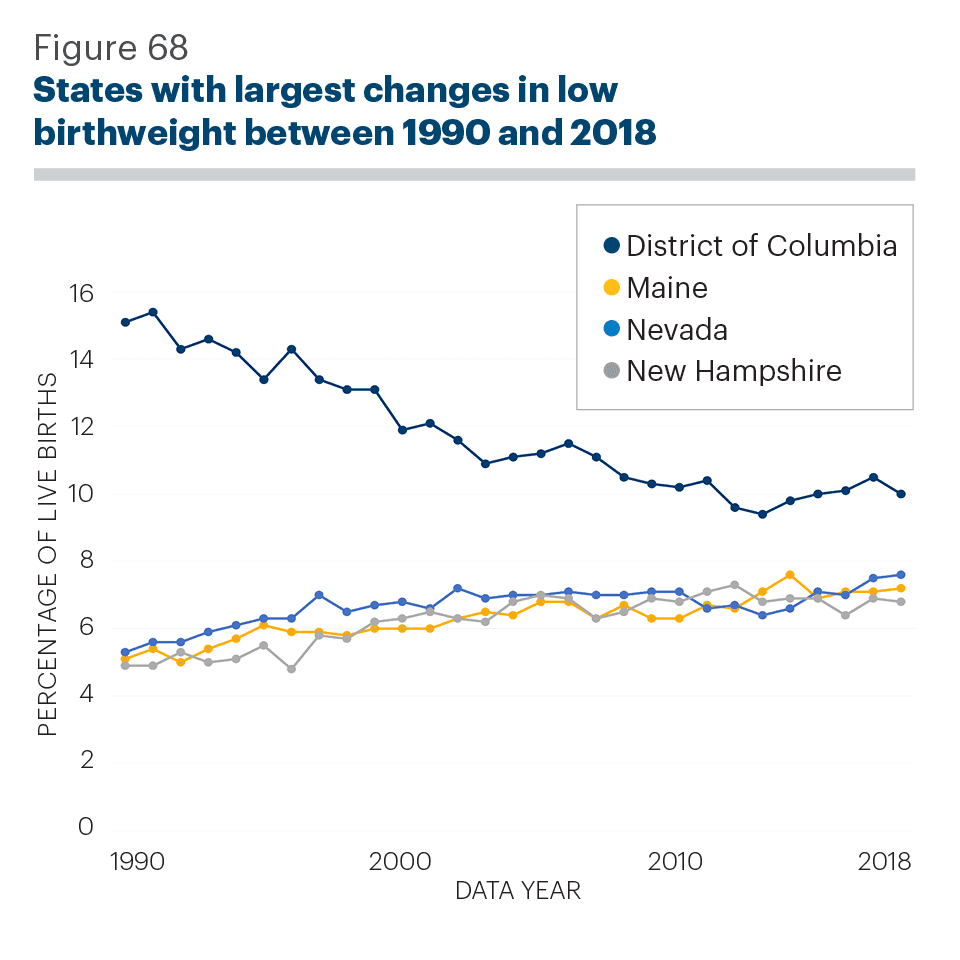
low birthweight increased 19% between 1990 and 2018, from 7.0% to 8.3% of infants (Figure 67). There was no change between 2017 and 2018. Between 1990 and 2018, the prevalence of low birthweight increased in all states. The largest increases occurred in
Maine (41% from 5.1% to 7.2%),
Nebraska (43% from 5.3% from 7.6%) and
New Hampshire (39% from 4.9% to 6.8%). Meanwhile the percentage of low birthweight infants born in the
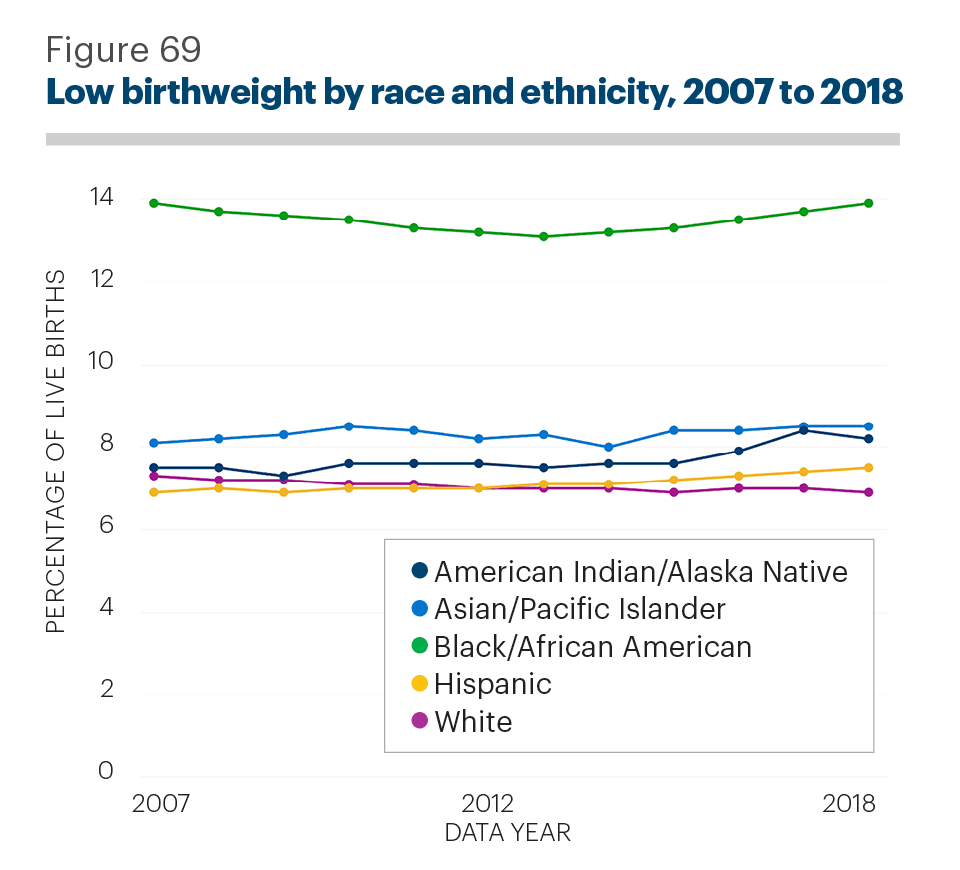
District of Columbia decreased (34% from 15.1% to 10.0%) (Figure 68). Between 2007 and 2018, the prevalence of low birthweight infants changed differently by race and ethnicity (Figure 69), increasing among
American Indian/Alaska Native (9% from 7.5% to 8.2%),
Asian (5% from 8.1% to 8.5%) and
Hispanic (9% from 6.9% to 7.5%) mothers and decreasing among
white mothers (5% from 7.3% to 6.9%).
Disparities
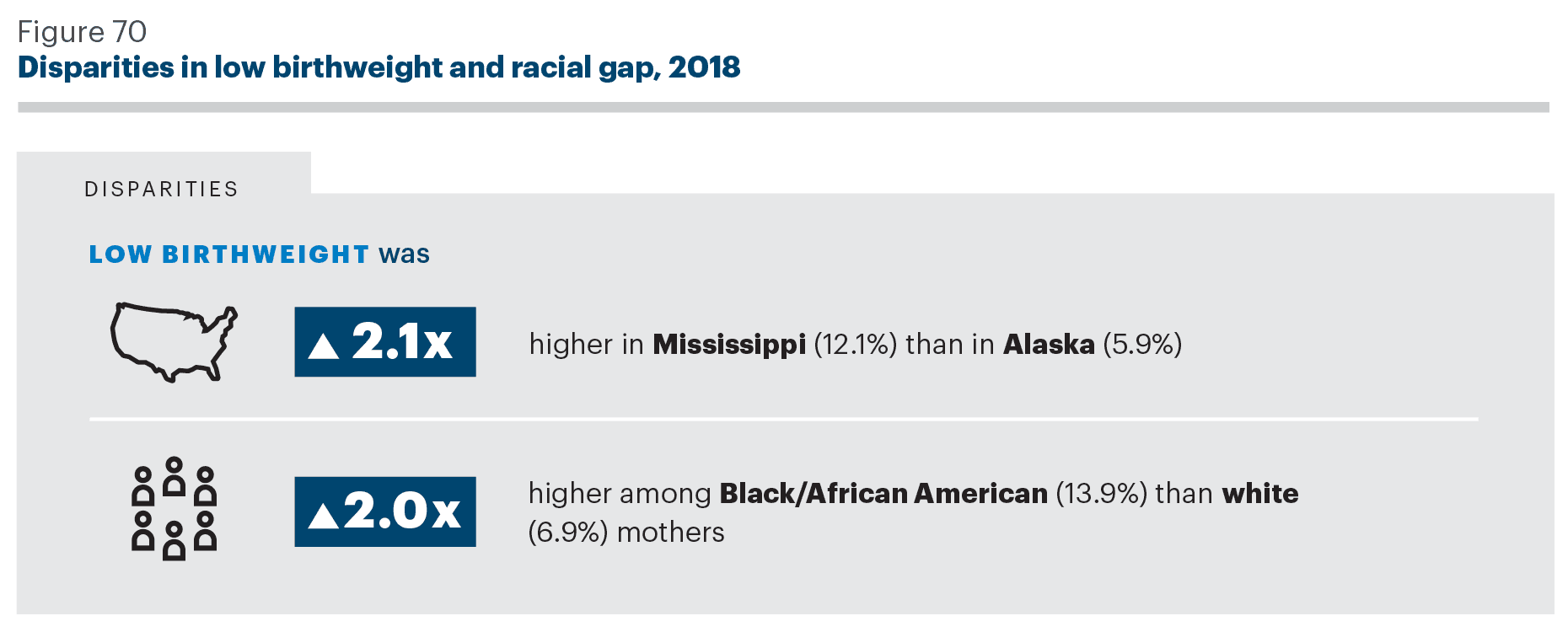
The percentage of infants born with low birthweight varies across states and by the age, education as well as race and ethnicity of their mother. The largest disparities in 2018 were by geography as well as race and ethnicity (Figure 70). The percentage of low birthweight infants was highest in
Mississippi (12.1%),
Louisiana (10.8%) and
Alabama (10.7%) and lowest in
Alaska (5.9%),
North Dakota,
South Dakota and
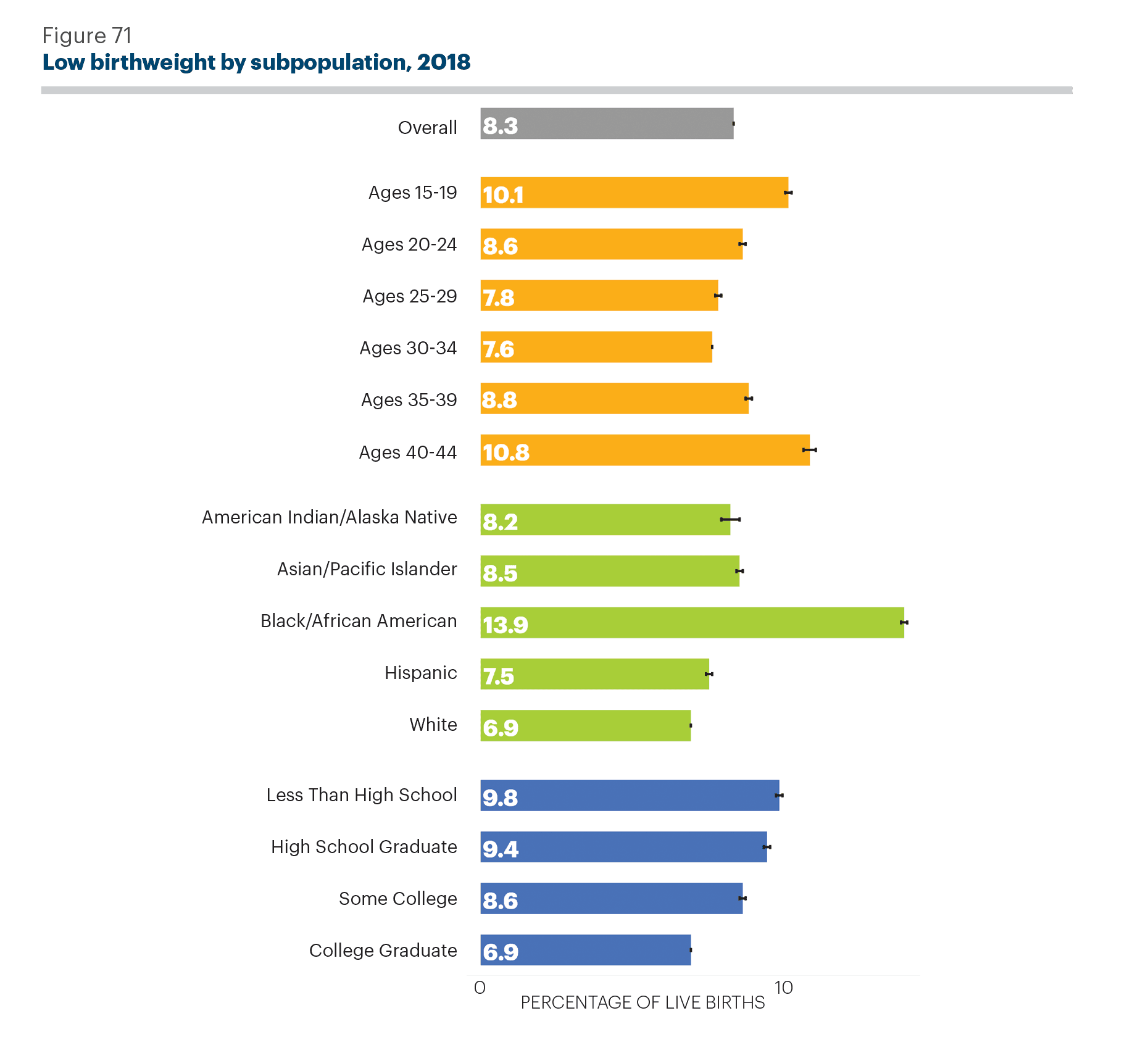
Washington (all 6.6%). In 2018, the percentage of low birthweight infants was higher among (Figure 71):
The
difference in low birthweight between infants born to Black/African American mothers and infants born to white mothers was 7.0 percentage points nationally in 2018, a 4% increase from 6.7 percentage points in 2017. In 2018, the racial gap was 3.9 times higher in
Wisconsin (9.3 percentage points between Black/African American and white mothers) than in
Maine (2.4 percentage points between Black/African American and white mothers) (Figure 72).

 Alabama
 Alaska
 Arizona
 Arkansas
 California
 Colorado
 Connecticut
 Delaware
 District of Columbia
 Florida
 Georgia
 Hawaii
 Idaho
Idaho Illinois
 Indiana
 Iowa
Iowa Kansas
 Kentucky
 Louisiana
 Maine
Maine Maryland
 Massachusetts
 Michigan
 Minnesota
 Mississippi
 Missouri
 Montana
 Nebraska
 Nevada
 New Hampshire
 New Jersey
 New Mexico
 New York
 North Carolina
 North Dakota
 Ohio
Ohio Oklahoma
 Oregon
 Pennsylvania
 Rhode Island
 South Carolina
 South Dakota
 Tennessee
 Texas
Texas Utah
Utah Vermont
 Virginia
 Washington
 West Virginia
 Wisconsin
 Wyoming
 US SummaryAppendixMeasures TableData Source DescriptionsThe Team