America's Health Rankings, United Health Foundation Logo
2021 Health Disparities Report

District of Columbia

Download
Previous Page18 / 65Next Page
Close
Executive BriefIntroductionDesignNational FindingsKey FindingsSocial and Economic FactorsPhysical EnvironmentClinical CareBehaviorsHealth OutcomesState SummariesAlabamaAlaskaArizonaArkansasCaliforniaColoradoConnecticutDelawareDistrict of ColumbiaFloridaGeorgiaHawaiiIdahoIllinoisIndianaIowaKansasKentuckyLouisianaMaineMarylandMassachusettsMichiganMinnesotaMississippiMissouriMontanaNebraskaNevadaNew HampshireNew JerseyNew MexicoNew YorkNorth CarolinaNorth DakotaOhioOklahomaOregonPennsylvaniaRhode IslandSouth CarolinaSouth DakotaTennesseeTexasUtahVermontVirginiaWashingtonWest VirginiaWisconsinWyomingU.S. SummaryAppendixMeasuresData SourcesMethodologyNational Advisory CommitteeThe Team
2021 Health Disparities Report – Executive Brief2021 Health Disparities Report2021 Health Disparities Report – State Summaries2021 Health Disparities Report – Infographics
‌‌‌‌‌
‌
‌
‌‌‌
‌
‌

Please tell us a little more about you

We appreciate you taking the time to help America’s Health Rankings better understand our audiences. Your feedback will allow us to optimize our website and provide you with additional resources in the future. Thank you.

Please select one option which best describes your profession or field of expertise

Journalist or media professional
Health Policy Professional
Public health professional (state, local, or community level)
Health care provider or administrator
Member of an advocacy group or trade organization
Academic, student, or researcher
Government administrator, legislator, or staffer
Concerned citizen
Other
Don't show me this again

Summary

State Summary Download

Low Disparities1

  • Between females2 and males2 for unemployment
  • Between Black3 and white3 for cancer
  • Between females3 and males3 for high health status

High Disparities

  • Between those with less than a high school education2 and college graduates3 for poverty
  • Between Black2 and Hispanic3 for premature death
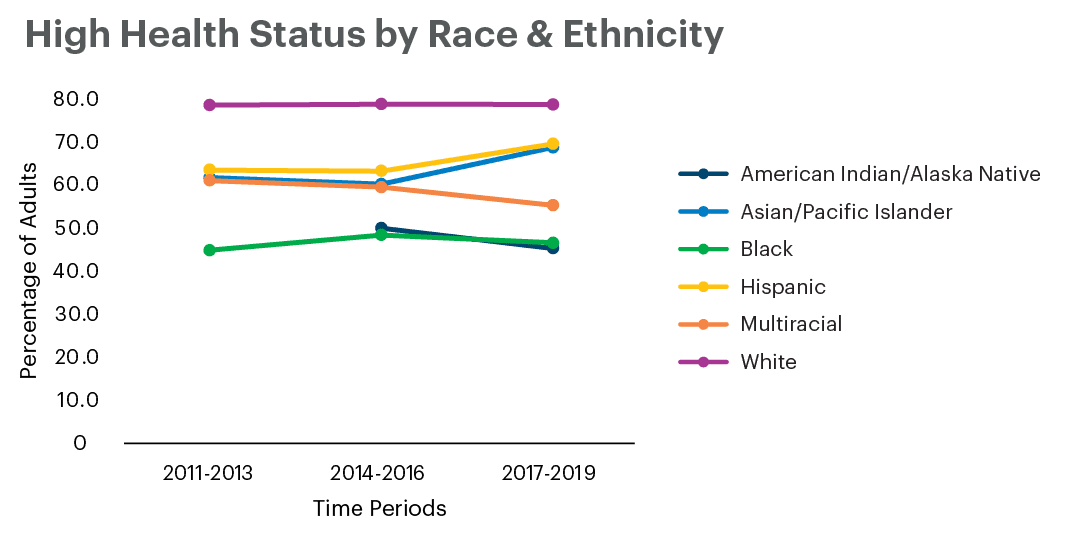
  • Between those with less than a high school education2 and college graduates3 for high health status

[1] Low disparities within a state does not indicate that all populations are doing well. Consider rates in comparison to national averages.

[2] Rates worse than national average.

[3] Rates same or better than national average.

Highlights

  • 28% decrease in Infant Mortality in Black infants between 2003-2006 and 2015-2018 from 17.7 to 12.8 infant deaths (before age 1) per 1,000 live births
  • 38% decrease in those with a Less Than a High School Education in the female population between 2005-2009 and 2015-2019 from 14.6% to 9.1%
  • 30% decrease in Smoking in college graduates between 2011- 2013 and 2017-2019 from 8.8% to 6.2%
  • 19% increase in Excessive Drinking in female adults between 2011-2013 and 2017-2019 from 21.1% to 25.1%
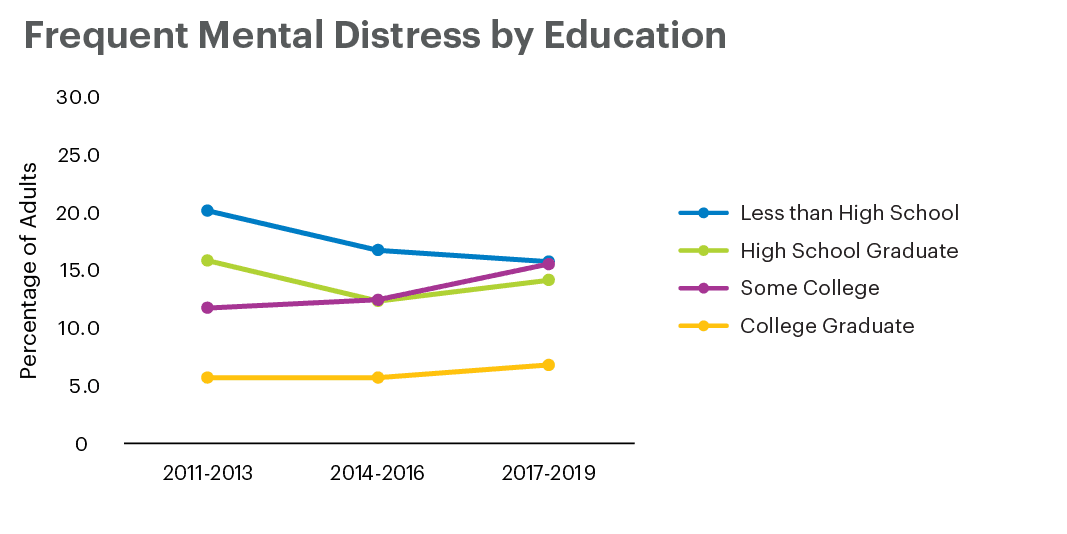
  • 52% increase in Frequent Mental Distress in white adults between 2011-2013 and 2017-2019 from 5.2% to 7.9%
  • 32% increase in Physical Inactivity in adults with some college education between 2011-2013 and 2017-2019 from 20.7% to 27.3%

Trends

high_health_status_district_of_columbia

frequent_mental_distress_district_of_columbia

Income Inequality

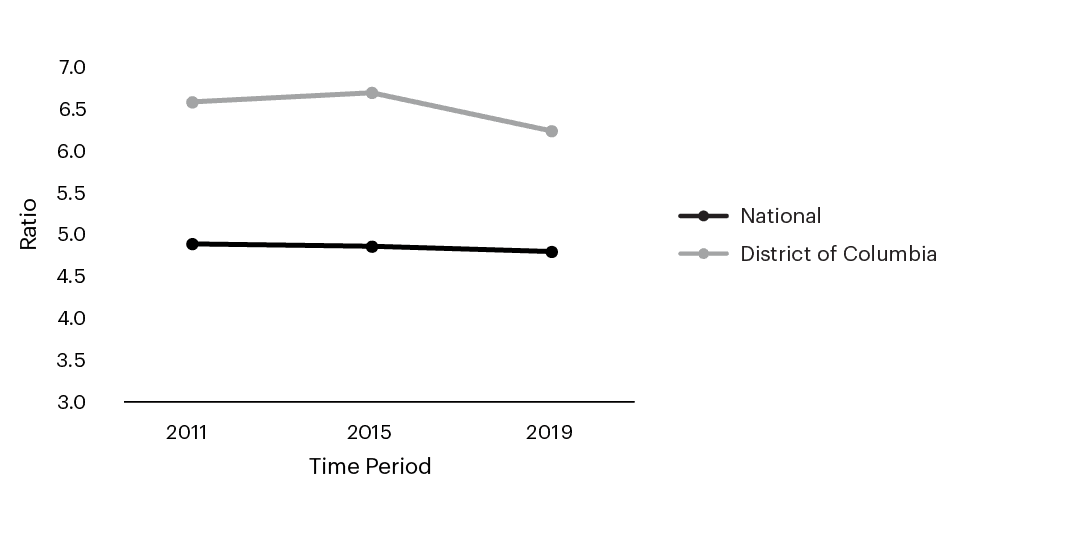
Income inequality measures the ratio of median household income of the 20% richest to the 20% poorest. A high ratio indicates greater income inequality. Research demonstrates an association between greater income disparity and poorer population health.
In the District of Columbia (DC), income inequality has decreased since 2011. DC’s ratio is currently higher than the national ratio.
income_inequality_district_of_columbia

America's Health Rankings, United Health Foundation Logo

Reports

Partner With Us

Explore the Data and Stay Tuned for New Insights

Want to be notified of our latest updates? Sign up now

America's Health Rankings, United Health Foundation Logo