Drug overdose deaths in the United States
decreased between 2022 and 2023, after two decades of near-continuous increases.
2 Provisional 2024 data suggest that this positive trend is continuing.
3 However, not all regions, racial/ethnic groups or age groups
experienced improvements in overall drug deaths.
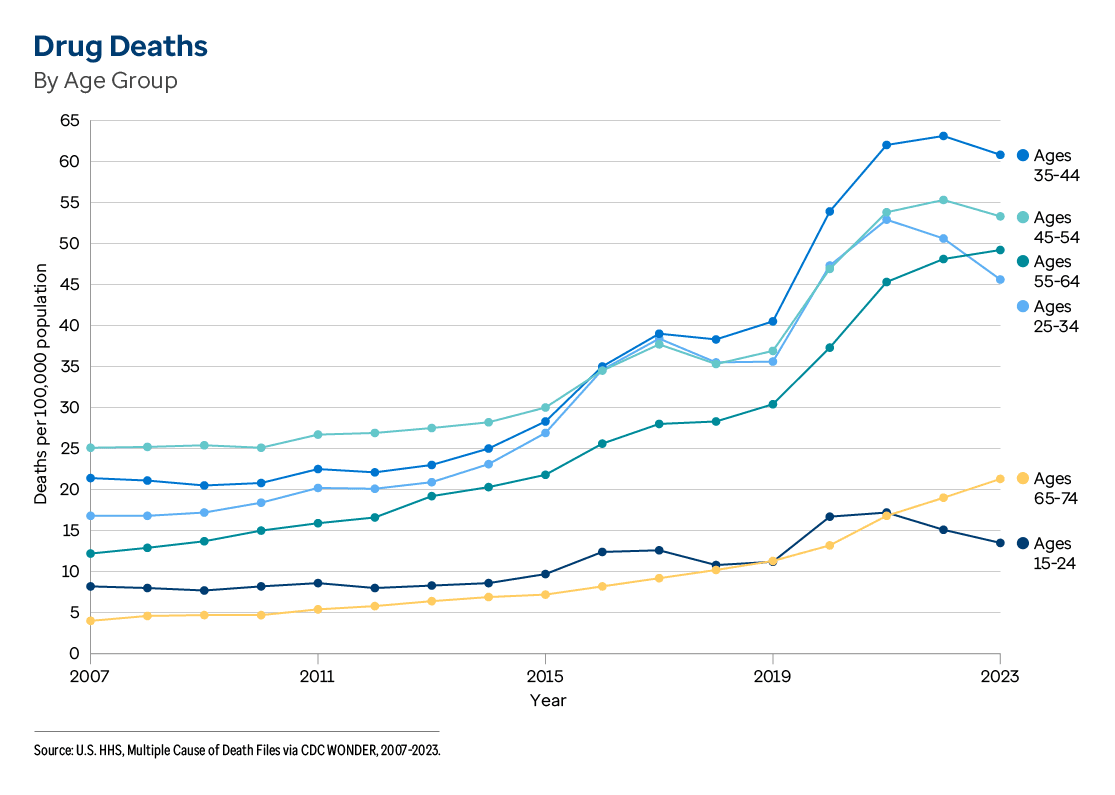
4 Between 2022 and 2023, the drug death rate significantly decreased:
- 11% among those ages 15-24 (15.1 to 13.5 deaths per 100,000 population), 10% among those ages 25-34 (50.6 to 45.6), and 4% among both those ages 35-44 (63.1 to 60.8) and those ages 45-54 (55.3 to 53.3).
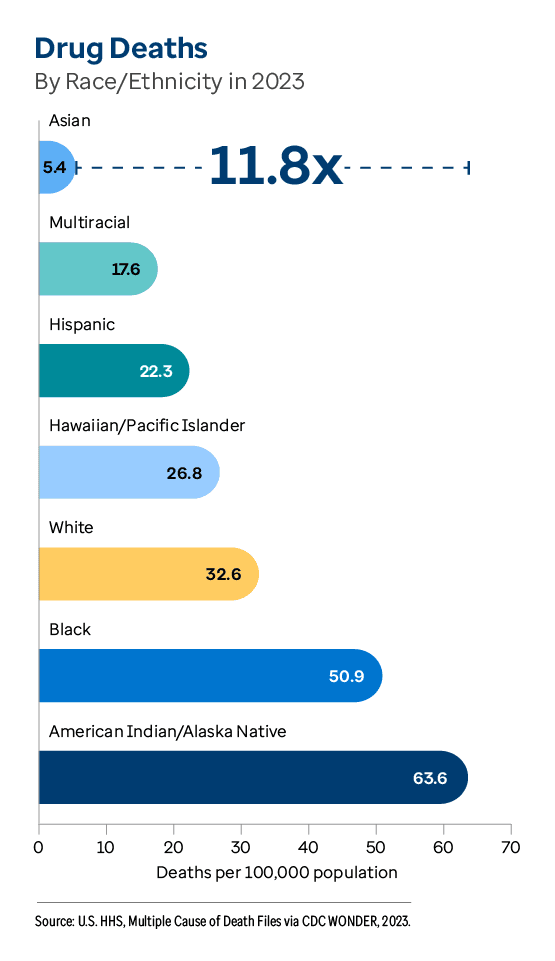
- 6% among white populations (34.6 to 32.6).
- 5% among females (19.1 to 18.2) and 2% among males (45.9 to 44.8).
However, during the same period, the drug death rate significantly increased:
- 12% among those ages 65-74 (19.0 to 21.3 deaths per 100,000 population).
- 3% among Black populations (49.3 to 50.9).
Between 2022 and 2023, the drug death rate significantly decreased in 14 states, but increased in five states. The largest decreases were: 19% in
North Carolina (40.3 to 32.5 deaths per 100,000 population), 17% in both
Arkansas (20.3 to 16.8) and
Indiana (39.3 to 32.7), and 16% in
Maine (51.0 to 42.8). The drug death rate increased 41% in
Alaska (34.6 to 48.9), 31% in
Oregon (32.1 to 42.1), 27% in both
Washington (35.0 to 44.5) and
Nevada (31.6 to 40.1), and 4% in
California (28.1 to 29.2).
Differences. The drug death rate significantly varied by race/ethnicity, geography, age and gender in 2023. The rate was:
- 11.8 times higher among American Indian/Alaska Native (63.6 deaths per 100,000 population) compared with Asian (5.4) populations.
- 8.9 times higher in West Virginia (77.8) than in Nebraska (8.7).
- 4.5 times higher among those ages 35-44 (60.8) than those ages 15-24 (13.5).
- 2.5 times higher among males (44.8) compared with females (18.2).
Related Measure: Non-Medical Drug UseNationally, the percentage of adults who reported using prescription
drugs non-medically (including pain relievers, stimulants and sedatives) or illicit drugs (excluding cannabis) in the last 12 months did not change significantly between 2024 and 2025 (17.6% to 16.8%). In 2025, almost 44.2 million adults reported non-medical drug use. Over the longer term,
non-medical drug use increased 49% from 11.3% to 16.8% between 2019 and 2025.
Between 2024 and 2025, non-medical drug use prevalence significantly decreased:
During the same period, non-medical drug use significantly changed in one state. Use decreased 37% in
Nevada (39.3% to 24.9%).
Changes over time. Nationally, the percentage of adults who reported
excessive drinking remained stable (16.7% to 17.0%) between 2023 and 2024. Excessive drinking includes both
binge drinking (four or more drinks on one occasion in the past 30 days for females or five or more for males) and
heavy drinking (eight or more drinks per week for females or 15 or more for males). Long-term, the prevalence decreased 14% (from 19.8%) between 2011 and 2024.
Between 2023 and 2024, excessive drinking prevalence significantly decreased 15% in
Hawaii (20.1% to 17.1%). During the same time period, the prevalence significantly increased 10% among adults
age 65 and older (6.9% to 7.6%) and 7% among adults
ages 45-64 (15.1% to 16.2%).
Differences. Excessive drinking significantly varied by age, geography, race/ethnicity, disability status, income, gender, sexual orientation and educational attainment. In 2024, the prevalence was:
Suicide is a troubling public health issue that leaves a
lasting impact on families and communities.
12 In 2024,
14.3 million adults seriously thought about suicide, 4.6 million made a plan and 2.2 million attempted suicide.
13 Differences. The suicide rate significantly varied by geography, gender, race/ethnicity and age in 2023. The rate was:
Related Measure: Frequent Mental DistressNationally, the percentage of adults who reported their mental health was not good 14 or more days in the past 30 days remained stable nationally (15.4% to 15.6%) and significantly increased in one state between 2023 and 2024 (
Wisconsin, 14.7% to 17.2%). However, since 2011, the prevalence of
frequent mental distress has increased 33% nationally (from 11.7%).
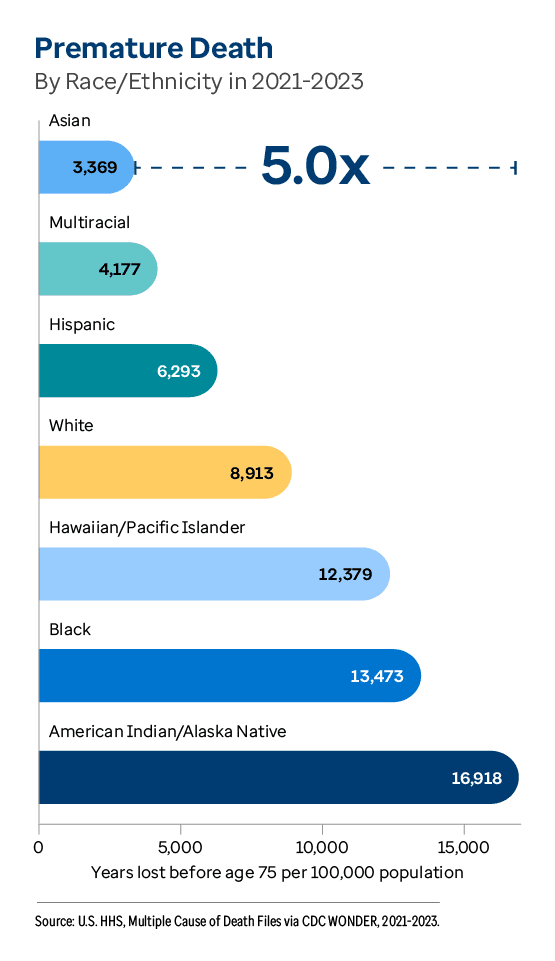
Premature death is a measure of years of potential life lost due to death occurring before the age of 75. Deaths at younger ages contribute more to the premature death rate than deaths occurring closer to age 75. For example, a person dying at age 70 would lose five years of potential life, whereas a child dying at age five would lose 70 years of potential life. The
top five causes of premature death in 2023 were unintentional injuries, cancer, heart disease, suicide and homicide.
15 In 2023, homicide replaced COVID-19 in the top five and
COVID-19 dropped out of the top 10.
16 Changes over time. Nationally,
premature death decreased 8% from 8,522 to 7,862 years lost before age 75 per 100,000 population between 2022 and 2023. During this time frame, the premature death rate decreased in 44 states, led by: 13% in
Maine (9,327 to 8,082), 12% in both
South Dakota (9,120 to 8,047) and
West Virginia (13,647 to 12,053), and 11% in both
Indiana (10,167 to 9,093) and
Missouri (10,446 to 9,303).
Differences. The premature death rate varied by race/ethnicity and geography. It was:
Multiple Chronic Conditions
Changes over time. Nationally, the percentage of adults who have
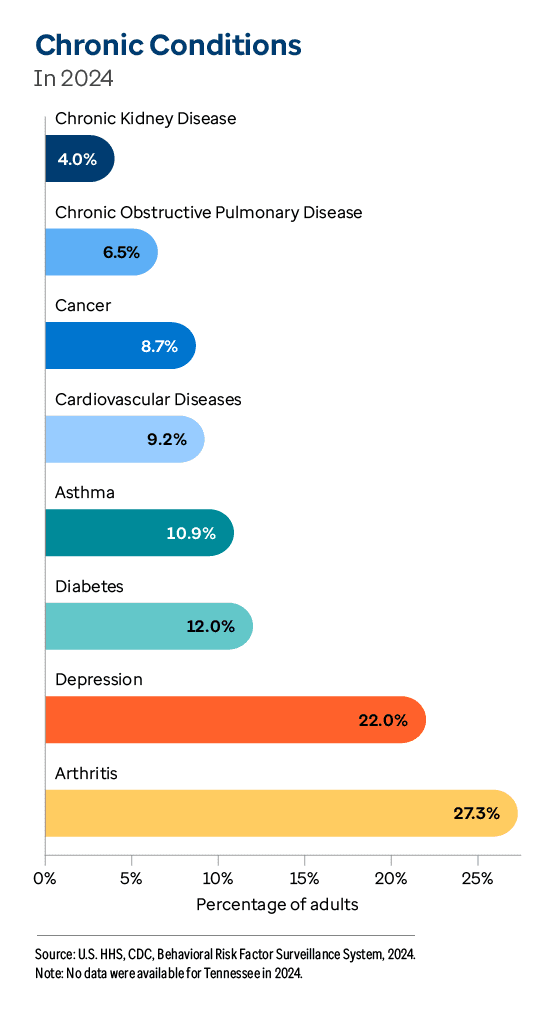
three or more of these chronic conditions — arthritis, asthma, cancer (excluding nonmelanoma skin cancer), cardiovascular diseases (heart disease, heart attack or stroke), chronic kidney disease, chronic obstructive pulmonary disease (COPD), depression or diabetes — increased 6% from 10.7% to 11.3% of adults between 2023 and 2024. During this time
arthritis increased 4% (26.3% to 27.3%),
asthma increased 6% (10.3% to 10.9%),
cancer increased 4% (8.4% to 8.7%),
cardiovascular diseases increased 8% (8.5% to 9.2%),
chronic kidney disease increased 8% (3.7% to 4.0%),
COPD increased 2% (6.4% to 6.5%) and
diabetes increased 4% (11.5% to 12.0%).
Depression was the only chronic condition that did not change, remaining at 22.0% in 2024.
During this time frame, the prevalence of multiple chronic conditions significantly increased in six states, with the largest increases being 24% in
Texas (8.3% to 10.3%), 20% in
Michigan (12.8% to 15.3%), and 17% in both
Nebraska (8.4% to 9.8%) and
Oklahoma (12.8% to 15.0%).
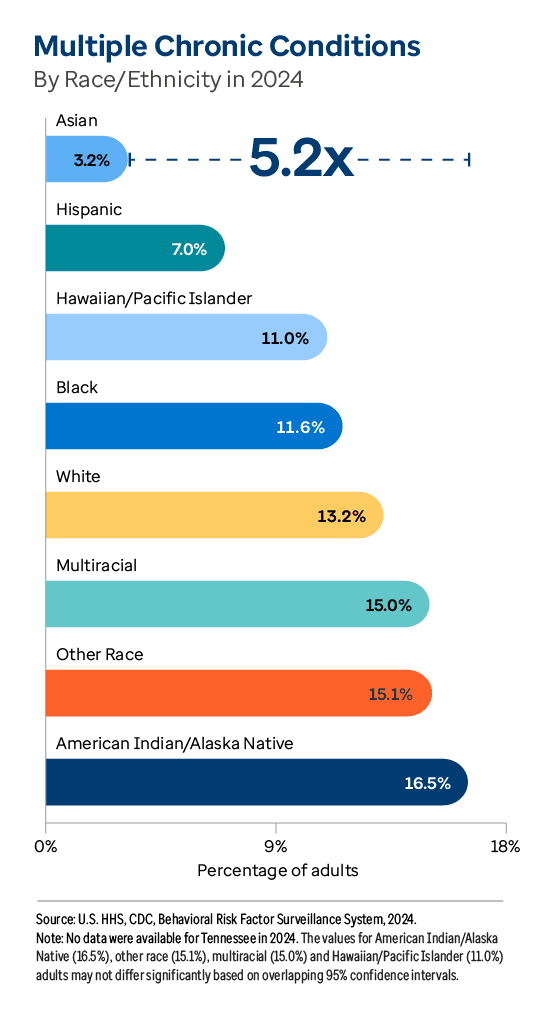
Differences. The prevalence of multiple chronic conditions significantly varied by disability status, age, race/ethnicity, income, geography, educational attainment, veteran status, metropolitan status, gender and sexual orientation in 2024. It was:
- 8.8 times higher among adults who have difficulty with self-care (45.8%) than those without a disability (5.2%).
- 6.6 times higher among adults age 65 and older (23.2%) compared with those ages 18-44 (3.5%).
- 5.2 times higher among American Indian/Alaska Native (16.5%) compared with Asian (3.2%) adults.
- 4.7 times higher among adults with an annual household income less than $25,000 (23.3%) compared with those with incomes of $150,000 or more (5.0%).
- 2.5 times higher in West Virginia (20.6%) than in California (8.1%).
- 2.0 times higher among adults with less than a high school education (16.6%) than college graduates (8.2%).
- 1.6 times higher among adults who have served in the U.S. armed forces (17.4%) than those who have not served (10.7%).
- 1.5 times higher among adults living in nonmetropolitan areas (15.4%) than those in metropolitan areas (10.6%).
- 1.4 times higher among women (13.2%) compared with men (9.3%).
- 1.2 times higher among straight (12.0%) compared with LGBQ+ (10.4%) adults.
Note: No data were available for Tennessee in 2024 or for Kentucky and Pennsylvania in 2023. The values for American Indian/Alaska Native (16.5%), other race (15.1%), multiracial (15.0%) and Hawaiian/Pacific Islander (11.0%) adults may not differ significantly based on overlapping 95% confidence intervals. Related Measure: ObesityAfter increasing 23% between 2011 and 2023 (27.8% to 34.3%), the national
obesity prevalence among adults remained stable between 2023 and 2024 at 34.2%. The prevalence did not significantly change in any states during this recent period, but it did significantly increase 4% among adults
ages 18-44, from 30.0% to 31.3%.
Note: No data were available for Tennessee in 2024 or for Kentucky and Pennsylvania in 2023.

 US Summary
 Alabama
 Alaska
 Arizona
 Arkansas
 California
 Colorado
 Connecticut
 Delaware
 District of Columbia
 Florida
 Georgia
 Hawaii
 Idaho
Idaho Illinois
 Indiana
 Iowa
Iowa Kansas
 Kentucky
 Louisiana
 Maine
Maine Maryland
 Massachusetts
 Michigan
 Minnesota
 Mississippi
 Missouri
 Montana
 Nebraska
 Nevada
 New Hampshire
 New Jersey
 New Mexico
 New York
 North Carolina
 North Dakota
 Ohio
Ohio Oklahoma
 Oregon
 Pennsylvania
 Rhode Island
 South Carolina
 South Dakota
 Tennessee
 Texas
Texas Utah
Utah Vermont
 Virginia
 Washington
 West Virginia
 Wisconsin
 Wyoming