Data show improvements in prevention and the workforce caring for older adults; however, worsening behavioral health measures underscore unique challenges
The older adult population in the United States continues to grow faster than younger age groups, causing the average age of the country to rise. There are now more than 61 million individuals age 65 and older, and this number is projected to pass
78 million by 2040. The distribution of older adults is not even; some states have a significantly higher share of older adults than others, and
millions of adults age 65 and older transition between different homes and geographic areas each year.
Taken together, these ongoing changes in the size, geographic distribution, demographic characteristics and health needs of this population highlight the need for data at the national, state and population group levels to help understand and improve the well-being of communities nationwide.
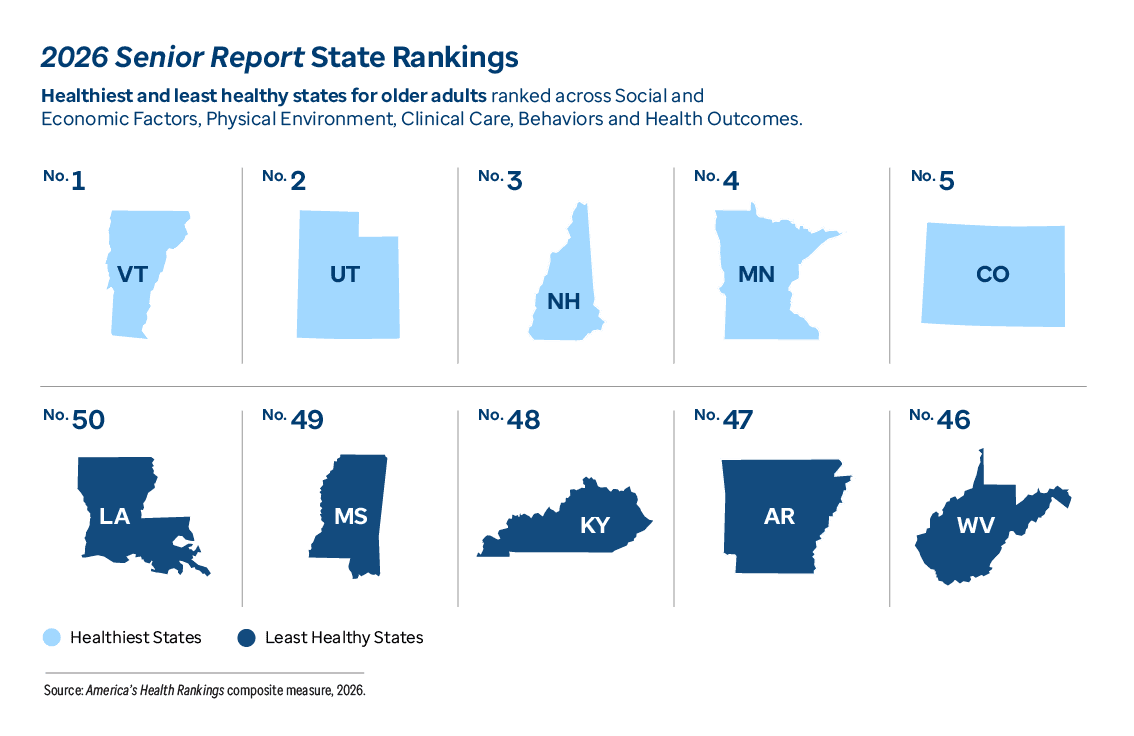
The America’s Health Rankings® 2026 Senior Report examines 56 measures from 25 data sources to provide a comprehensive view of older adult health. This year’s report highlights progress in several areas, including improvements in preventive health behaviors, growth in the workforce caring for older adults and a continued decrease in early death. However, challenges persist, particularly in mental and behavioral health, with increases in drug deaths, excessive drinking and suicide, as well as increasing food insecurity. Differences remain across demographic groups, with health outcomes varying by metropolitan status, race/ethnicity, gender and more.
The report offers insights to help leaders identify priorities, build on areas of progress and take targeted action to improve health outcomes for older adults.
State Summaries provide tailored data and insights about the demographics and health of older adults in specific states to guide local action. Visit State Summaries to explore the data.
The workforce caring for older adults has expanded, reaching new highs — though gaps persist as this population grows
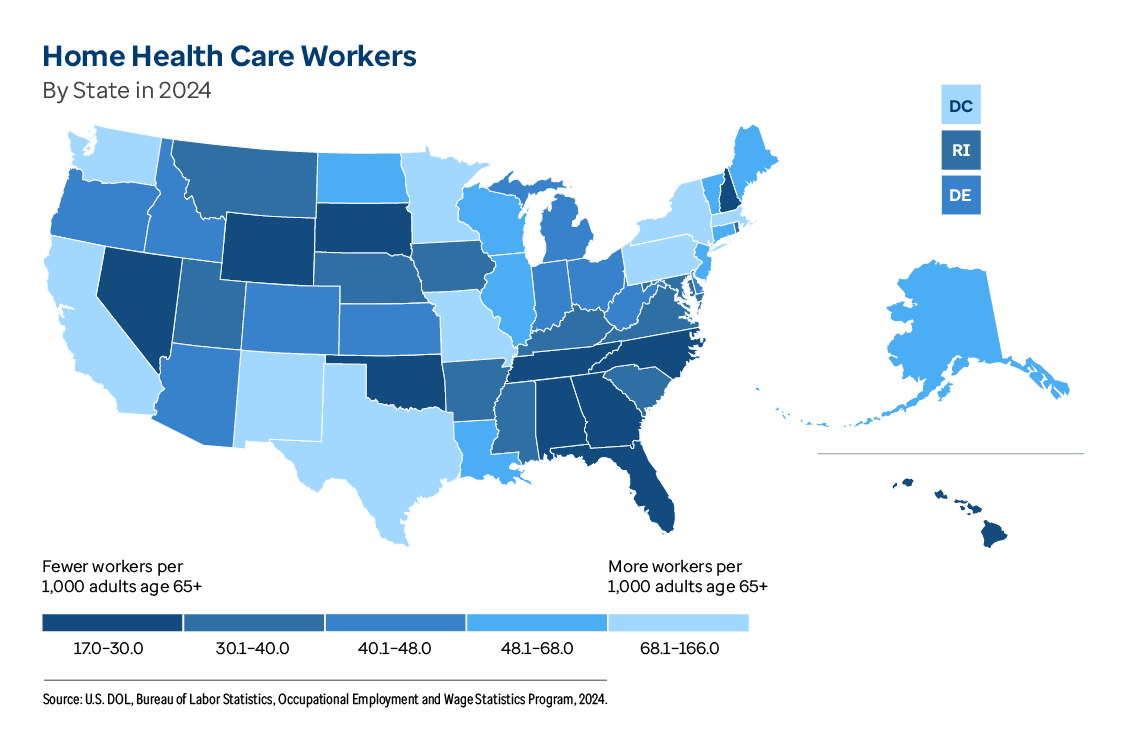
The workforce caring for older adults has continued to grow in recent years. The number of home health care workers increased 5% from 62 to 65 workers per 1,000 adults age 65 and older between 2023 and 2024. This continued a long-term positive trend, totaling a 38% increase (47 to 65) from 2016 to 2024.
While this number grew nationally, there were differences between states. The rate of home health care workers was 9.8 times higher in New York (166 per 1,000) than in Florida (17), the states with the highest and lowest rates, respectively. Home health care workers increased the most in Washington (24%, from 59 to 73) and decreased the most in Hawaii (13%, from 23 to 20).
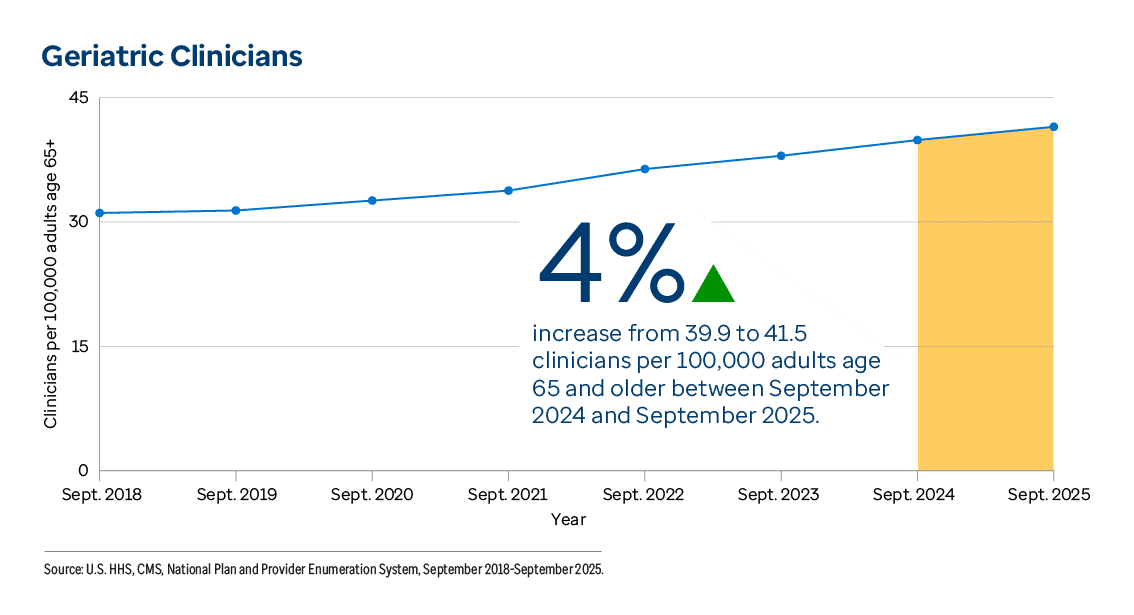
Similarly, the number of geriatric clinicians — including family medicine and internal medicine geriatricians and nurse practitioners — increased 4% from 39.9 to a new high of 41.5 clinicians per 100,000 adults age 65 and older between September 2024 and September 2025. However, this rate also varied by geography; the number of geriatric clinicians per 100,000 older adults was 5.5 times higher in the District of Columbia (94.5) than in South Dakota (17.3).
The share of individuals,
often family members or friends, providing unpaid support or assistance to someone age 65 or older did not significantly change between 2021-2022 and 2023-2024 (from 14.3% to 14.4% of individuals age 15 and older).
Cancer screenings and physical inactivity have improved, but differences remain between demographic groups Some measures of preventive care and health behaviors have improved in recent years. The percentage of adults ages 65-75 receiving recommended breast and colorectal cancer screenings increased 4% from 74.1% to 76.8% between 2022 and 2024.
While the flu vaccination rate among the general population decreased 4% (from 42.9% to 41.3%) between 2023 and 2024, the rate among older adults remained relatively stable, decreasing 1% from 63.4% to 62.5% between 2023 and 2024. However, this was still lower than the
Healthy People 2030 goal to increase the proportion of people of all ages who get the flu vaccine every year to 70.0%.
While older adults tend to be less active than younger people,
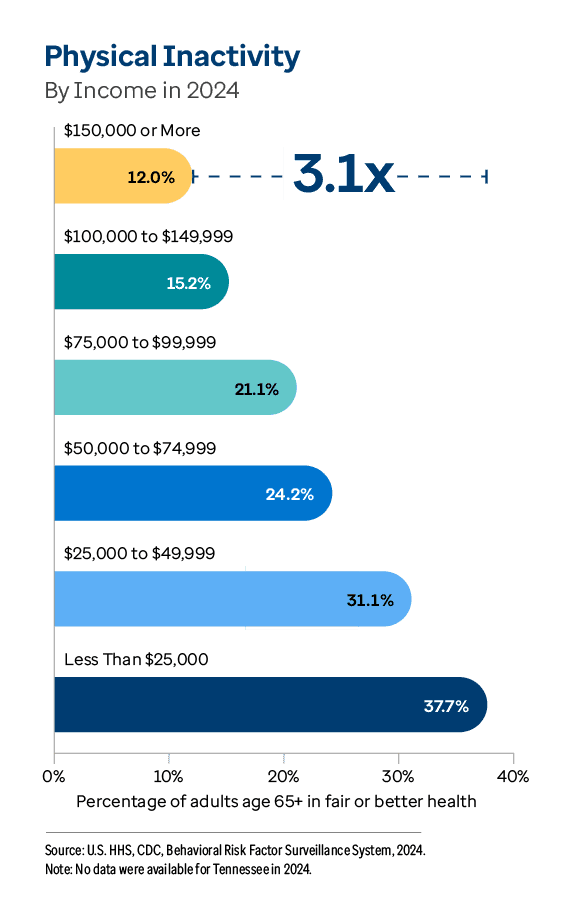
increasing their susceptibility to diseases associated with physical inactivity, the percentage of adults age 65 and older in fair or better health who reported doing no physical activity or exercise in the past 30 days decreased 16% from 31.7% to 26.5% between 2023 and 2024, an improvement in this measure. Despite this progress, the physical inactivity rate among older adults still exceeds the
Healthy People 2030 goal to reduce the proportion of adults age 18 and older who do no physical activity in their free time to 21.8%.
Physical inactivity differed by socioeconomic status. The rate was 3.1 times higher, or less healthy, among older adults living in households with an income less than $25,000 (37.7%) compared with those with an income of $150,000 or more (12.0%).
Early death improved, continuing to approach its 2019 level
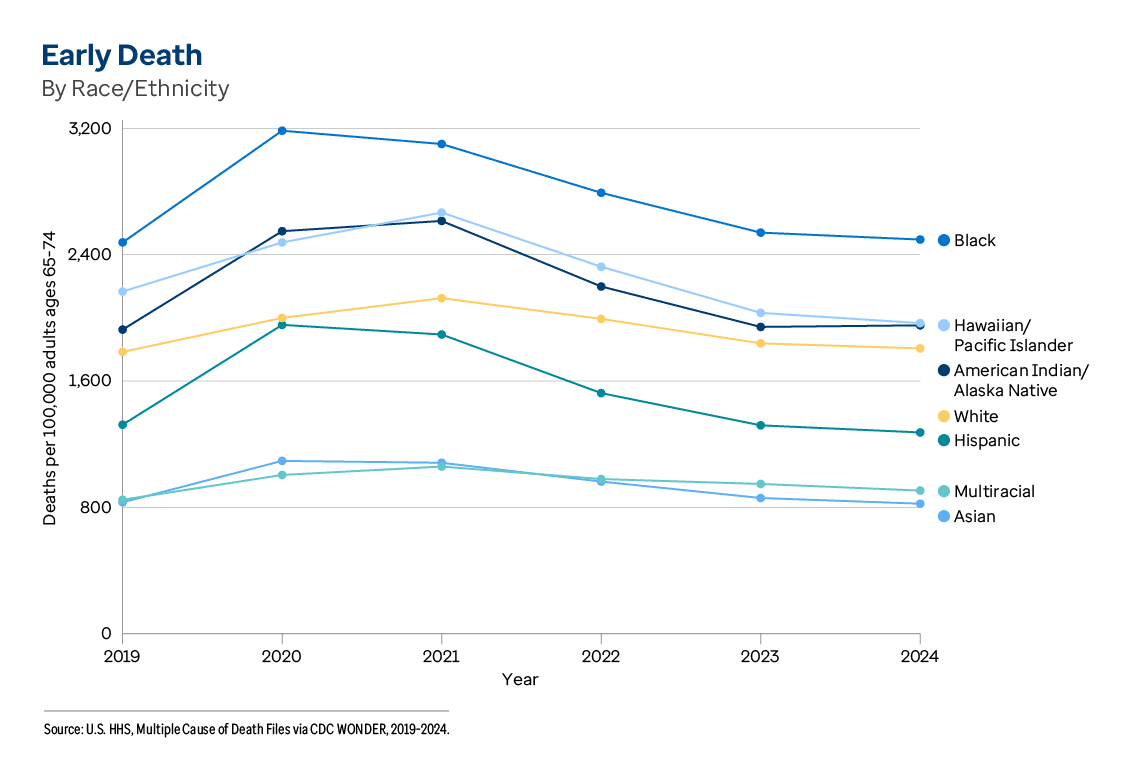
The early death rate — the number of deaths per 100,000 adults ages 65-74 — also improved, decreasing 2% from 1,810 to 1,773 deaths between 2023 and 2024, continuing to approach the 2019 level (1,765). Chronic diseases accounted for the top five causes of early death in 2024, underscoring the importance of prevention, screening and clinical care. The
leading causes of death among adults ages 65-74 in the U.S. were cancer, heart disease, chronic lower respiratory disease, cerebrovascular disease and diabetes.
Unintentional injuries remained the sixth-leading cause of early death, led by falls, poisonings (including drug deaths) and motor vehicle crashes.
Despite the improvement in early death nationally, this rate was 3.0 times higher among Black (2,495 deaths per 100,000) compared with Asian (823) older adults.
Amid a nationwide trend of drug death reduction, older adults were the only age group to experience an increase Drug overdose deaths — the number of deaths due to drug injury per 100,000 adults age 65 and older —
have risen in the U.S. over the past two decades. Drug deaths increased 38% from 9.9 to 13.7 deaths per 100,000 adults age 65 and older between 2019-2021 and 2022-2024.
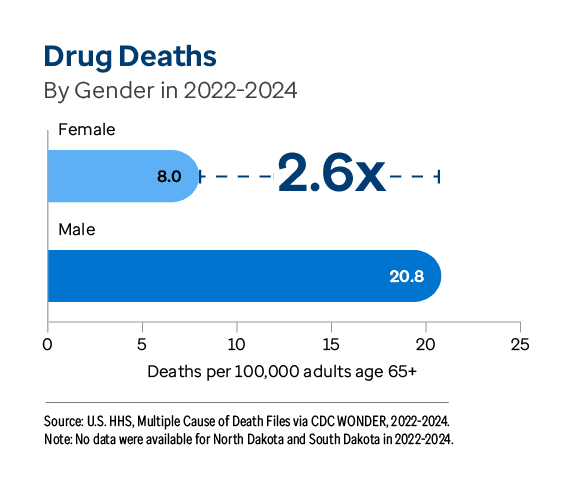
America’s Health Rankings data indicate that older adults were the only age group that experienced a significant increase between 2022 and 2023. While drug-related deaths among individuals ages 65-74 rose 12% from 19.0 to 21.3 deaths per 100,000 adults, rates decreased among those ages 15-54. The drug death rate among adults age 65 and older in 2022-2024 was 2.6 times higher among older men (20.8) compared with older women (8.0).
Excessive drinking and suicide also rose among adults age 65 and older, despite rates stabilizing in other age groups
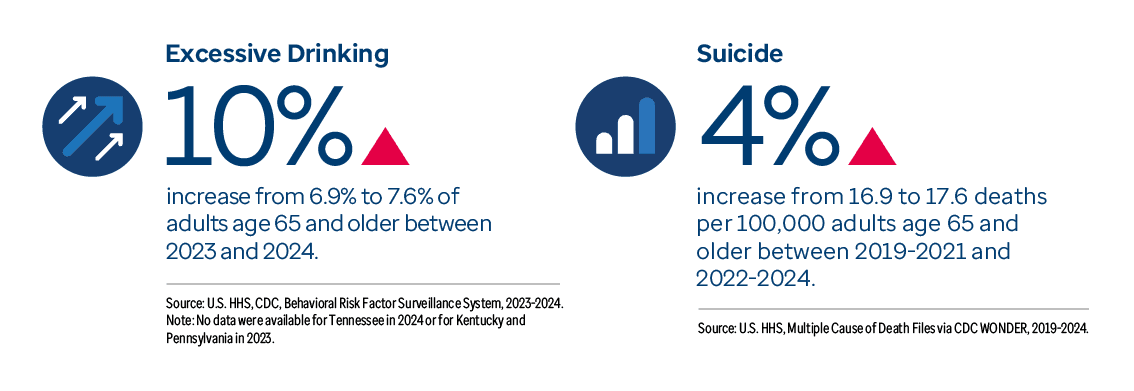
Excessive drinking — the percentage of adults age 65 and older who reported binge drinking or heavy drinking — also increased, rising 10% from 6.9% to 7.6% of adults age 65 and older between 2023 and 2024. This increase occurred even as
excessive drinking remained stable among the overall population (16.7% to 17.0%) and rose more modestly at 7% among adults ages 45-64 (15.1% to 16.2%). Excessive drinking was 1.7 times higher among men age 65 and older (9.7%) compared with women in the same age group (5.8%) in 2024.
Suicide is a troubling public health issue that can leave a
lasting impact on families and communities. The suicide rate among older adults increased 4% from 16.9 to 17.6 deaths due to intentional self-harm per 100,000 adults age 65 and older between 2019-2021 and 2022-2024, while the suicide
rate for the overall population did not significantly change between 2022 and 2023 (14.8 to 14.7). Adults age 85 and older had the highest suicide rate of any group (22.7) in 2023, 1.7 times higher than those ages 15-24 (13.5). In 2022-2024, the suicide rate among adults age 65 and older was 6.0 times higher among older men (32.4) compared with older women (5.4).
Food insecurity among older adults worsened, despite increases in SNAP participation and home-delivered meals
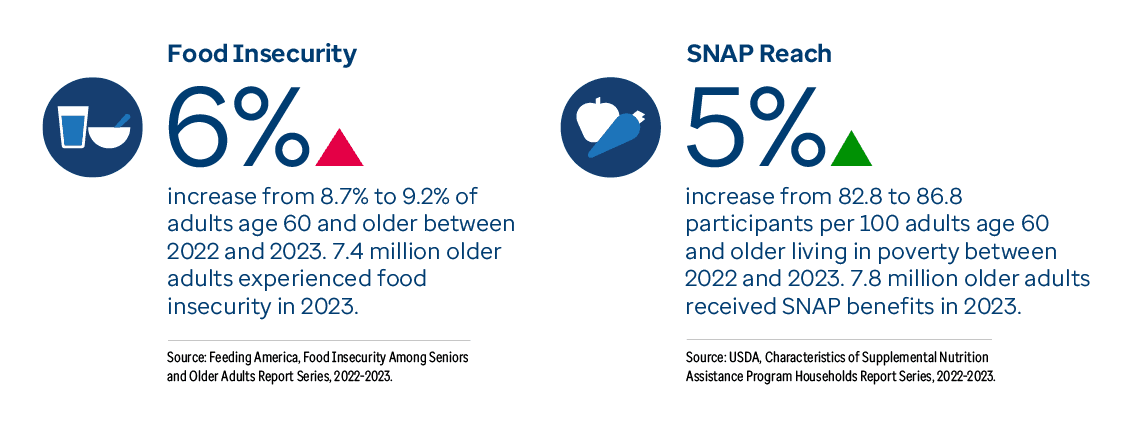
Food insecurity among older adults worsened between 2022 and 2023, increasing 6% from 8.7% to 9.2% of adults age 60 and older — an increase of approximately 500,000 older adults, from 6.9 million to 7.4 million. Limited access to adequate nutrition is associated with a range of
adverse health outcomes for older adults, including chronic disease and mental health challenges.
At the same time, participation in nutrition support programs increased. The number of older adults receiving
Supplemental Nutrition Assistance Program (SNAP) benefits increased 5% from 82.8 to 86.8 participants per 100 adults age 60 and older living in poverty between 2022 and 2023 — an increase of approximately 626,000 older adults, from 7.2 million to 7.8 million. SNAP
provides food benefits to low-income individuals, and its
eligibility requirements are determined at the federal level.
While the rate of home-delivered meals has declined since its peak in 2021, it remains above the 2019 level. In 2024, 11.3 individuals per 100 adults age 65 and older with independent living difficulty were served a home-delivered meal — still 27% higher than the rate in 2019 (8.9).
Data show noteworthy progress to build on — and opportunities to address persistent challenges
This year’s report highlights encouraging progress in the health of older adults, including continued reductions in early deaths and a growing older adult care workforce. The data also point to the complex and unique challenges that older adults face, demonstrated by the rise in drug deaths among this population despite its stabilization among other age groups.
As the older adult population continues to grow, we urge leaders at every level to use these findings — along with the detailed state- and population-level data available through the America’s Health Rankings platform — to build on areas of progress and address the persistent barriers that make healthy aging harder for too many people. By working together, we can help ensure that every older adult has the opportunity to live a healthier life.

 US Summary
 Alabama
 Alaska
 Arizona
 Arkansas
 California
 Colorado
 Connecticut
 Delaware
 District of Columbia
 Florida
 Georgia
 Hawaii
 Idaho
Idaho Illinois
 Indiana
 Iowa
Iowa Kansas
 Kentucky
 Louisiana
 Maine
Maine Maryland
 Massachusetts
 Michigan
 Minnesota
 Mississippi
 Missouri
 Montana
 Nebraska
 Nevada
 New Hampshire
 New Jersey
 New Mexico
 New York
 North Carolina
 North Dakota
 Ohio
Ohio Oklahoma
 Oregon
 Pennsylvania
 Rhode Island
 South Carolina
 South Dakota
 Tennessee
 Texas
Texas Utah
Utah Vermont
 Virginia
 Washington
 West Virginia
 Wisconsin
 Wyoming