Self-reported high health status has improved since the inaugural Senior Report, and teeth extractions have decreased. However, obesity has worsened, and nearly half of older adults have multiple chronic conditions.
Self-reported health status is a measure of how individuals
perceive their health, rating it as excellent, very good, good, fair or poor. Among adults ages 65 and older, self-reported health status is a good predictor of
short- and
long-term mortality. It is also a good predictor of future
health care use.
Between 2011 and 2020
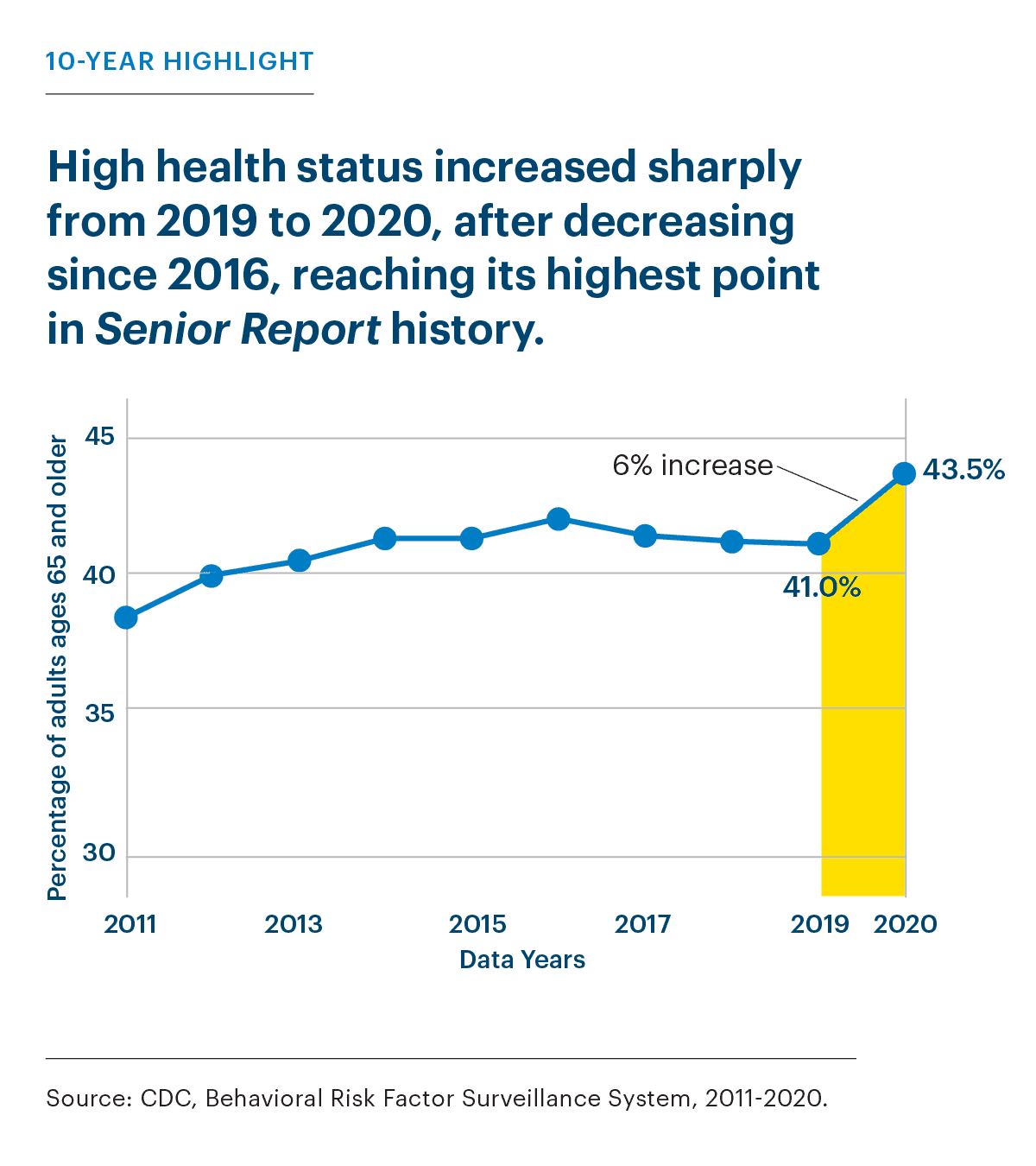
Nationally, the percentage of adults ages 65 and older who reported their health was very good or excellent significantly increased 13% from 38.4% to 43.5%.
High health status has generally increased since 2011, with a large part of this change occurring in the past year, increasing 6% from 41.0% in 2019 and reaching its highest point in 2020. More than 24.5 million older adults reported that their health was very good or excellent in 2020, an increase of approximately 2.6 million older adults between 2019 and 2020. High health status among older adults significantly increased in 33 states and the
District of Columbia, led by: 33% in
Wisconsin (39.0% to 52.0%), 32% in
Rhode Island (36.9% to 48.8%) and 30% in
New York (35.0% to 45.5%).
Some racial/ethnic, gender and education subpopulations experienced significant increases in high health status; changes by income were not notable. Among adults ages 65 and older, increases greater than the national change included: 28% among
Black (24.1% to 30.9%) and 14% among
white (41.5% to 47.4%) adults, as well as 14% among
females (38.8% to 44.3%).
Disparities in 2020
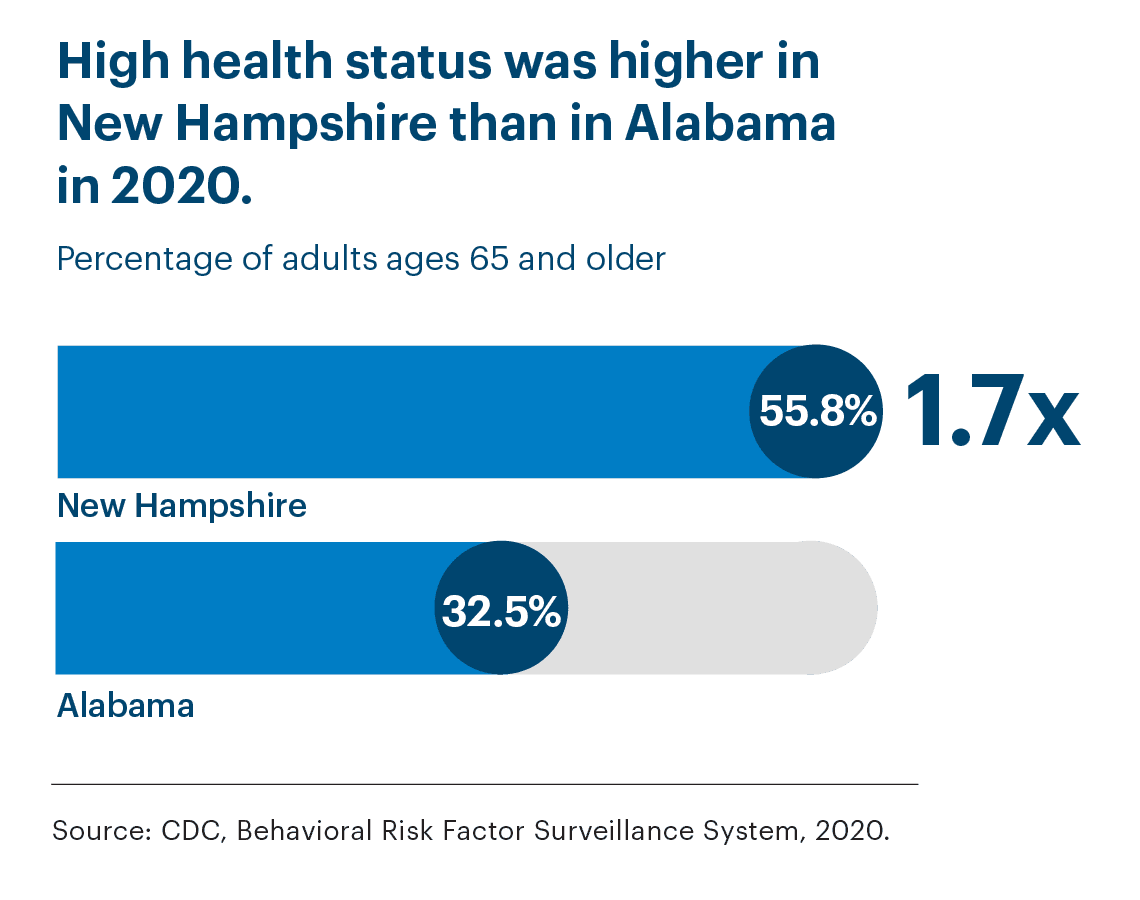
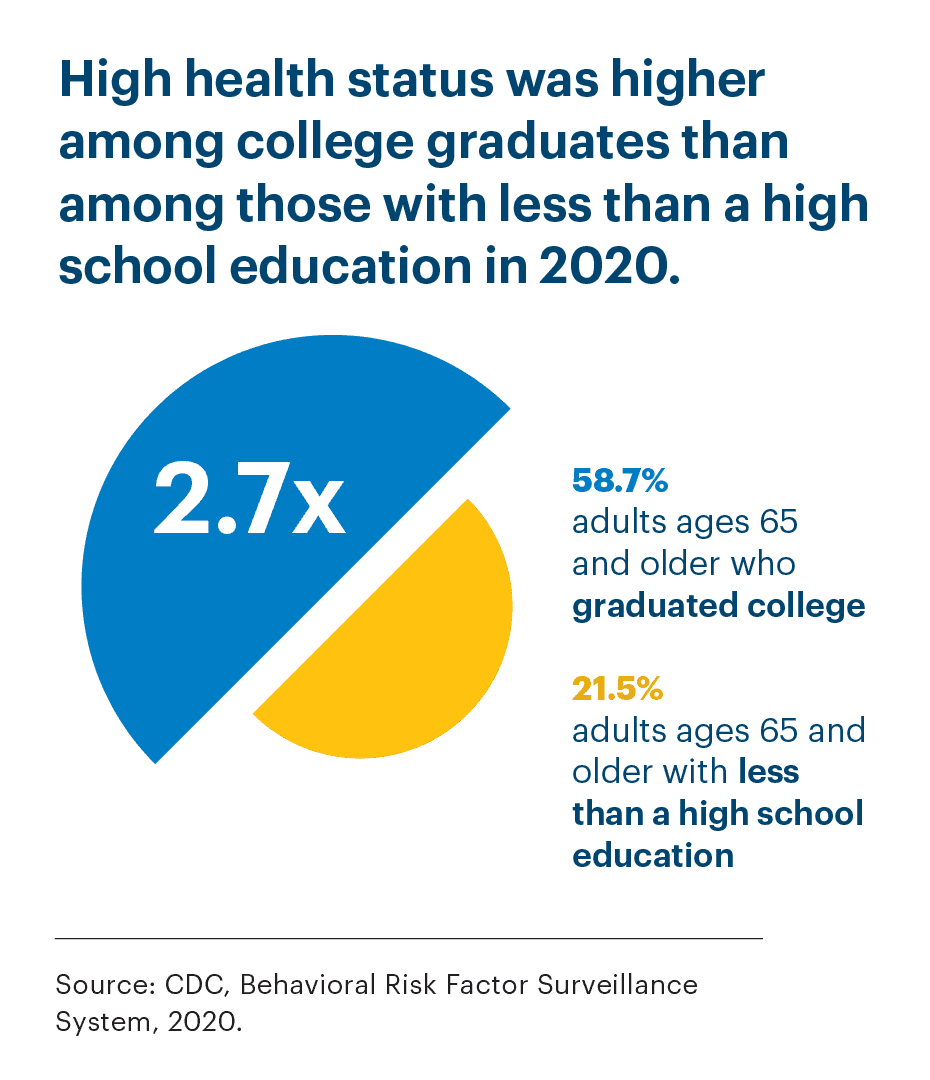
High health status significantly varied by education, income, race/ethnicity and metropolitan status; differences by gender were not notable. The prevalence among adults ages 65 and older was higher among:
Teeth Extractions
Having all or some permanent teeth missing is associated with increased risk of
disability, mortality and
decreased daily function and quality of life. Missing teeth or having dentures can also impair one’s ability to eat and speak, and is associated with poor nutrition. Severe oral health issues that impact daily life are also
associated with loneliness.
Between 2012 and 2020
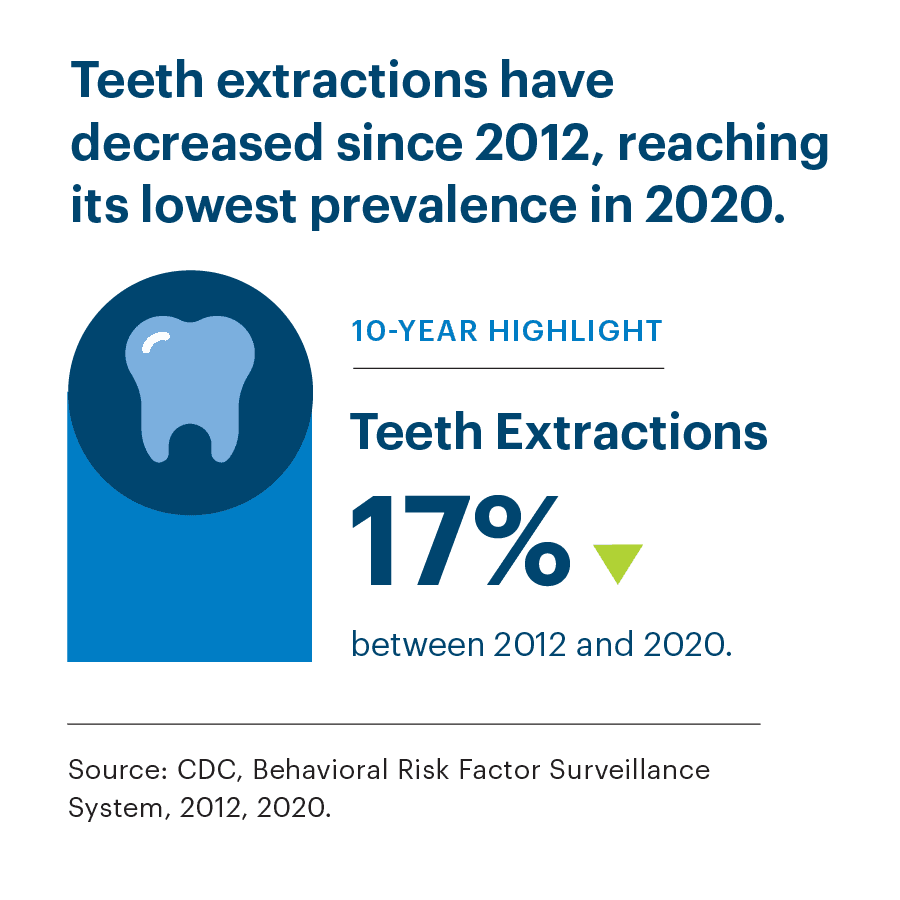
Nationally, the percentage of adults ages 65 and older who reported having all their teeth removed due to decay or gum disease significantly decreased 17% from 16.1% to 13.4%.
Teeth extraction prevalence has generally decreased continuously since 2012, reaching its lowest point in 2020. Still, 7.1 million older adults reported in 2020 that they had all their teeth removed. Teeth extractions among older adults significantly decreased in 20 states, led by: 40% in
Louisiana (28.7% to 17.2%), 38% in
Maryland (14.5% to 9.0%) and 34% in both
Kansas (18.8% to 12.4%) and
West Virginia (33.7% to 22.2%).
Some education, racial/ethnic and gender subpopulations experienced significant decreases in teeth extractions; changes by income were not notable. Among adults ages 65 and older, decreases greater than the national change included:
Disparities in 2020
The percentage of teeth extractions among older adults was lowest in
Hawaii (5.6%),
Minnesota (8.8%), and
California and Maryland (both 9.0%); it was highest in
Kentucky (22.4%), West Virginia (22.2%) and
Arkansas (21.5%).
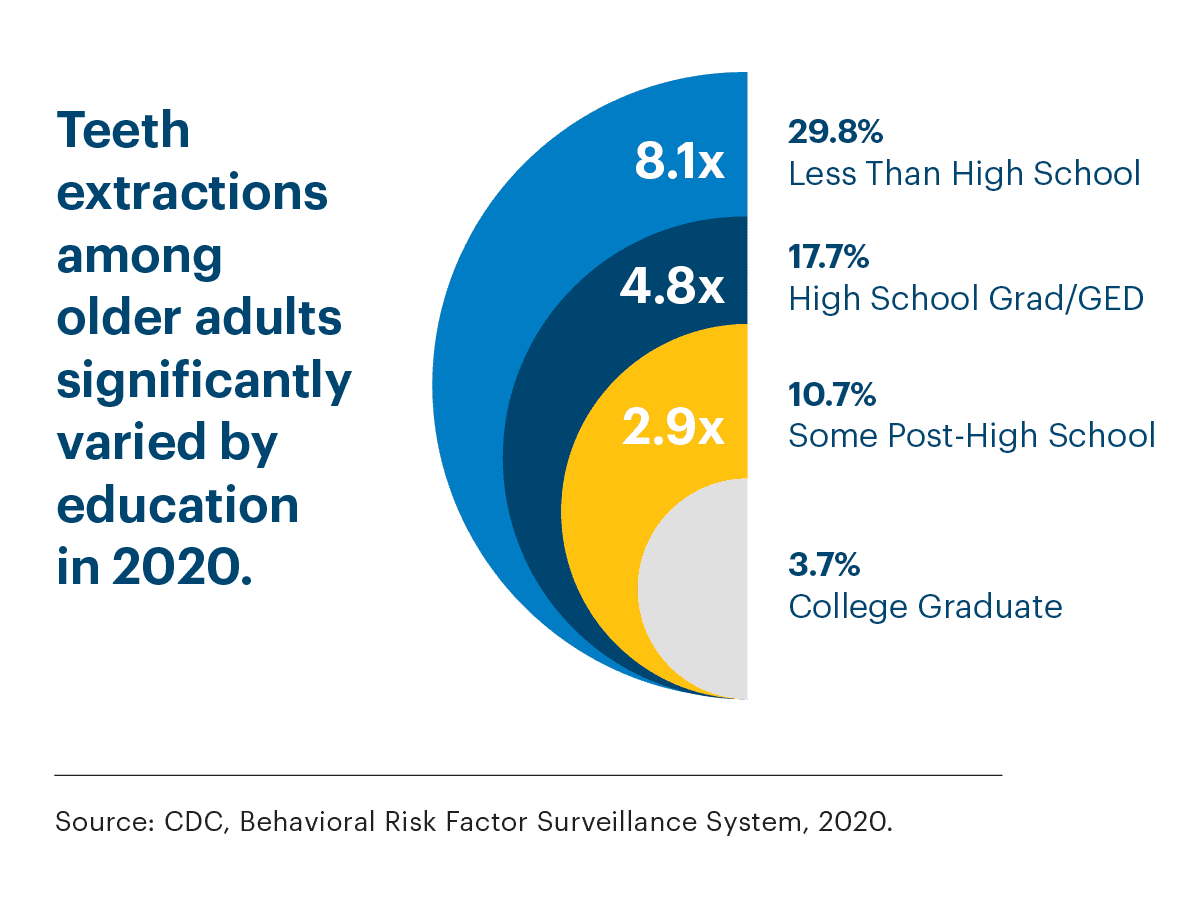
Teeth extractions significantly varied by education, income, race/ethnicity and metropolitan status; differences by gender were not notable. The prevalence among adults ages 65 and older was higher among:
- Those with less than a high school education (29.8%), 8.1 times higher than among college graduates (3.7%). The prevalence was significantly higher with each decrease in education level.
- Those with an annual household income below $25,000 (25.3%), 7.0 times higher than among those with an income of $75,000 or more (3.6%). The prevalence was significantly higher with each decrease in income level.
- American Indian/Alaska Native adults (23.7%), 5.0 times higher than among Asian adults (4.7%). The prevalence was significantly lower among Asian adults compared with all other racial/ethnic groups.
- Those living in non-metropolitan (18.3%) than among those living in metropolitan (12.3%) areas.
Adults with
obesity have an increased risk of developing
serious health conditions such as hypertension, Type 2 diabetes, stroke, sleep apnea and breathing problems, osteoarthritis and certain cancers, as well as mental illnesses like depression and anxiety. Some research suggests that the strength of the association between obesity and mortality risk
increases with age, making obesity among older adults of particular concern.
Between 2011 and 2020
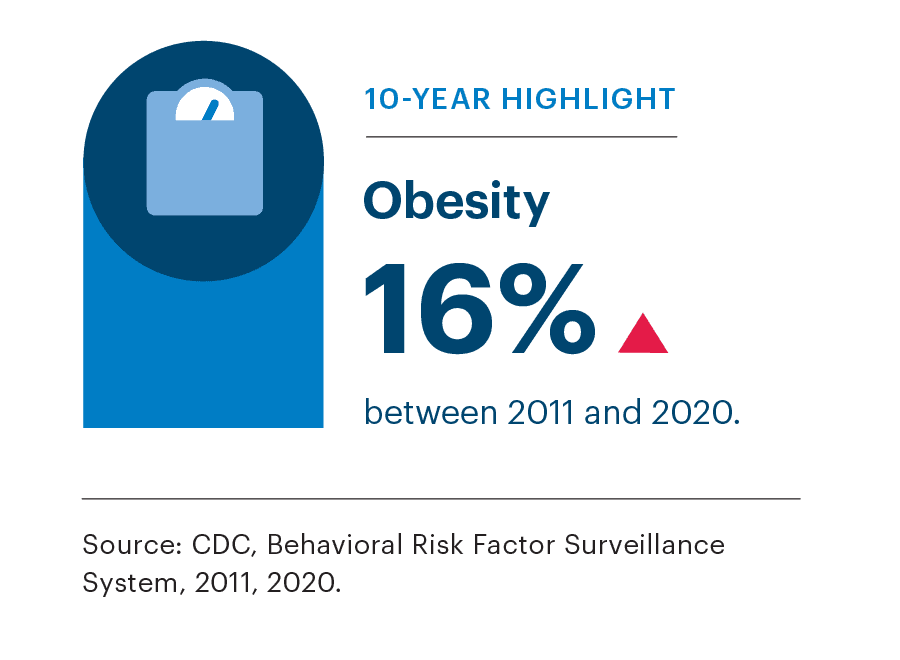
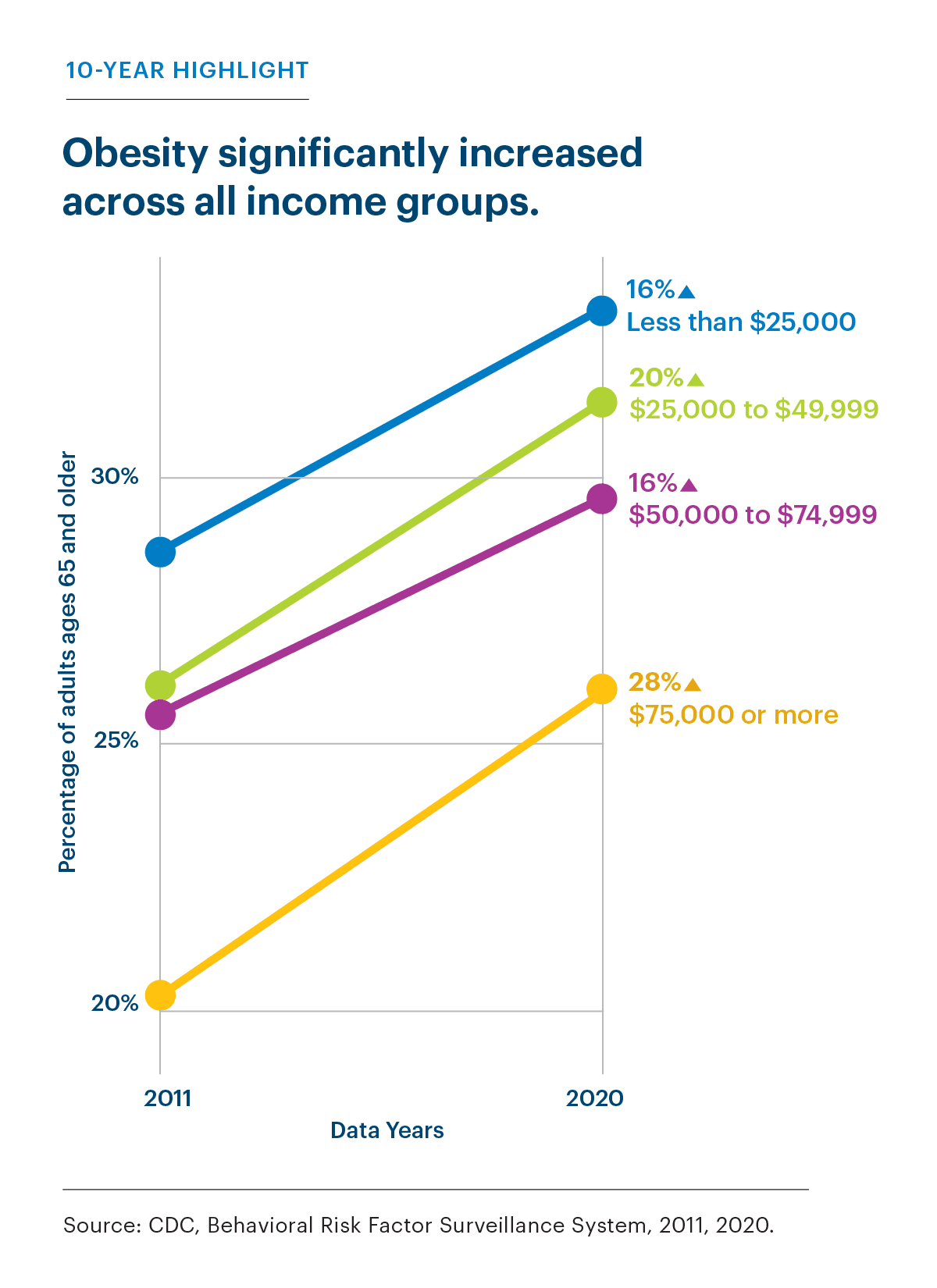
Nationally, the percentage of adults ages 65 and older with a body mass index of 30.0 or higher based on reported height and weight significantly increased 16% from 25.3% to 29.3%. Obesity among older adults significantly increased in 19 states, led by 60% in
Nevada (18.1% to 28.9%), 45% in
Wyoming (20.4% to 29.5%) and 36% in
South Dakota (23.8% to 32.4%).
All income and some education, racial/ethnic and gender subpopulations experienced significant increases in obesity. Among adults ages 65 and older, increases greater than the national change included:
Disparities in 2020
Obesity significantly varied by race/ethnicity, education, income and metropolitan status; differences by gender were not notable. The prevalence among adults ages 65 and older was higher among:
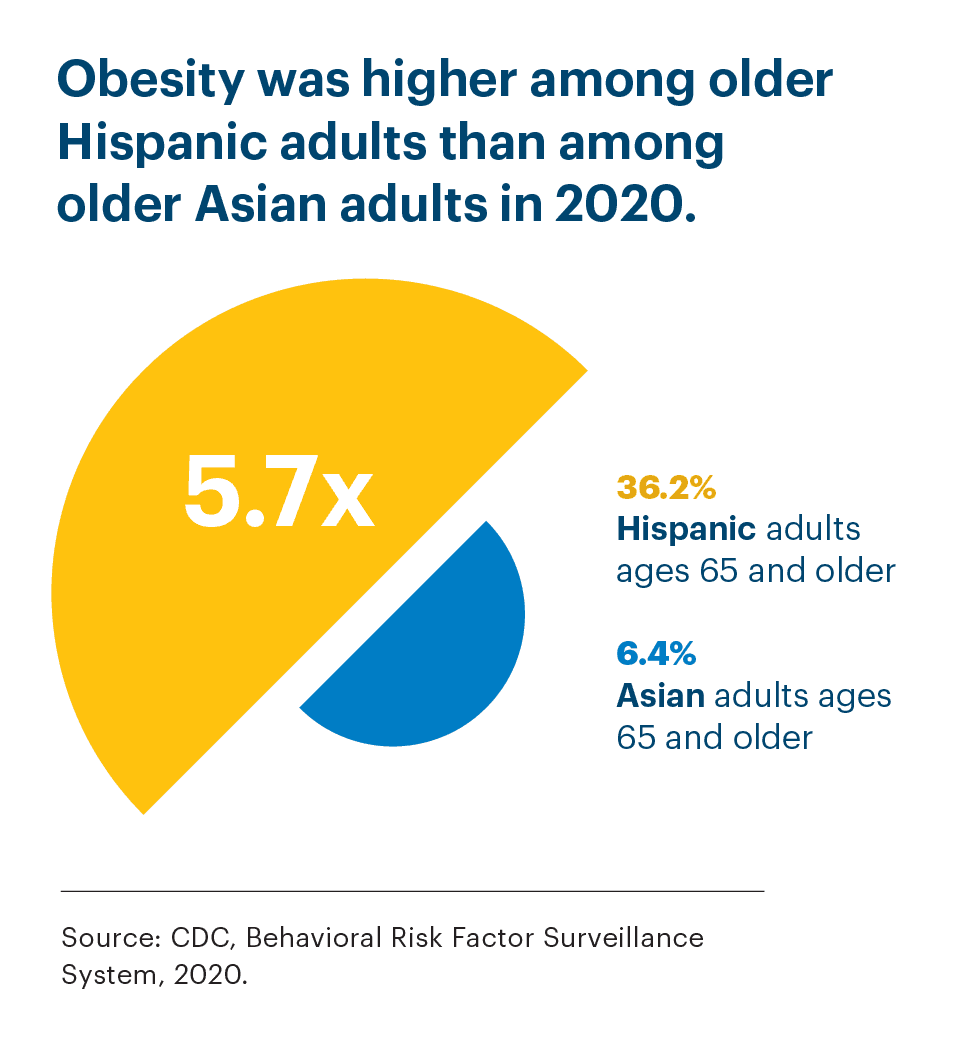
- Hispanic (36.2%), Black (36.1%) and American Indian/Alaska Native (35.7%) adults than among Asian adults (6.4%). The prevalence was significantly lower among Asian adults compared with all other racial/ethnic groups.
- Those with less than a high school education (33.7%) than among college graduates (23.5%). The prevalence was significantly lower among college graduates compared with all other education levels.
- Those with an annual household income below $25,000 (33.1%) than among those with an income of $75,000 or more (26.0%). The prevalence was significantly lower among those with an income of $75,000 or more compared with all other income groups.
- Those living in non-metropolitan (31.6%) than among those living in metropolitan (28.7%) areas.
Multiple Chronic Conditions
2020
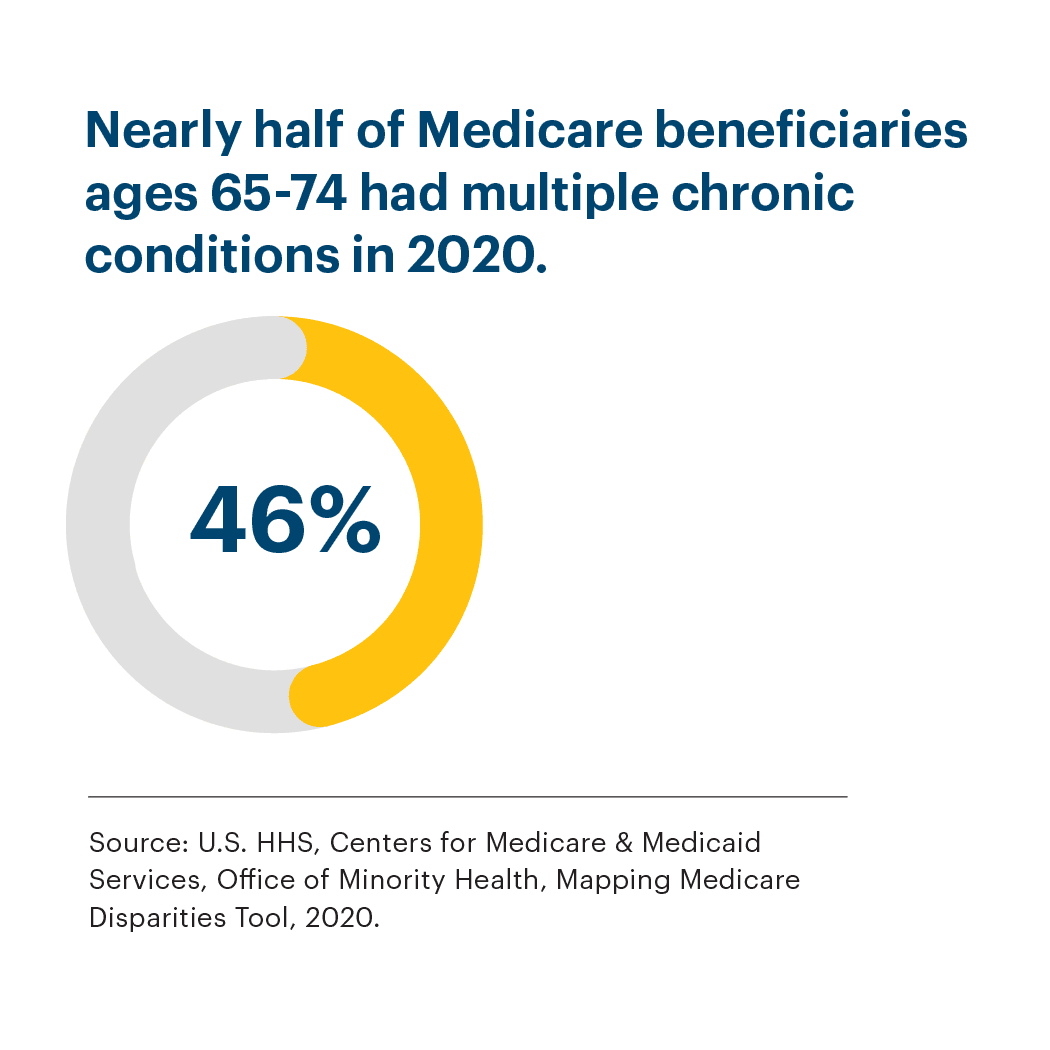
Nationally, 46% of Medicare beneficiaries ages 65-74 enrolled in the fee-for-service program had three or more of 21 chronic conditions identified by the Chronic Conditions Warehouse. The prevalence of
multiple chronic conditions was lowest in
Alaska and
Wyoming (both 28%) as well as
Montana and
Vermont (both 30%); it was highest in
Alabama (58%),
West Virginia (55%) and
Louisiana and
Delaware (both 54%). Multiple chronic conditions varied by race/ethnicity; differences by gender were not notable. The prevalence was higher among
Black (53%) than among
Asian/Pacific Islander (40%) adults.

 Alabama
 Alaska
 Arizona
 Arkansas
 California
 Colorado
 Connecticut
 Delaware
 District of Columbia
 Florida
 Georgia
 Hawaii
 Idaho
Idaho Illinois
 Indiana
 Iowa
Iowa Kansas
 Kentucky
 Louisiana
 Maine
Maine Maryland
 Massachusetts
 Michigan
 Minnesota
 Mississippi
 Missouri
 Montana
 Nebraska
 Nevada
 New Hampshire
 New Jersey
 New Mexico
 New York
 North Carolina
 North Dakota
 Ohio
Ohio Oklahoma
 Oregon
 Pennsylvania
 Rhode Island
 South Carolina
 South Dakota
 Tennessee
 Texas
Texas Utah
Utah Vermont
 Virginia
 Washington
 West Virginia
 Wisconsin
 Wyoming
 US SummaryAppendixMeasures TableData Source DescriptionsMethodology