Data show encouraging gains in women and children’s health and well-being, but concerning mortality trends persist across populations
In 2023, women ages 18-44 made up 17.8% of the population, more than 59.5 million people, while children under 18 accounted for 21.7%, or 72.8 million. Together, these groups represent a substantial share of individuals in the United States whose health and well-being are essential to the strength and resilience of communities.
The ninth edition of the America’s Health Rankings® Health of Women and Children Report takes a comprehensive view of 125 measures of health and well-being from 34 data sources to tell a story of both progress and setbacks in health nationwide and within individual states.
This year’s findings point to several meaningful improvements that strengthen long-term health and well-being, including a reduction in the prevalence of childhood overweight and obesity, growth in early childhood education enrollment and gains across several clinical care measures. Yet, these advances were offset by worsening mortality rates among children of all ages and continued increases in maternal mortality.
The report also examines differences across communities, spotlighting challenges faced by the roughly
18 million women of reproductive age living in rural areas and how their health differs from their metropolitan counterparts. While the data show improvements among rural women on certain measures of maternal health, they experience higher rates of chronic conditions than their metropolitan counterparts. Differences like these underscore the need for solutions tailored to the unique needs of rural communities.
Users can
explore population data by metropolitan and nonmetropolitan (rural) areas for a variety of measures. For further insights into differences by metropolitan status, look for this icon throughout the Executive Brief and Comprehensive Report.
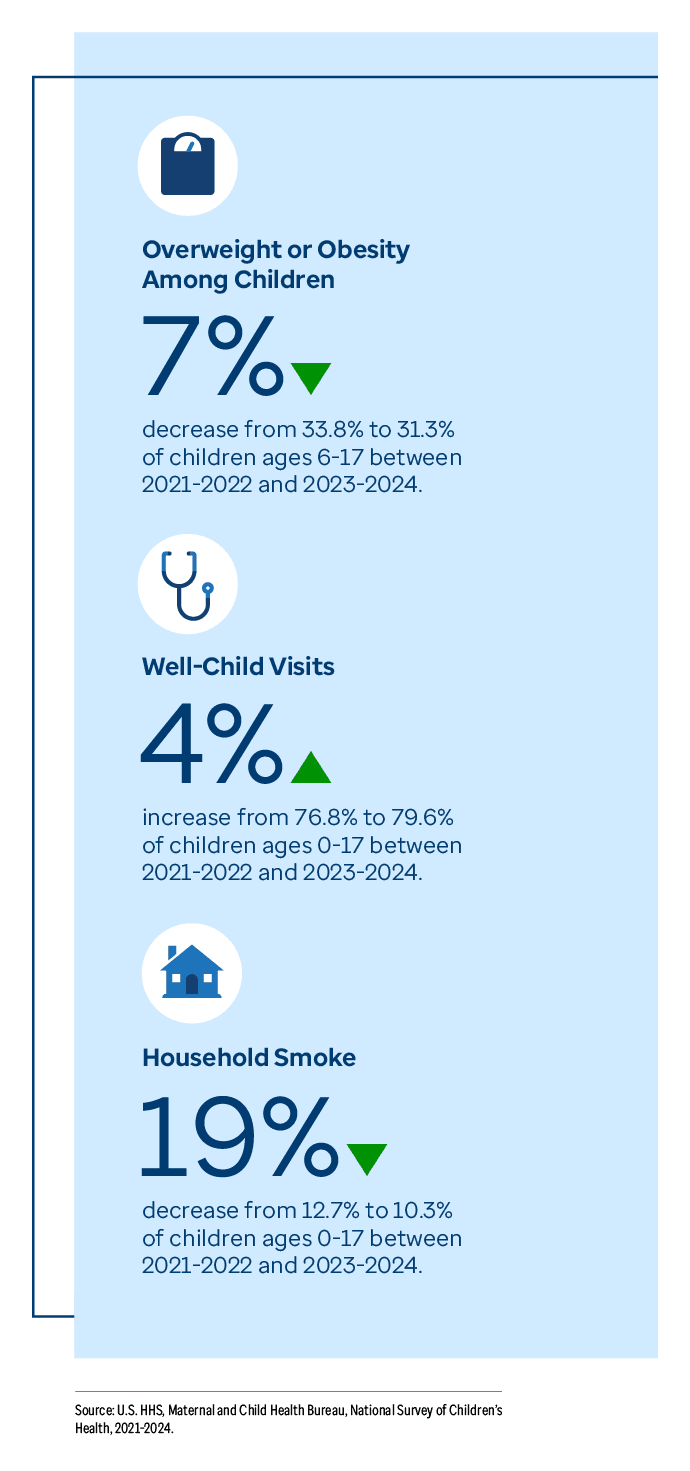
Wide-ranging improvements in children’s health outcomes, clinical care and social and economic factors The data show improvements in children’s health and well-being in recent years across a range of clinical care, social and economic, and health outcomes measures. The percentage of children ages 6-17 who were overweight or obese improved 7%, from 33.8% to 31.3%, between 2021-2022 and 2023-2024. As a result, an estimated 1.1 million fewer children had these conditions. While improvement in overweight and obesity was significant among boys, with a 10% decrease (36.4% to 32.7%), overweight and obesity remain more prevalent for boys than girls (29.8%).
Clinical care measures also reflected some improvement. The rate of well-child visits — routine preventive medical appointments for children ages 0-17 — rose 4%, from 76.8% in 2021-2022 to 79.6% in 2023-2024.
Improvements in children’s physical environments have added further positive momentum. Household smoke exposure, which is
especially harmful to infants and children whose bodies are still developing, decreased 19% between 2021-2022 and 2023-2024, from 12.7% to 10.3%. In 2023-2024, 7.2 million children lived in households where someone smoked, 1.7 million fewer than in 2021-2022.
Between 2021-2022 and 2023-2024, the rate of neighborhood amenities also increased 6%, from 36.1% to 38.2%, representing an improvement in the percentage of children ages 0-17 with access to: a park or playground; a recreation center, community center or boys' and girls' club; a library or bookmobile; and sidewalks or walking paths. Two states had significant increases of 24% and 22%, respectively: North Dakota (33.6% to 41.6%) and Indiana (26.0% to 31.8%).
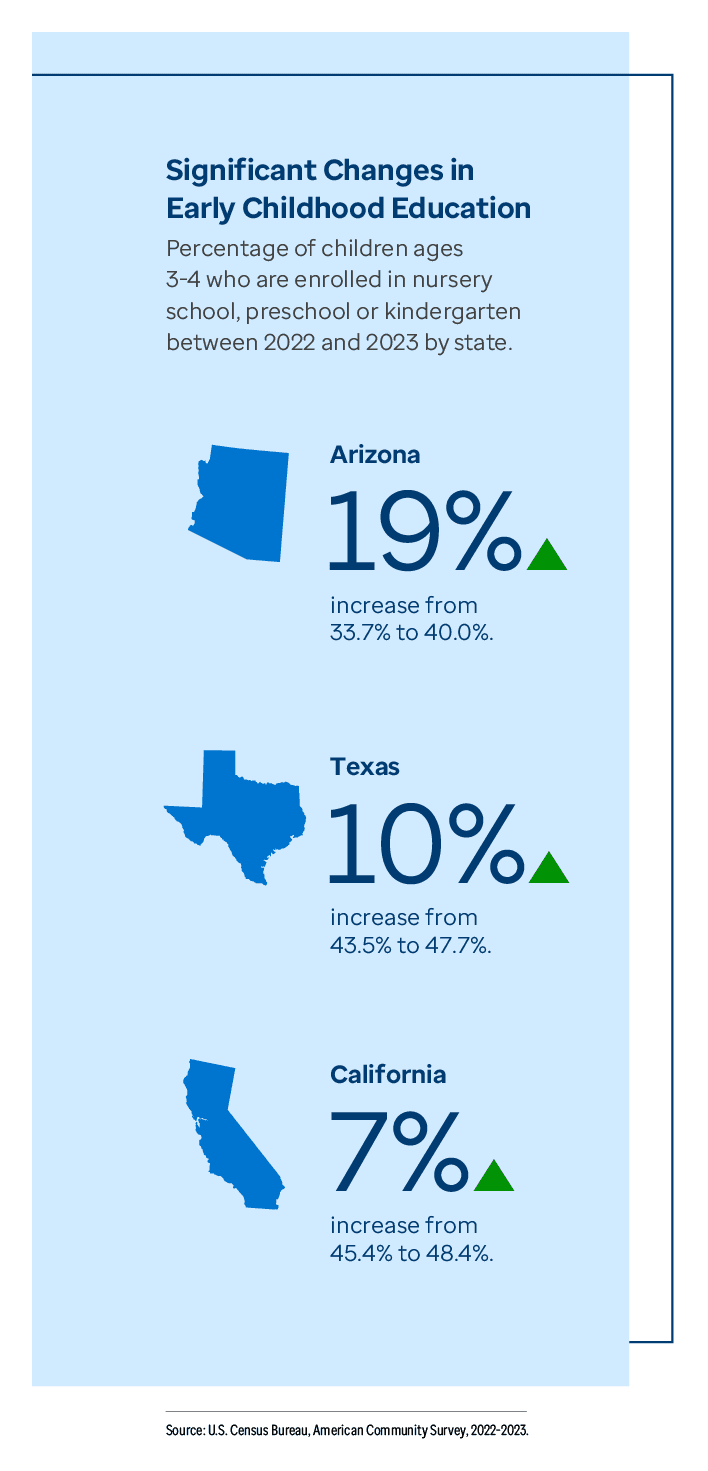
Early childhood education enrollment also improved, rising 4% from 46.7% to 48.5% between 2022 and 2023. This means over 95,100 additional children ages 3 and 4 were enrolled in nursery school, preschool or kindergarten. Enrollment rates, however, varied across states. Rates were 2.4 times higher in Connecticut and New Jersey (65.6%) than in North Dakota (26.8%); Washington, D.C., led the nation at 90.1%. There were also significant increases in three states: Early childhood education enrollment increased 19% in Arizona (33.7% to 40.0%), 10% in Texas (43.5% to 47.7%) and 7% in California (45.4% to 48.4%).
Research shows that participation in early childhood education is linked to stronger academic outcomes, improved health in adulthood and reduced involvement in crime.
The percentage of diagnosed mental health conditions among children — including attention deficit/hyperactivity disorder (ADHD), anxiety, behavior problems and depression — rose 9% from 2021-2023 to 2023-2024, and treatment for attention deficit disorder (ADD) and ADHD in children ages 3-17 increased 21%, from 2.8% to 3.4% during the same period. While higher rates of diagnosis and treatment may reflect improved awareness and engagement with care, they could also indicate a
growing burden of mental health challenges for youth.
Early diagnosis and treatment of mental health conditions in children can help improve their quality of life and ability to function at home, in school and in relationships.
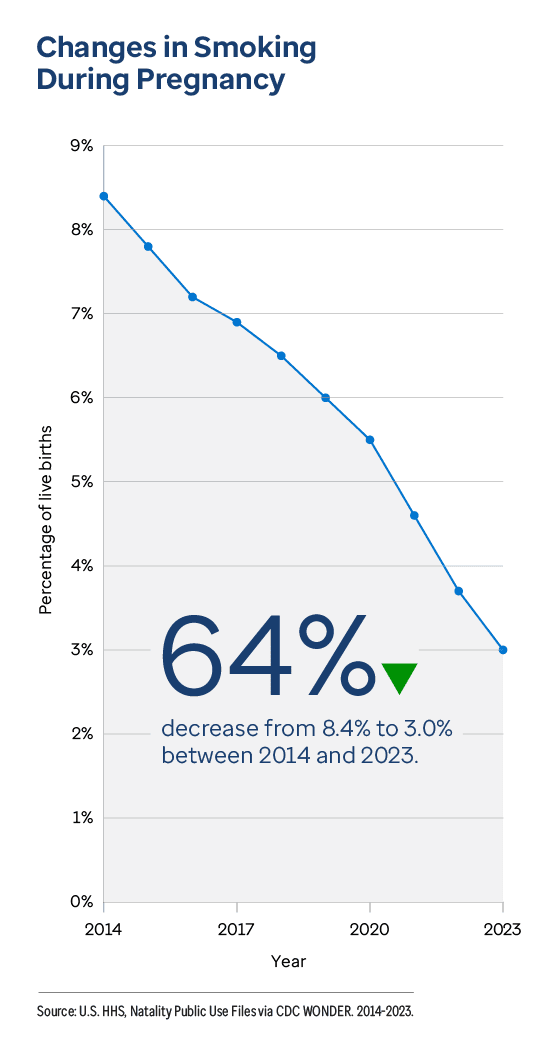
Several maternal health behaviors that affect children’s health improved The share of women who reported smoking during pregnancy decreased 19%, from 3.7% in 2022 to 3.0% in 2023, representing approximately 26,400 fewer affected births compared with the previous year. This drop represents the continuation of a nearly decade-long trend, as the rate of smoking during pregnancy fell 64% between 2014 and 2023 (8.4% to 3.0%). Neonatal abstinence syndrome (NAS) — the rate of newborn hospitalizations for withdrawal symptoms due to prenatal exposure to illicit drugs — also improved 10%, dropping from 5.9 to 5.3 NAS hospitalizations per 1,000 birth hospitalizations between 2021 and 2022.
Neonatal abstinence syndrome fell 10% from 2021 to 2022 — an improvement for neonatal health.
The largest improvements were observed among women living in rural areas, where NAS rates dropped 13% (from 9.1 in 2021 to 7.9 NAS hospitalizations per 1,000 in 2022). Improvements were more modest, but still significant, among women living in metropolitan areas, with a 7% decrease in both large (4.5 to 4.2) and small-to-medium (7.0 to 6.5) metropolitan areas.
Mixed progress in women’s clinical care measures
Well-woman visits — annual checkups that can include preventive screenings and health education conversations — improved 3%, rising from 70.5% to 72.7% of women ages 18-44 between 2020-2021 and 2022-2023.
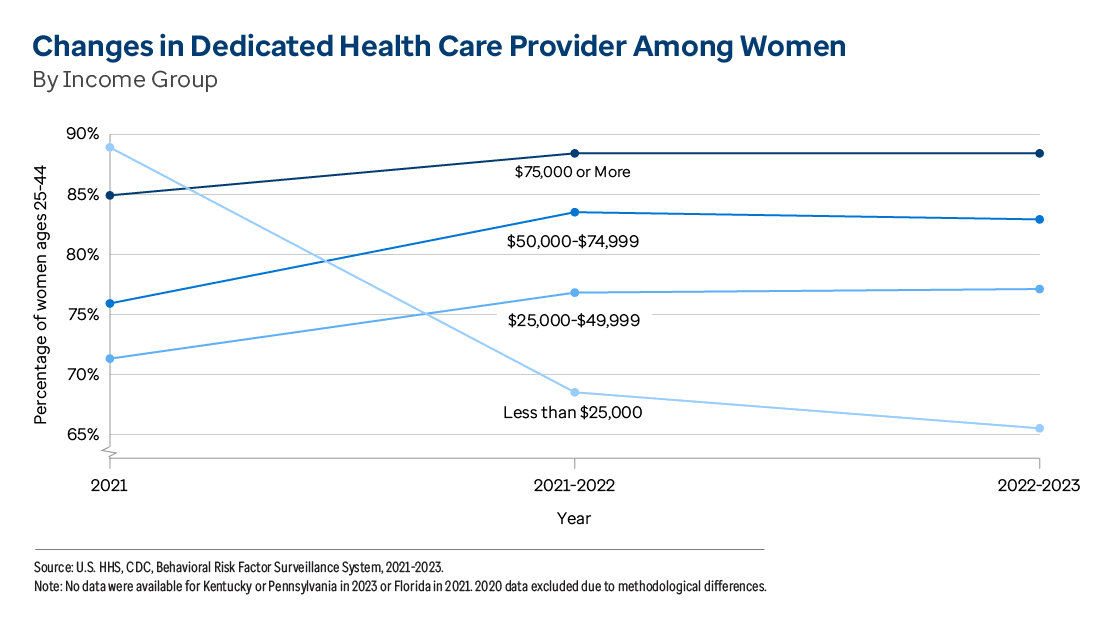
Additionally, the share of women with a dedicated health care provider, which is linked to better prevention, early detection and effective management of health conditions, decreased 2% (79.2% to 77.4%) between 2021 and 2022-2023. This means roughly 403,800 fewer women ages 18-44 had a personal doctor.
Notably, there was a 26% drop among women with household incomes less than $25,000 (88.9% to 65.5%), even as the percentage increased among all other income groups. As a result, in 2022-2023, there is a large difference by income. Roughly 1.3 times more women in the highest income group (household incomes of $75,000 or more) had dedicated health care providers compared with the lowest income group (household income less than $25,000), at 88.4% and 65.5%, respectively.
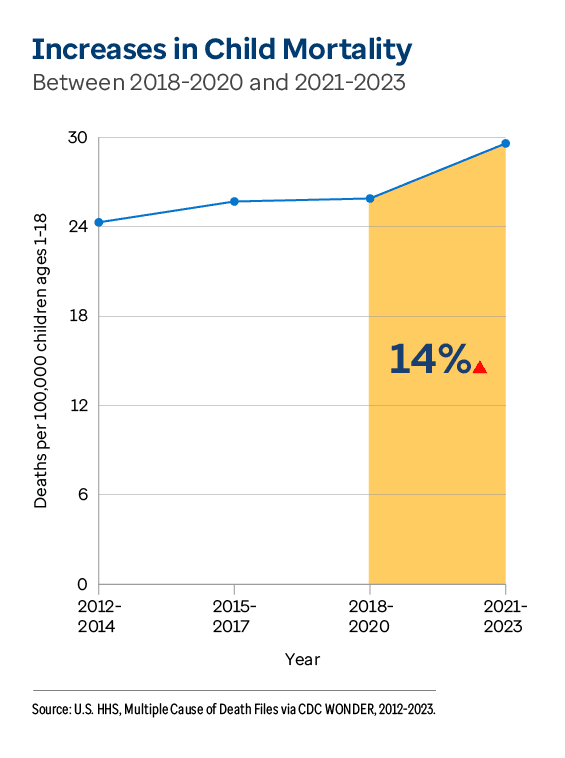
Mortality rates worsened among children of all ages Child mortality
increased 14%, rising from 25.9 to 29.6 deaths per 100,000 children ages 1-19 between 2018-2020 and 2021-2023. Most of these deaths could have been prevented. In 2021-2023, accidents (unintentional injuries) remained the
leading cause of childhood death. The top causes of injury deaths (both intentional and unintentional) were firearms, motor vehicle traffic accidents and poisoning. There were differences across populations, and mortality was 4.3 times higher among American Indian/Alaska Native (62.0) compared with Asian (14.4) children.
Infant mortality rose for the first time in the history of the Health of Women and Children Report.
Between 2020-2021 and 2022-2023, infant mortality increased 4% from 5.4 to 5.6 deaths per 1,000 live births for children under the age of 1. In 2023, the top three causes of infant mortality were congenital abnormalities, low birth weight and sudden infant death syndrome (SIDS). Infant mortality is a
Healthy People 2030 Leading Health Indicator, with a goal of reducing the rate of infant deaths to 5.0 per 1,000 births occurring within the first year of life. Neonatal mortality followed a similar trend in this time period, increasing 3% from 3.5 to 3.6 deaths in the first 28 days of life per 1,000 live births.
Despite a reduction in women’s mortality overall, maternal mortality rose nationwide and more than doubled in some states Maternal mortality continued to worsen, increasing 36% (17.3 to 23.5 live births per 100,000 live births) between 2014-2018 and 2019-2023. Maternal mortality is a
Healthy People 2030 Leading Health Indicator, with a target of reducing maternal deaths to 15.7 per 100,000 live births.
There were also differences between populations. In 2019-2023, the maternal mortality rate among American Indian/Alaska Native women (60.8 deaths per 100,000 live births) was 4.8 times higher than among multiracial (12.7) women.
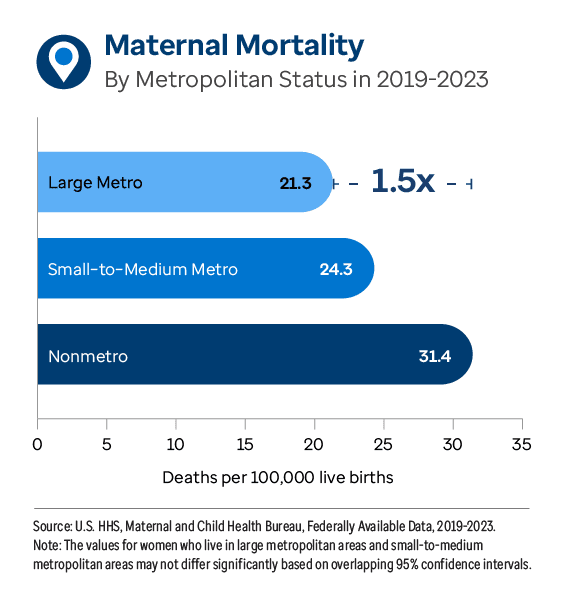
At the same time, women living in rural areas faced higher maternal mortality, with rates 1.5 times higher than those in large metropolitan areas (31.4 compared with 21.3).
Some states also experienced large increases in maternal mortality between 2014-2018 and 2019-2023; it increased 159% in Mississippi (15.3 to 39.7), 139% in Nevada (9.5 to 22.7) and 95% in Virginia (17.1 to 33.4).
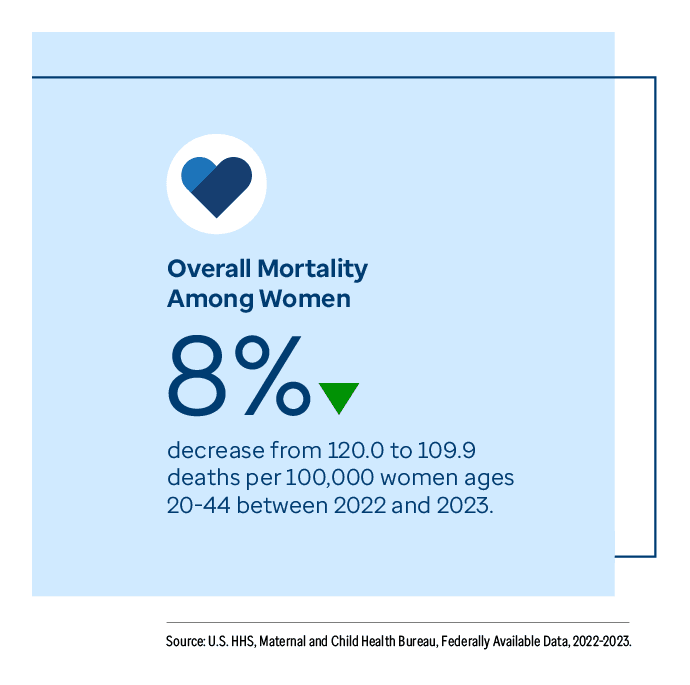
In an improvement, overall mortality among women ages 20-44 decreased 8%, dropping from 120.0 to 109.9 deaths per 100,000 between 2022 and 2023.
Provisional data indicate that a decrease in the drug death rate among women ages 20-44 likely contributed to this improvement; drug deaths decreased between 2021-2023 and 2022-2024, after they had steadily increased since 2014 and showed no change between 2020-2022 and 2021-2023 (28.6 deaths per 100,000 women during both time periods). However, racial/ethnic differences persisted: Drug deaths were 20.8 times higher among American Indian/Alaska Native (76.8) compared with Asian (3.7) women in 2021-2023.
Women also saw improvements in severe maternal morbidity, or the rate of significant, life-threatening maternal complications during delivery. Severe maternal morbidity improved 6%, falling from 100.3 to 94.7 complications per 10,000 delivery hospitalizations between 2021 and 2022.
Much of this progress was driven by women living in small-to-medium metropolitan areas and rural areas, where complications decreased 12% (95.3 to 84.0) and 11% (88.5 to 78.6), respectively.
Spotlight
Women in Rural Communities
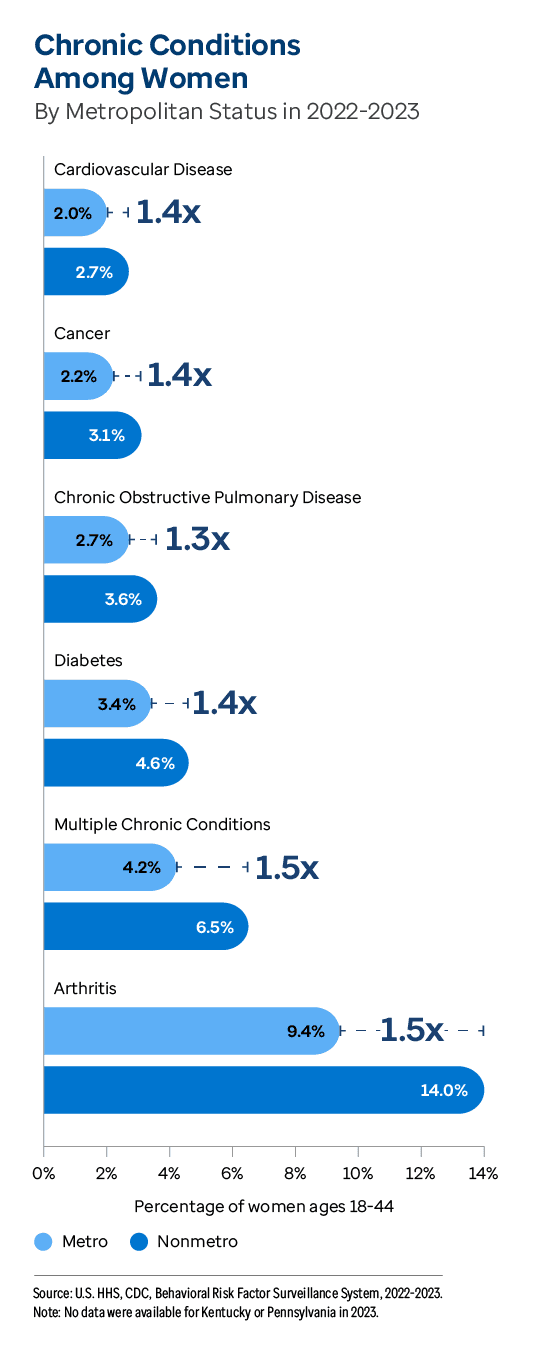
Several chronic conditions were higher among women in rural areas compared with their metropolitan counterparts
The 2025 Health of Women and Children Report not only provides a national, comprehensive picture of women and children’s health and well-being, but also sheds light on the distinct challenges faced by specific populations.
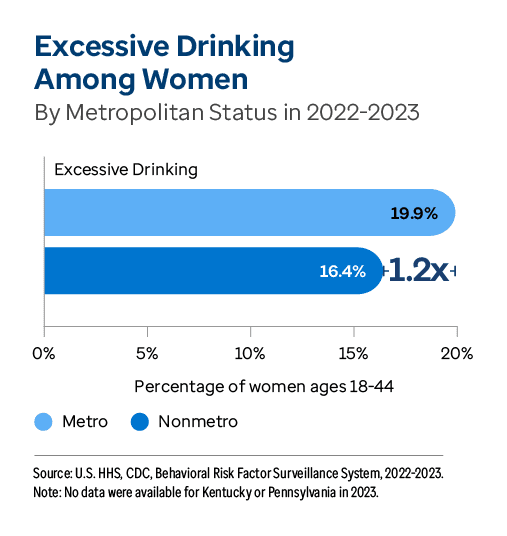
This year’s report uses America’s Health Rankings’ depth of data to spotlight rural communities. It finds that women in rural areas had lower rates of excessive drinking, but higher rates of chronic conditions than those living in metropolitan areas.
These differences highlight how geographic location and access to resources can shape health outcomes and underscore the importance of tailored solutions to meet the needs of different populations across the United States.
While progress has been made, the data in the 2025 Health of Women and Children Report show urgent challenges that cannot be ignored. Rising maternal and child mortality rates highlight the need for collaboration and coordinated action. These data can also foster interventions tailored to address communities’ unique needs, like higher rates of chronic conditions among women in rural areas. Insights from America’s Health Rankings data can help leaders target and prioritize strategies that advance the health of women and children and the nation as a whole.

 US Summary
 Alabama
 Alaska
 Arizona
 Arkansas
 California
 Colorado
 Connecticut
 Delaware
 District of Columbia
 Florida
 Georgia
 Hawaii
 Idaho
Idaho Illinois
 Indiana
 Iowa
Iowa Kansas
 Kentucky
 Louisiana
 Maine
Maine Maryland
 Massachusetts
 Michigan
 Minnesota
 Mississippi
 Missouri
 Montana
 Nebraska
 Nevada
 New Hampshire
 New Jersey
 New Mexico
 New York
 North Carolina
 North Dakota
 Ohio
Ohio Oklahoma
 Oregon
 Pennsylvania
 Rhode Island
 South Carolina
 South Dakota
 Tennessee
 Texas
Texas Utah
Utah Vermont
 Virginia
 Washington
 West Virginia
 Wisconsin
 Wyoming